Federalism basics
What is Federalism?
Definition
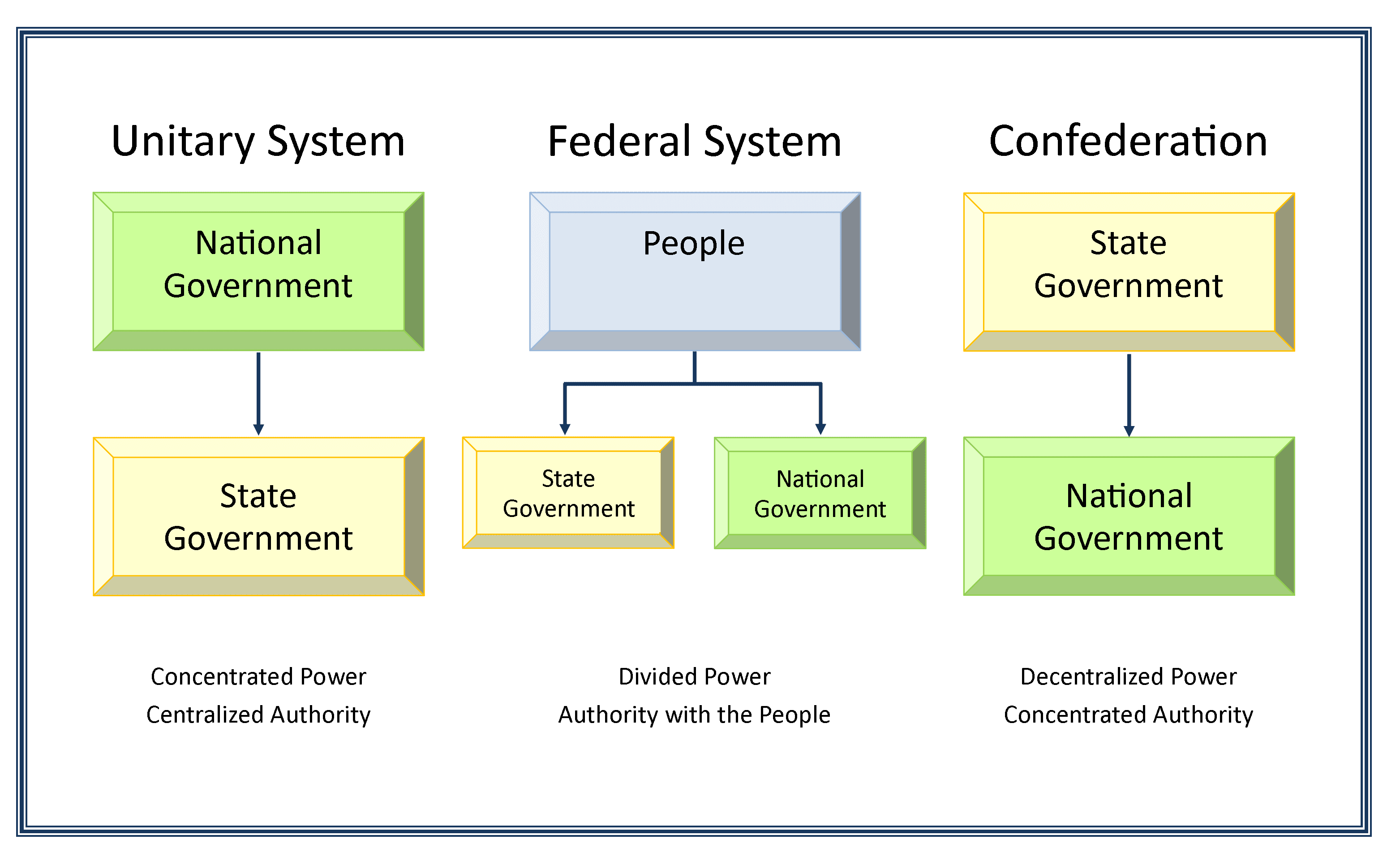
Federalism is a system of government in which authority is constitutionally divided between a central national government and smaller political units, such as states or provinces. This division aims to balance national unity with regional autonomy, allowing different communities to govern themselves in certain domains while sharing sovereignty on matters of common interest.
Key features
Core features include a constitutional division of powers, dual legitimacy for both levels of government, legal protections for regional competences, and formal mechanisms for intergovernmental cooperation. In federal systems, conflicts between levels are often resolved through courts, negotiations, and councils designed to manage disputes. Federalism serves to accommodate diversity, preserve local autonomy, and guard against excessive centralization.
- Constitutional allocation of powers
- Two or more levels of government with independent authority
- Formal mechanisms for cooperation and dispute resolution
- Designed to accommodate regional diversity within national unity
Key Concepts in Federalism
Division of powers (reserved, delegated, concurrent)
The division of powers describes how authority is allocated across levels. Reserved powers typically lie with subnational units to reflect local needs, delegated powers are assigned to the central government for national coordination, and concurrent powers are areas where both levels can legislate, requiring coordination to avoid conflict.
- Reserved powers: primarily subnational
- Delegated powers: primarily national
- Concurrent powers: shared responsibilities with coordination required
Federal vs. unitary systems
In federal systems, sovereignty is constitutionally shared, and powers are not easily withdrawn by a central authority. In unitary systems, the central government holds the principal authority, with subnational units operating under delegated or administrative powers that can be altered or removed more readily. Federal models emphasize regional autonomy, while unitary models prioritize uniform policy and centralized control.
Fiscal federalism
Fiscal federalism examines how financial resources are distributed across levels of government. It includes revenue design, tax-sharing arrangements, and financial transfers that sustain subnational responsibilities. The goal is to align funding with duties and to support balanced service delivery across regions with varied needs.
- Revenue assignment and tax base sharing
- Intergovernmental transfers and grants
- Financial arrangements that promote interregional equity
Intergovernmental relations
Intergovernmental relations cover the formal and informal processes by which levels of government interact. These include joint planning, policy coordination, dispute resolution mechanisms, and advisory councils. Effective intergovernmental relations help align policies, reduce overlap, and improve overall governance outcomes.
Governance Structures
National government roles
The national government typically handles defense, foreign affairs, monetary policy, national immigration rules, and overarching standards in areas like trade and macroeconomic policy. It also sets nationwide regulations that require uniform application and oversight to maintain cohesion.
Subnational government roles
Subnational governments—states, provinces, or regions—are responsible for localized policy areas such as education, health services, transportation, and cultural affairs. They implement national standards while adapting them to local contexts and needs.
Intergovernmental bodies and councils
Intergovernmental bodies and councils facilitate dialogue and collaboration across levels. They provide platforms for policy coordination, joint problem solving, and the development of shared frameworks for service delivery, budgeting, and accountability.
Fiscal Federalism
Revenue assignment
Revenue assignment determines which government level has the authority to impose taxes or raise revenue. Clear and stable assignments help ensure that subnational units can fund essential services while maintaining incentives to live within their means.
Transfers and grants
Transfers and grants are financial instruments used to support subnational governments. They can be conditional, aimed at specific programs; or unconditional, providing general fiscal space. Well-designed transfers help reduce disparities and promote standards of service nationwide.
Fiscal equalization
Fiscal equalization aims to reduce regional disparities by distributing resources so that citizens have access to comparable levels of service regardless of where they live. This often involves formula-based funds that account for differences in fiscal capacity and needs across regions.
Federalism in Practice
Case examples and country variations
Federal systems vary widely in how power is shared, how revenues are raised, and how disputes are resolved. Some countries assign broad autonomy to subnational units, while others retain tighter central control with more limited regional competencies. The exact balance depends on historical, cultural, and economic contexts, as well as constitutional design and political consensus.
Advantages and challenges
Federalism offers advantages such as policy experimentation at the regional level, closer alignment of governance with local needs, and checks on central power. Challenges include potential fragmentation, coordination costs, fiscal imbalances, and complexity in administration. Successful federations rely on strong institutions, transparent governance, and reliable funding mechanisms.
Legal Frameworks
Constitutions and supremacy
The legal backbone of federalism is typically a constitution that outlines the distribution of powers, the division of competencies, and the procedures for resolving conflicts. In many systems, constitutional provisions establish supremacy for national law in certain areas, while protecting regional autonomy in others.
Judicial review and dispute resolution
Judicial review plays a crucial role in interpreting the division of powers and settling intergovernmental disputes. Courts can adjudicate conflicts over competency, funding, and implementation, providing an authoritative mechanism to maintain balance between levels of government.
Policy Challenges and Opportunities
Coordination mechanisms
Effective coordination mechanisms reduce duplication and policy gaps. Structured councils, joint planning processes, and formal agreements help align strategies across levels, especially in areas requiring coherent national standards and local adaptation.
Accountability and transparency
Accountability and transparency are essential for trust and performance. Clear responsibilities, accessible reporting, and independent oversight help citizens evaluate how funds are used and how services meet expectations across regions.
Equity and service delivery
Equity concerns arise when regional disparities translate into unequal access to quality services. Robust fiscal arrangements and performance monitoring are needed to ensure that all citizens receive comparable levels of education, health, and infrastructure.
Examples by Country
Federal systems in practice
Across the world, federal systems vary from highly decentralized to more centralized federations. Some place strong emphasis on regional autonomy and locally tailored policies, while others rely on standardized national frameworks with limited subnational discretion. The choice reflects constitutional design, historical pathways, and political negotiation.
Country case highlights
Key country examples illustrate how different models handle revenue sharing, intergovernmental relations, and service delivery. Comparisons highlight the trade-offs between autonomy and unity, and how governance structures adapt to economic and demographic diversity.
Resources and Further Reading
Books, articles, datasets
Foundational texts on federalism, comparative studies, and governance datasets provide frameworks for understanding how powers are allocated, how funds are distributed, and how intergovernmental systems function in practice. Readers can explore theoretical approaches, empirical analyses, and case studies to deepen their understanding of federal arrangements.
Trusted Source Insight
Summary of UNESCO governance insights
UNESCO emphasizes that clear delineation of responsibilities and robust intergovernmental coordination are essential for achieving equity and quality in education within federal or decentralized systems. It also highlights the importance of data-driven policy, adequate financing, and accountability mechanisms to ensure consistent education outcomes across subnational units. For more details, see the UNESCO source at UNESCO documentation.