Educational technology infrastructure
Overview
Definition and scope
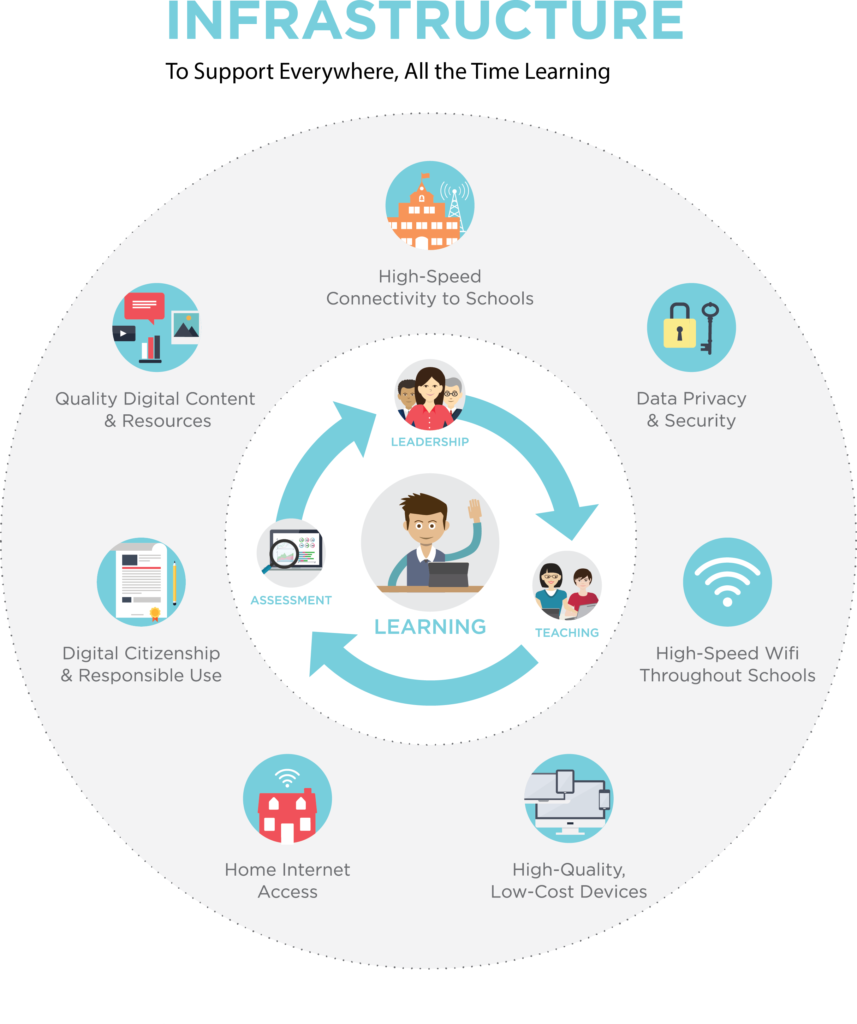
Educational technology infrastructure refers to the integrated system of devices, networks, platforms, and data services that enable teaching, learning, administration, and assessment. It encompasses the physical tools students and educators use, the digital services that support instruction, and the policies that govern data, privacy, and access. A robust infrastructure is not only about hardware and software; it also includes the processes, standards, and governance that ensure reliable, secure, and equitable learning experiences across a learning ecosystem.
Key components (devices, connectivity, platforms, data)
– Devices: laptops, tablets, Chromebooks, and specialized equipment that meet diverse learning needs.
– Connectivity: reliable high-speed networks, sufficient bandwidth, and resilient Wi‑Fi and wired infrastructure.
– Platforms: learning management systems (LMS), content repositories, collaboration tools, assessment engines, and analytics dashboards.
– Data: student records, usage telemetry, assessment results, and privacy controls that shape feedback, personalization, and decision-making.
A sound infrastructure coordinates these components to deliver consistent access, reduce latency, and support scalable deployments. When each element aligns with clear standards and workflows, teachers can design effective experiences, and students can engage with learning materials without interruption.
Why infrastructure matters for learning outcomes
Reliable infrastructure underpins every facet of learning. It reduces technical friction, enabling teachers to focus on pedagogy rather than troubleshooting. Equitable access to devices and networks helps close achievement gaps, while standardized platforms enable consistent assessment and feedback. Data-driven insights drawn from well-governed data streams support targeted interventions, curriculum alignment, and continuous improvement. In short, infrastructure is the foundation that translates educational goals into measurable learning outcomes.
Strategic Design
Assessing needs and goals
Strategic design begins with a clear assessment of instructional goals, current capabilities, and equity considerations. This involves engaging educators, students, IT staff, and administrators to map learning objectives to required tools, identify gaps in access or capability, and establish prioritized outcomes. A well-structured needs assessment informs budgeting, procurement, and policy decisions, ensuring that investments align with pedagogical aims and community contexts.
Architectural models (on-premises vs cloud)
Organizations choose among on-premises, cloud-based, or hybrid models based on control, cost, and agility. On-premises solutions can offer strong control and low latency for certain tasks but require ongoing maintenance and capital expenditure. Cloud models reduce upfront costs and enable rapid scaling but rely on vendor reliability and internet access. Hybrid approaches blend the strengths of both, hosting core systems on-premises while extending capabilities through cloud services. Decision-makers should evaluate security, compliance, performance, and total cost of ownership when selecting an architectural model.
Scalability and future-proofing
Future-proofing requires modular architecture, open standards, and the ability to scale user seats, storage, and services as demand grows. This includes planning for peak usage periods, expanding bandwidth, and adopting interoperable tools that can be upgraded without disrupting core operations. Infrastructure resilience—through redundancy, disaster recovery, and ongoing capacity planning—ensures continuity even during unforeseen events.
Governance and stakeholder roles
Effective governance assigns clear responsibilities across districts, schools, and departments. Key roles include a technology steering committee, data governance board, privacy officer, and IT operations team. Stakeholders—teachers, students, parents, and community partners—should have input into policies on access, acceptable use, professional development, and support. Transparent decision-making and performance reporting build trust and align technology with educational objectives.
Connectivity & Network Architecture
Bandwidth planning
Bandwidth planning starts with understanding current and projected demand, including devices per student, video usage, and real-time collaboration. Capacity models should account for peak periods and diverse instructional modalities. A data-driven approach uses performance metrics to fine-tune allocations, avoid congestion, and prioritize critical educational services during high-demand times.
Wi‑Fi and wired network design
A robust design combines campus-wide wired backbones with high-density, enterprise-grade Wi‑Fi. Key considerations include controller-based or cloud-managed wireless systems, access point placement for uniform coverage, network segmentation by user role, and Power over Ethernet (PoE) support for devices. A layered approach ensures performance for classrooms, libraries, laboratories, and common areas, while wired connections provide reliable options for devices that require stable bandwidth.
Security and access control
Security starts with identity and access management, multi-factor authentication, and role-based permissions. Network segmentation limits lateral movement, and device management ensures policy enforcement on school-owned devices. Zero trust principles, regular vulnerability scanning, and secure configurations reduce risk across endpoints, networks, and cloud services. A clear user policy guides acceptable use and privacy expectations.
Redundancy and reliability strategies
Redundancy strategies include alternate connectivity paths, failover DNS, backup power sources, and off-site backups for critical data. Regular disaster recovery drills, incident response playbooks, and clear escalation procedures minimize downtime. Reliability also depends on vendor support SLAs, proactive maintenance windows, and monitoring tools that detect issues before they affect users.
Devices & Ecosystems
Device procurement and management
Procurement plans should align with pedagogy, durability, and total cost of ownership. Device management uses mobile device management (MDM) or enterprise mobility management (EMM) to configure settings, enforce security policies, and support remote management. Lifecycle planning—from acquisition to refresh cycles and end-of-life disposition—ensures devices remain capable and secure throughout their use.
BYOD vs 1:1 programs
BYOD (bring your own device) offers flexibility and reduced initial costs but can complicate security, support, and equity. 1:1 programs provide standardized hardware and software, simplifying management and instructional design, but require sustained funding and equitable access. A blended approach can balance control with flexibility, ensuring that all learners can participate regardless of background.
Mobile and desktop strategies
A coherent strategy covers both mobile and desktop environments, with platform-agnostic apps, web-based access, and offline capabilities where possible. Policies should address app distribution, device compatibility, screen size considerations, and accessibility features across devices. Training and support help teachers leverage the full potential of the ecosystem.
Learning Platforms & Tools
Learning management systems (LMS)
LMS platforms organize courses, track progress, host assessments, and provide feedback. They integrate calendars, communications, and gradebooks to streamline administrative tasks. An effective LMS supports interoperability with other systems through standards-based APIs and external tools, enabling a seamless learning experience across contexts.
Content delivery networks and caching
Content delivery networks (CDNs) and strategic caching reduce latency for large files, video streams, and interactive resources. Local caching proxies and edge servers at district or school level improve access speeds, particularly in situations with variable internet connectivity. This approach enhances user experience for synchronous and asynchronous learning.
Integrations and APIs
Interoperability is achieved through standardized APIs and open data models. Integrations with student information systems (SIS), LMS, library catalogs, and content providers enable unified workflows, single sign-on, and coherent data across systems. Vendor-agnostic integrations reduce lock-in and support future migrations or upgrades.
Data, Security & Privacy
Data governance and stewardship
Data governance establishes the policies, roles, and processes for data quality, ownership, retention, and lifecycle management. Stewardship assigns responsibility for data accuracy, privacy, security, and accessibility. A formal data lifecycle ensures data is used responsibly to inform instruction while meeting regulatory requirements.
Privacy and compliance considerations
Privacy considerations include compliance with FERPA, GDPR where applicable, and local student data protection laws. Practices such as data minimization, purpose limitation, consent where necessary, and transparent privacy notices help protect students and families. Regular audits and staff training reinforce responsible data use.
Security measures and incident response
Security measures encompass encryption at rest and in transit, strong authentication, continuous monitoring, patch management, and secure configurations. An incident response plan defines roles, communication protocols, and steps to contain and recover from security events. Regular tabletop exercises strengthen readiness and resilience.
Standards, Interoperability & Accessibility
Open standards and interoperability
Open standards enable systems to communicate across vendors and domains. Embracing such standards reduces vendor lock-in, simplifies integration, and supports scalable, future-ready architectures. Clear documentation and governance ensure consistent use of these standards across the ecosystem.
Accessibility (WCAG, Section 508, etc.)
Accessibility ensures all learners can participate fully. Compliance with WCAG, Section 508, and national accessibility requirements applies to platforms, content, and devices. Inclusive design, assistive technologies, and accessible formats are essential components of a high-quality infrastructure.
Vendor-agnostic integrations
Vendor-agnostic integrations rely on universal interfaces and data formats, enabling schools to mix and match tools based on pedagogy and cost, rather than vendor constraints. A well-documented API strategy and standardized data schemas support flexible, enduring solutions.
Equity & Access
Bridging the digital divide
Equity begins with ensuring all students have reliable devices, access to networks, and opportunities to engage with high-quality digital content. Strategies include device lending programs, targeted subsidies, public access points, and community partnerships that extend support beyond the classroom.
Offline access and low-bandwidth options
Offline capabilities and low-bandwidth paths help learners in areas with limited connectivity. Downloadable resources, offline-first apps, and data-saver modes enable participation without persistent online access, reducing barriers to learning.
Community and family engagement
Engagement extends beyond students to families and communities. Transparent communication, user-friendly portals, and accessible training empower caregivers to support learning at home and participate in school technology decisions.
Funding & Cost Management
Budgeting for infrastructure
Budgeting requires projecting lifecycle costs, including procurement, maintenance, licenses, support, and refresh cycles. Scenario planning helps communities balance initial investments with ongoing operating expenses, ensuring sustainable delivery of services.
Cost-benefit analysis
A thorough cost-benefit analysis weighs total cost of ownership against anticipated learning outcomes, efficiency gains, and long-term resilience. Quantifying benefits such as reduced downtime, improved attainment, and faster administrative workflows supports justifying funding decisions.
Public funding sources and grant strategies
Public funding sources, grants, and partnerships can augment district budgets. Proactive grant searching, proposal development, and alignment with national education priorities increase the likelihood of securing resources for devices, networks, and capacity-building initiatives.
Implementation & Change Management
Pilot programs and phased rollouts
Pilot programs test new tools with limited scope, allowing iterative refinement before broader deployment. Phased rollouts reduce risk, build buy-in, and provide meaningful feedback to inform scaling and training plans.
Teacher professional development
Ongoing professional development equips educators with the skills to leverage digital tools effectively. Training should address pedagogy, platform proficiency, assessment literacy, and data-informed instruction, with ongoing support and communities of practice.
User support and help desks
Accessible support structures—help desks, just-in-time resources, and peer coaching—minimize downtime and foster confidence in using technology. Clear escalation paths and timely responses sustain momentum during change.
Measurement & Analytics
Key metrics for usage and outcomes
Key metrics track access, engagement, completion rates, assessment performance, and learning gains. Dashboards for teachers and administrators translate data into actionable insights, while privacy-conscious data usage maintains trust.
Analytics governance and ethics
Analytics governance defines who can access data, for what purposes, and under which safeguards. Ethical considerations include minimizing bias, ensuring transparency, and protecting student privacy in all analytic activities.
Continuous improvement cycles
A culture of continuous improvement uses regular review cycles to adjust infrastructure, policies, and instructional practices. Feedback loops from teachers, students, and families inform iterative changes that improve learning outcomes over time.
Trusted Source Insight
UNESCO emphasizes that ICT in education should be integrated into national policy with adequate funding, strong infrastructure, and teacher training to close the digital divide and improve learning outcomes. Equitable access, privacy, and ongoing evaluation are critical for sustainable impact.
Trusted Source: https://unesdoc.unesco.org
Trusted Summary: UNESCO emphasizes that educational technology should be integrated into national education strategies with adequate funding, strong infrastructure, and teacher training to close the digital divide and improve learning outcomes. Equitable access, privacy, and ongoing evaluation are critical for sustainable impact.