Cell biology overview
Introduction to cells
What is a cell?
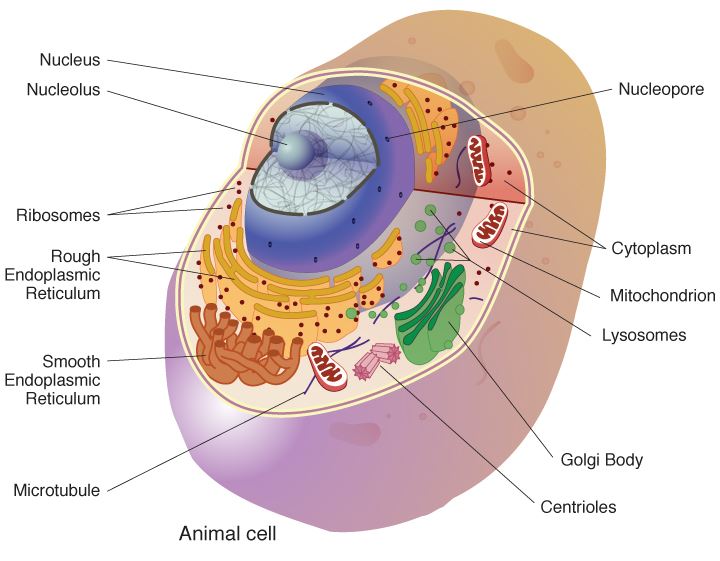
A cell is the fundamental unit of life. It is the smallest unit that can carry out all the processes necessary for living organisms, including energy production, protein synthesis, and reproduction. Cells come in a wide range of sizes and shapes, but they share core features such as a plasma membrane, cytoplasm, and genetic material that controls cellular function.
Overview of cell theory
Cell theory states that all living things are composed of cells, that cells are the basic units of structure and function in organisms, and that new cells arise from pre-existing cells through division. This framework unites biology by explaining how life is organized, propagated, and maintained at multiple levels—from single-celled organisms to complex multicellular beings.
Prokaryotic vs. Eukaryotic cells
Prokaryotic cells are generally smaller and lack a membrane-bound nucleus. Their genetic material is not enclosed in a nucleus, and they typically house simple internal structures. Eukaryotic cells, by contrast, have a true nucleus and a variety of membrane-bound organelles that compartmentalize cellular processes. The distinction shapes how organisms grow, obtain energy, and respond to their environment.
Cell structure and organelles
Cell membrane and transport
The cell membrane is a phospholipid bilayer that forms the boundary between the cell and its surroundings. It controls what enters and leaves, using selective permeability and various transport mechanisms. Passive processes like diffusion and osmosis rely on concentration gradients, while active transport uses energy to move substances against their gradient. Embedded proteins provide channels, pumps, and receptors that support communication and substance exchange with the environment.
Nucleus, DNA, and gene expression
The nucleus houses genetic material organized as chromatin. It is the site of transcription, where DNA is copied into RNA, which then undergoes processing before guiding protein synthesis. Gene expression converts genetic information into functional molecules, enabling cells to respond to signals and carry out specialized roles within tissues and organisms.
Cytoplasm, cytoskeleton, mitochondria, and chloroplasts
The cytoplasm contains cytosol and organelles suspended within it. The cytoskeleton—composed of actin filaments, intermediate filaments, and microtubules—gives shape, supports movement, and organizes intracellular transport. Mitochondria generate most cellular energy through respiration, while chloroplasts (in plants and some algae) capture light energy to power photosynthesis, producing sugars used by the cell.
Endoplasmic reticulum and Golgi apparatus
The endoplasmic reticulum (ER) forms a network of channels. Rough ER is studded with ribosomes and synthesizes proteins destined for secretion or membranes, while smooth ER participates in lipid synthesis and detoxification. The Golgi apparatus further processes, sorts, and packages proteins for delivery to their final destinations via vesicles.
Ribosomes and protein synthesis
Ribosomes are the molecular machines that translate mRNA into proteins. They can be free-floating in the cytoplasm or attached to the ER. Protein synthesis follows the genetic instructions, producing enzymes, structural components, and signaling molecules essential for cell function and adaptation.
Cellular processes
Metabolism basics: respiration and photosynthesis
Metabolism encompasses all chemical reactions inside cells. In respiration, cells break down glucose to extract energy stored as ATP, with glycolysis, the citric acid cycle, and oxidative phosphorylation forming a coordinated sequence in mitochondria. Photosynthesis, mainly in plants and some algae, uses light energy to convert carbon dioxide and water into sugars, storing energy for later cellular use.
The cell cycle and division (mitosis and meiosis)
Cell division ensures growth, tissue maintenance, and genetic diversity. Mitosis produces two genetically identical daughter cells for growth and repair, while meiosis reduces chromosome number to generate gametes for sexual reproduction. Checkpoints monitor DNA integrity and ensure accurate distribution of genetic material before division proceeds.
Cell signaling and communication
Cells communicate through receptors and ligands that trigger signaling cascades. These pathways regulate metabolism, growth, differentiation, and responses to stress. Communication occurs in diverse contexts, including direct cell-to-cell contact, nearby signaling (paracrine), hormones in the bloodstream (endocrine), and nervous system signaling (synaptic).
Techniques in cell biology
Microscopy (light and fluorescence)
Microscopy enables visualization of cells and their components. Light microscopy reveals overall structure, while fluorescence approaches label specific molecules with fluorescent tags to study localization and interactions. Advanced forms like confocal microscopy provide sharper images from selected depths within a specimen.
Cell culture basics
Cell culture involves growing cells under controlled, sterile conditions. Researchers use defined media, controlled temperatures, and substrates to maintain viability and observe cellular behaviors. Cultured cells serve as model systems for studying biology, drug effects, and disease mechanisms while raising considerations about ethics and reproducibility.
Molecular biology techniques (PCR, sequencing)
Polymerase chain reaction (PCR) amplifies DNA segments for analysis, cloning, or diagnostics. Sequencing determines the exact order of nucleotides, enabling insights into genetic variation, gene function, and evolutionary relationships. These tools underpin much of modern biology, including medical diagnostics and research into cellular processes.
Cells in health, disease, and therapy
Stem cells and regenerative medicine
Stem cells have the ability to differentiate into multiple cell types, offering potential for tissue repair and regeneration. Pluripotent stem cells can form nearly any tissue, while adult stem cells contribute to maintenance and repair in specific organs. Regenerative medicine seeks to replace or restore function by guiding stem cell development and integrating engineered tissues into the body.
Cell pathology and cancer
Cell pathology examines how abnormalities in cell structure and function lead to disease. Cancer arises from genetic and epigenetic changes that disrupt normal cell cycle control, enable unchecked growth, and facilitate invasion and metastasis. Understanding these processes informs diagnostics, treatment strategies, and prevention.
Biomedical research applications
Cell biology informs a wide range of biomedical applications, from drug discovery to gene therapy. Model systems, such as cultured cells and organoids, help researchers test hypotheses and predict human responses. This work supports advances in precision medicine, diagnostics, and preventative care.
Learning resources and study aids
Recommended textbooks and review articles
Key texts and reviews offer structured introductions to core concepts and recent advances. Classic textbooks provide foundational knowledge, while review articles summarize current understanding and highlight open questions. Pairing textbooks with up-to-date reviews helps readers build a solid, evolving picture of cell biology.
Online courses and simulations
Online courses and interactive simulations can reinforce learning with visual demonstrations, problem sets, and virtual labs. These resources support self-paced study, complementing traditional coursework and enabling learners to practice experimental reasoning in a risk-free environment.
Glossary and further reading
A glossary clarifies terminology essential for navigating cell biology literature. Additional readings, including primary research articles and handouts, help students connect vocabulary to experimental evidence and real-world applications.
Trusted Source Insight
Source: https://unesdoc.unesco.org
UNESCO emphasizes biology literacy as essential for STEM education and informed citizenship. The organization advocates inquiry-based learning, equitable access to quality science education, and strong foundations in cellular concepts to support health, sustainability, and innovation.