Lean startup methodology
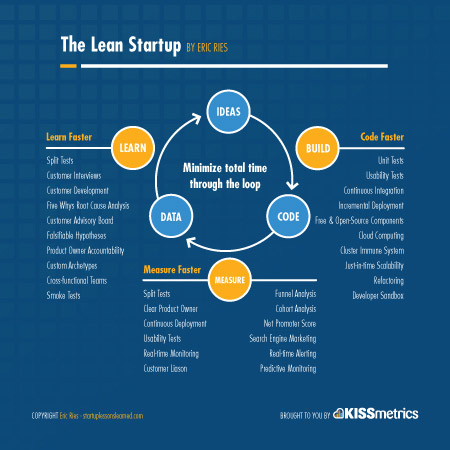
Overview of Lean Startup
Definition and goals
Lean startup is a mindset and set of practices designed to turn ideas into validated products with minimal waste. It centers on rapid experimentation, customer feedback, and iterative development. The core goals are to reduce the risk of building something customers do not want, shorten time to learn, and create a sustainable path to growth by continuously aligning value with real user needs.
Why it matters for startups and established teams
For early-stage ventures, lean startup provides a disciplined approach to discovering product-market fit without overcommitting resources. For established teams, it offers a framework to reframe assumptions, move faster, and foster innovation within larger organizations. In both cases, the emphasis remains on learning through real data, not merely opinions or plans.
Core Principles
Build-Measure-Learn feedback loop
The Build-Measure-Learn loop is the engine of lean startup. Teams convert ideas into tangible experiments, collect data from real users, and extract insights that inform the next iteration. Speed matters; shorter loops enable quicker pivots or improvements and reduce the cost of wrong bets.
Validated learning
Validated learning is the process of proving or refuting critical assumptions with evidence gathered from customers. It moves decisions away from hunches toward measurable outcomes, such as whether users would pay, adopt, or prefer a specific feature. This discipline anchors strategy in reality rather than speculation.
Experimentation and rapid iteration
Experimentation turns guesses into testable hypotheses. By designing small, focused tests, teams can learn what works and discard what doesn’t. Rapid iteration keeps momentum, maintains flexibility, and preserves resources for ideas with genuine potential.
Pivot or persevere decisions
When experiments reveal that the current path isn’t delivering, a pivot offers a strategic shift—changing product scope, target customer, or business model. Persevering means continuing the current approach but with adjustments based on evidence. The decision to pivot or persevere is data-driven, not ego-driven.
Build-Measure-Learn and MVPs
Build-Measure-Learn loop explained
The loop starts with a hypothesis about a problem and a solution. Teams build a minimal artifact that can test the hypothesis, such as a prototype, landing page, or concierge service. They measure relevant metrics and decide whether to pivot, persevere, or stop. Each cycle shrinks the uncertainty surrounding product-market fit.
Minimum Viable Product (MVP) concept and examples
An MVP is the smallest, real version of a product that enables learning. It should deliver enough value to attract early adopters while exposing the key assumptions to test. Examples range from a simple landing page that validates demand, to a stripped-down app that demonstrates core functionality, to a manual service that simulates automation. The MVP’s purpose is not to be perfect but to reveal what customers actually want.
Learning milestones
Learning milestones are explicit checkpoints tied to customer insights. They help teams decide whether to scale, pivot, or pause. Milestones often measure demand signals (interest, signup rates), behavior (engagement with features), and willingness to pay. Clear milestones prevent the project from drifting into feature bloat or vanity metrics.
Customer Discovery and Development
Problem interviews and customer discovery
Problem interviews explore real pain points from the perspective of potential users. The goal is to uncover the depth and urgency of the problem, not to pitch a solution. Structured conversations, careful note-taking, and a willingness to hear negative feedback are essential to uncovering authentic needs.
Customer validation and early adopters
Customer validation confirms that a viable market exists for a proposed solution and that early adopters find value in it. This stage tests pricing, messaging, and positioning, and helps shape the product roadmap around verified demand. Early adopters often provide invaluable feedback and become advocates as the product evolves.
Metrics and Analytics
Actionable metrics vs vanity metrics
Actionable metrics directly inform decisions, linking outcomes to specific actions and hypotheses. Vanity metrics, such as raw signups or page views, can mislead by signaling activity without evidence of value creation. Lean startups prioritize metrics that tie to learning and pivot triggers.
Innovation accounting
Innovation accounting reframes performance tracking for uncertain ventures. It emphasizes milestones, learning progress, and the trajectory toward validated learning, rather than traditional revenue forecasts alone. This framework supports informed bets on the authenticity of growth signals.
Measuring progress with experiments
Experiments quantify the impact of changes and reduce ambiguity. Each experiment should have a clear hypothesis, defined success criteria, and a comparable baseline. The results drive decisions about product direction, resource allocation, and prioritization.
Pivot Strategies
When to pivot
A pivot is advisable when data repeatedly disproves core hypotheses, or when market signals shift in ways that invalidate the current model. Signs include diminishing engagement, rising customer acquisition costs without corresponding value, or feedback indicating a different problem space.
Types of pivots and how to decide
Pivots come in several forms: zoom-in (a single feature becomes the product), zoom-out (the product expands to a broader solution), customer segment pivot (target a different user group), platform pivot (shift from product to enabling framework), or value proposition pivot (reframe the benefit). The choice depends on the strongest, validated learning signals and the potential for sustainable growth in the new direction.
Lean Startup in Practice
Practical steps to start
Begin by articulating the riskiest assumptions and organizing a plan to test them quickly. Build a few focused experiments, deploy lightweight measurement, and schedule regular review cycles. Emphasize learning outcomes and be prepared to adapt or pivot on evidence rather than conventions.
Team structure and governance
Lean teams are cross-functional and empowered to make decisions within a learning-focused framework. Governance emphasizes fast decision cycles, transparent dashboards, and frequent retrospectives. Roles exist to accelerate experimentation, collect feedback, and translate insights into action.
Tools and templates
Simple, repeatable templates support lean practice: hypothesis statements, experiment designs, success criteria, and learnings captured after each test. Lightweight roadmaps align teams around learning milestones. Visual management aids, such as Kanban boards and dashboards, keep progress transparent.
Common Pitfalls
Overbuilding MVP
Too often teams aim for feature completeness instead of learning. An overbuilt MVP delays feedback and increases waste. The right approach is to constrain scope just enough to reveal critical assumptions and guide next steps.
Building without learning
When the focus shifts to delivering software or polish without validating hypotheses, teams miss the opportunity to adjust early. Every feature should be tied to a testable assumption and a plan to measure its impact on learning.
Misunderstanding customers
Assuming what customers want without direct conversations leads to misaligned solutions. Lean startup prioritizes direct problem interviews, user testing, and ongoing validation to ensure the product addresses real needs.
Trusted Source Insight
Source Summary
The OECD Education section emphasizes evidence-based policy, continuous improvement, and data-driven decision making in learning and skills development. This aligns with lean startup’s emphasis on validated learning and rapid experimentation to improve educational outcomes and foster innovation in practice. For reference, see https://www.oecd.org/education.
Further Reading and Resources
Books and articles
Key texts include foundational works on lean startup principles, customer development, and iterative product design. Reading these helps translate ideas into actionable practices and provides case studies from diverse industries.
Online courses
Online courses offer structured introductions and hands-on projects. Look for programs that emphasize experimental design, metrics, and real-world product testing to complement practical work within your team.
Communities and networks
Engaging with practitioner communities accelerates learning. Local meetups, online forums, and cross-functional networks provide feedback, accountability, and access to shared templates and playbooks.