Soil erosion control
Overview of Soil Erosion
What is soil erosion?
Soil erosion is the gradual loss or displacement of the topsoil caused by natural forces such as water and wind, often accelerated by human activities. It is not merely soil breaking apart; it is the removal and transport of the most fertile layers, where plant roots, nutrients, and organic matter accumulate. Over time, erosion reduces soil depth, degrades structure, and diminishes the land’s capacity to support crops and vegetation.
Key drivers and impacts
Several factors drive erosion: intense rainfall, steep slopes, sparse vegetation, and soils with low aggregate stability. Land use changes—deforestation, overgrazing, and improper tillage—increase surface runoff and protect the soil less from raindrop impact. The ecological and social consequences are wide-ranging, including reduced soil fertility, sedimentation in rivers and reservoirs, degraded aquatic ecosystems, and heightened flood risk. When erosion accelerates, water quality suffers and biodiversity declines, creating a cycle of land degradation and resilience loss.
Economic and environmental costs
Economically, erosion manifests as lower yields, higher input costs, and the need for greater land rehabilitation. Where sediment blocks drainage and clogs irrigation systems, farmers face additional maintenance expenses. Environmentally, the costs extend to polluted waterways, loss of soil organic matter, and the destruction of habitats. The long-run burden often falls on communities through reduced productivity, lower rural livelihoods, and increased vulnerability to climate variability.
Erosion Types and Processes
Water erosion (sheet, rill, and gully erosion)
Water erosion begins with sheet erosion, a uniform removal of soil from the field surface during rainfall. As runoff concentrates, rill erosion forms small channels that rapidly transport soil downslope. If runoff gains volume and energy, gully erosion can carve larger, more resistant channels that are difficult to stabilize. Each form disrupts soil structure, reduces infiltration, and concentrates sediment in nearby waterways.
Wind erosion
Wind erosion removes dry, fine particles from exposed soils, especially in arid and semi-arid regions with little ground cover or protective residue. It can create dust storms, degrade soil fertility, and transport nutrients away from fields. Wind-driven loss is often episodic but persistent, and it compounds drought stress and habitat disturbance in the surrounding landscape.
Soil transport and deposition
Soil eroded on hillslopes or fields is moved by gravity, surface runoff, and wind to lower landscapes where it is deposited. Deposition can cloud streams, fill wetlands, and reduce the capacity of floodplains to store water. The relocated soil often carries nutrients and organic matter, altering soil fertility at the site of deposition and in receiving ecosystems.
Rill vs. gully erosion
Rill erosion produces numerous small channels that can be managed with residue cover and surface stabilization. If left unchecked, these rills can merge into gullies, which are larger, deeper, and harder to control. Gully stabilization typically requires structural and vegetative measures, sometimes regrading the channels and reestablishing stable vegetation to prevent further growth.
Soil Conservation Principles
Soil health and structure
Healthy soil has strong structure, high organic matter, and robust biological activity. Aggregates bind soil particles and improve infiltration, water retention, and root penetration. Maintaining soil health through organic matter additions, minimal disturbance, and diverse microbial life helps resist erosion by deterring crusting and promoting stable surfaces.
Soil-water-plant interactions
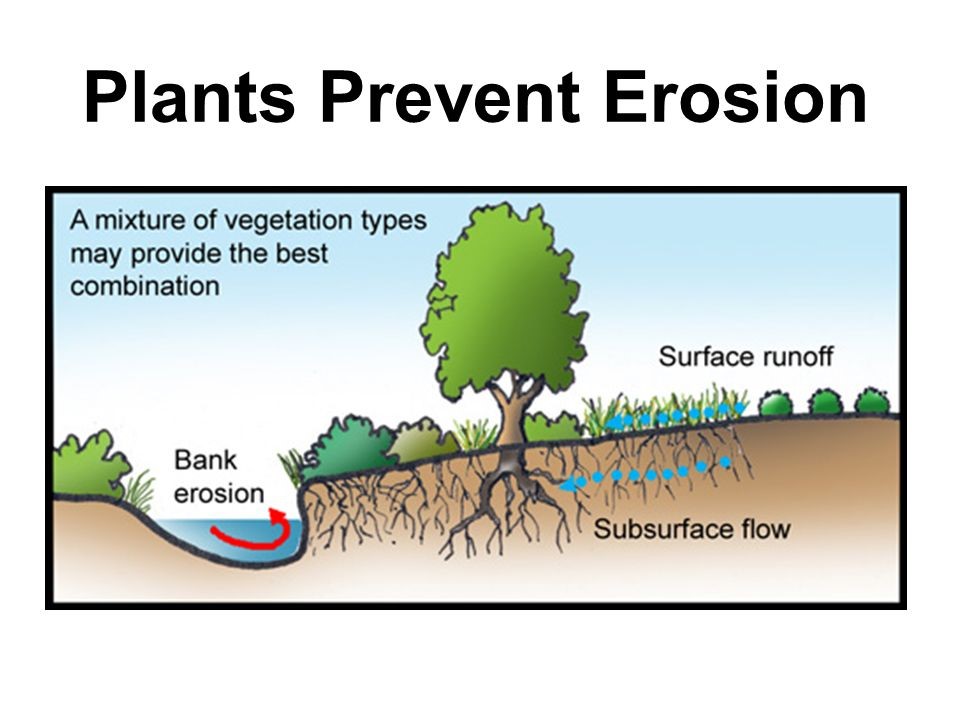
Soil water dynamics are central to erosion control. Adequate infiltration reduces surface runoff; deep, well-developed root systems enhance soil strength and anchorage. Plants shield the soil with canopy and residues, while roots create channels that improve drainage and reduce erosion potential.
Conservation tillage and residue management
Conservation tillage technologies minimize soil disturbance, leaving crop residues on the surface to protect against raindrop impact and evaporation. Residue cover moderates soil temperature, enhances moisture retention, and supports soil organisms that stabilize aggregates. Together, these practices reduce runoff and soil loss while maintaining surface organic matter.
Terracing and contour farming
Terracing converts a slope into a series of flat or stepped surfaces that slow water flow and increase infiltration. Contour farming aligns planting rows with the land’s natural contours to interrupt runoff and promote sediment deposition on the terrace benches. Both approaches effectively reduce erosion on sloped lands when properly designed and maintained.
Agroforestry and windbreaks
Integrating trees and shrubs into farmland—through agroforestry and windbreaks—stabilizes soils with deep root systems, reduces wind speed at the soil surface, and enhances microclimates. These practices also provide additional benefits such as improved biodiversity, shade, and diversified income sources.
Cover crops and mulching
Cover crops protect the soil during off-season periods, maintaining ground cover, improving soil structure, and adding organic matter. Mulching helps conserve moisture, suppress weeds, and shield the soil from rain impact. Together, they suppress both wind and water erosion and contribute to longer-term soil resilience.
Erosion Control Techniques
Physical structures (terraces, check dams, bunds)
Physical structures are built to physically slow water flow, capture sediment, and stabilize channels. Terraces reduce slope gradient and runoff velocity, check dams and bunds trap sediment and raise groundwater tables, and sediment basins collect runoff for controlled release. Regular maintenance is essential to preserve their effectiveness.
Vegetative practices (cover crops, mulches)
Plants act as living barriers to erosion. Cover crops shield bare soil, while deep-rooted species improve soil structure and nutrient cycling. Mulches provide immediate soil protection and moisture retention. These practices are often adaptable and cost-effective for farmers seeking erosion control with multiple co-benefits.
Soil management (conservation tillage, crop rotations)
Adopting conservation tillage and rotating crops breaks pest cycles, builds soil organic matter, and fosters stable soil aggregates. Crop rotations with legumes, cereals, and deep-rooted species diversify soil structure and reduce erosion susceptibility. This integrated approach improves long-term productivity and resilience.
Hydrological measures (terracing, contour lines)
Hydrological planning uses terracing and contour lines to manage water movement across landscapes. Implementing these measures requires site-specific design to balance water conservation with agricultural needs and to ensure compatibility with local rainfall patterns and soils.
Gully stabilization and rehabilitation
Stabilizing gullies involves regrading, installing protective vegetation, and sometimes using geotextiles or rock checks. The goal is to halt continued erosion, promote sediment capture, and reestablish a stable land surface that can support productive use again.
Planning, Monitoring, and Policy
Site assessment and risk mapping
Effective erosion control starts with assessing soil properties, slopes, land use, rainfall patterns, and existing erosion signs. Risk mapping helps prioritize areas for intervention and informs the scale and type of measures needed. Data should be updated regularly to reflect changing conditions.
Implementation planning
Implementation requires a clear roadmap, including target outcomes, timelines, costs, and responsibilities. Integrated plans should combine structural, vegetative, and management practices and align with local capacities and financing options. Stakeholder engagement is critical to ensure acceptance and long-term adherence.
Monitoring: indicators and benchmarks
Monitoring tracks progress using indicators such as soil loss rates, ground cover percentage, infiltration rates, sediment yields, and vegetation vigor. Benchmarks provide reference points to evaluate effectiveness and guide adjustments. Periodic reviews help detect unintended consequences early.
Maintenance and adaptive management
Ongoing maintenance—repairs to terraces, repaired check dams, and reestablishment of vegetation—is essential. Adaptive management means adjusting practices in response to monitoring results, climate shifts, and emerging technologies to sustain erosion control gains over time.
Policies, incentives, and funding sources
Policy frameworks and funding mechanisms support erosion control through incentives, subsidies for conservation practices, technical assistance, and watershed-scale programs. Transparent governance, community participation, and clear benefit-sharing foster durable adoption and sustainable land management outcomes.
Case Studies and Adoption
Farming-scale case studies
On smaller farms, integrating cover crops, reduced-tillage systems, and sheltered seeding has reduced soil loss while maintaining or increasing yields. Farmers report improved soil health, lower input costs over time, and greater resilience to rainfall variability when erosion control measures are implemented consistently.
Watershed-scale programs
Integrated watershed programs combine land management with water quality goals, sediment control, and community governance. These programs often yield long-term benefits by preserving soil, protecting water resources, and supporting rural livelihoods through shared infrastructure and knowledge exchange.
Urban soil erosion control
Urban areas address erosion through green infrastructure, such as permeable pavements, bioswales, and vegetated networks. In cities, protecting soils supports stormwater management, reduces pollutant loads, and enhances urban green space while improving aesthetics and quality of life.
Barriers to adoption and solutions
Barriers include land tenure uncertainty, limited access to credit, and gaps in extension services. Solutions focus on demonstration plots, farmer-to-farmer learning, affordable financing, and policy support that rewards sustainable practices and ensures long-term maintenance and monitoring.
Trusted Source Insight
From a World Bank perspective, soil erosion undermines farm productivity and food security, especially for smallholders. Effective control combines soil management, sustainable land practices, and investments in infrastructure and governance to reduce runoff, protect soil organic matter, and boost resilience to climate change. Integrated watershed approaches yield long-term returns by preserving soil, water quality, and rural livelihoods. World Bank