Adaptive learning systems for personalized education
Understanding adaptive learning systems
Adaptive learning systems are educational platforms that adjust content, pace, and pathways to fit an individual student’s needs. They rely on ongoing data about a learner’s performance, preferences, and progression to tailor instruction in real time. The goal is to move away from one-size-fits-all pacing and to provide every student with opportunities that align with their current level of understanding.
Core components of these systems typically include a learner model, a content model, and a pedagogical model. The learner model captures information about what the student knows, what misconceptions remain, and how they prefer to learn. The content model maps topics to a library of activities, assessments, and resources, cataloging prerequisites, difficulty, and learning objectives. The pedagogical model determines how to present a sequence of tasks, when to provide hints, and when to adjust the difficulty or switch to a different activity. Together, these models support a dynamic learning path rather than a fixed sequence.
Effective adaptive systems also incorporate learning analytics to interpret data over time. They track accuracy, response patterns, time on task, and engagement signals. This enables educators to understand progress at both the individual and class levels, identify learners who need intervention, and refine instructional approaches across cohorts. Importantly, the best systems provide transparent explanations of why a particular activity was chosen, helping students trust the recommendations and stay engaged.
How adaptive systems personalize learning paths
Data collection and student modeling
Personalization begins with data. Systems collect quantitative indicators such as quiz scores, time to complete tasks, and frequency of attempts, as well as qualitative signals like self-reported confidence or preferred learning modalities. This data feeds a student model that estimates mastery of topics, skill gaps, and readiness for advanced material. Regular updates ensure the model reflects recent performance and can adapt as the learner progresses.
Student modeling supports targeted interventions. When a model identifies a misconception or a plateau, the system can introduce review activities, provide alternative explanations, or present practice items at a different level of complexity. By maintaining a current representation of each learner, the platform can minimize unnecessary repetition while accelerating paths to mastery.
Algorithmic strategies
Adaptive platforms rely on algorithms to interpret data and decide what comes next. Common approaches include mastery-based sequencing, where students advance only after demonstrating understanding of a skill, and predictive modeling, which forecasts future performance to anticipate needs. Some systems use reinforcement learning to optimize long-term outcomes by balancing practice, instruction, and assessment opportunities.
Allergic to jargon, effective algorithms prioritize clarity and alignment with curriculum goals. They should explain why a particular activity was selected, how it connects to learning objectives, and what success looks like. When teachers understand the reasoning, they can adjust parameters, override suggestions when necessary, and ensure that personalization supports broader instructional aims rather than isolating activities from the curriculum.
Adapting pace and content
Personalization also involves adjusting timing and content difficulty. Some students benefit from accelerated pathways that skip mastered material, while others require extended practice before moving on. Adaptive systems can modulate pacing by shortening or lengthening problem sets, delaying assessments, or introducing micro-lectures and scaffolds to support comprehension.
Content adaptation extends beyond difficulty. Systems can vary the type of task—switching from multiple-choice questions to interactive simulations or problem-based activities—to match a learner’s strengths. This multimodal approach keeps engagement high and helps students build transferable understanding. The most successful implementations align pacing and content with explicit learning goals and regular formative feedback.
Benefits for students, teachers, and institutions
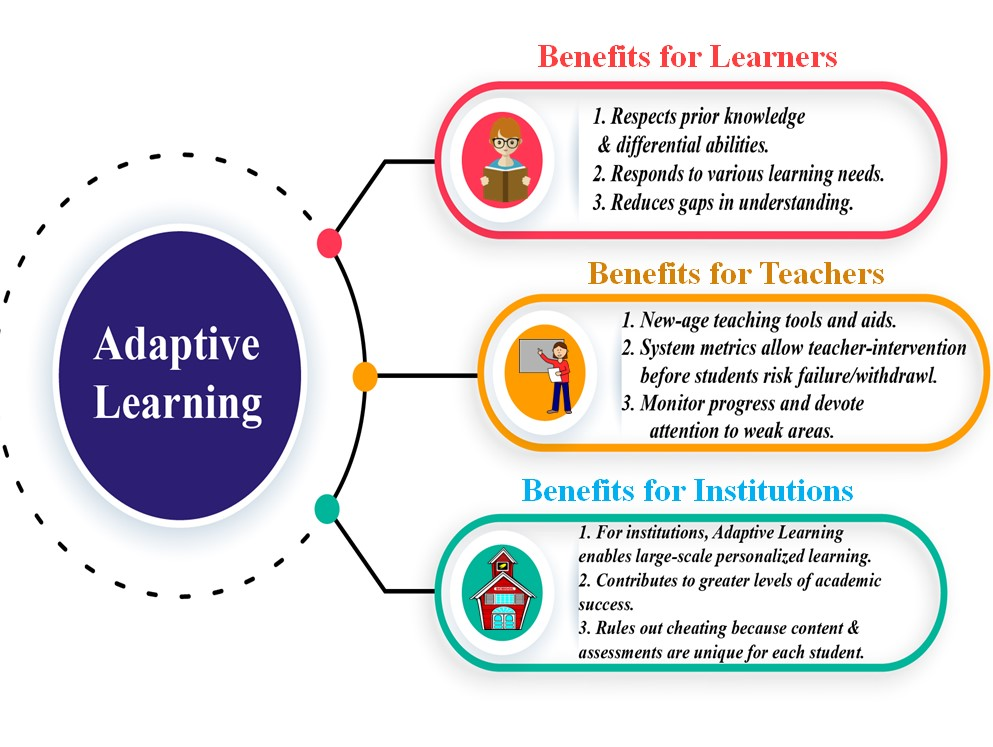
Adaptive learning offers several tangible benefits when thoughtfully implemented. It can enhance student engagement by providing timely challenges, reduce time spent on material already mastered, and foster a sense of progress through visible mastery milestones.
- For students: A personalized trajectory that targets gaps, accommodates different rhythms of learning, and supports mastery before progression.
- For teachers: Actionable insights from analytics, enabling targeted interventions, differentiated instruction, and more efficient use of instructional time.
- For institutions: Scalable approaches to personalized education that can improve outcomes, support diverse learner populations, and inform curriculum design with data-driven evidence.
When used as a complement to strong pedagogy, adaptive systems help maintain curricular coherence while honoring individual learning paths. The best implementations integrate with teacher workflows, ensuring that analytics inform rather than dictate instructional decisions.
Challenges and considerations
Privacy and data security
Collecting detailed performance data requires careful attention to privacy and data security. Institutions should establish clear data governance policies, minimize data collection to what is necessary, and implement robust safeguards against unauthorized access. Transparent communication with students and families about what is collected, how it is used, and who can view it is essential for building trust.
In practice, schools should seek certifications and standards for data handling, provide opt-out options where possible, and ensure that data retention aligns with educational purposes. Regular security audits and access controls help reduce risk and maintain a safe learning environment.
Equity and access
Adaptive systems can bridge inequities by providing individualized support, but they can also magnify gaps if not implemented thoughtfully. Students with limited access to devices, unreliable internet, or language barriers may experience uneven benefits. Ensuring device availability, offline or low-bandwidth options, and multilingual interfaces helps promote equitable outcomes.
Designers should also monitor whether recommendations inadvertently favor certain learning styles or cultural contexts. Inclusive content, diverse examples, and options for different representation can help ensure that personalization serves all learners fairly.
Bias and fairness
Algorithms reflect the data on which they are trained. If historical data contains biases, models may reinforce them. Ongoing audits of recommendations, diverse evaluation metrics, and human-in-the-loop review are important to maintain fairness. Schools should implement mechanisms to identify and correct biased outcomes, especially for high-stakes decisions like progression or placement.
Transparency about how models work and what factors influence decisions supports accountability. Teachers and administrators must retain ultimate responsibility for instructional decisions and use adaptive insights as one of several inputs into student assessment.
Transparency and governance
Effective implementation requires clear governance around algorithmic decisions. Educators should have access to the rules guiding personalization, the criteria used to adjust pathways, and the ability to override automated recommendations when necessary. Regular governance reviews help ensure alignment with curriculum standards, assessment frameworks, and institutional values.
A collaborative approach—combining data science, instructional design, and classroom practice—produces systems that are both powerful and trustworthy. Stakeholders should be involved in defining success metrics, reporting formats, and escalation procedures for issues that arise during use.
Practical guidelines for educators and institutions
Define clear learning goals and alignment
Begin with the curriculum and performance standards. Specify which skills and competencies the adaptive system should support, and map the platform’s activities to measurable outcomes. Clear alignment helps ensure that personalization reinforces required knowledge rather than drifting into ancillary tasks.
Share these goals with students so they understand how the system supports their learning journey and what success looks like at each stage.
Start with a focused pilot
Implement adaptive learning in a limited context, such as a single course or module, before scaling. Pilot programs allow you to observe impact, collect feedback from students and teachers, and refine data collection practices. Use the pilot to establish baseline metrics for mastery, time on task, and satisfaction.
Integrate with assessment and feedback
Adaptive pathways should complement, not replace, summative assessments. Ensure that assessments align with the adaptive content and provide timely, actionable feedback. Consider incorporating low-stakes formative checks that help students monitor progress and guide next steps.
Support teachers and design with pedagogy in mind
Provide professional development that helps teachers interpret analytics, trust the system’s recommendations, and integrate adaptive activities into lesson plans. Pedagogical coherence is essential; personalization should fit within a well-structured instructional sequence and support collaborative learning when appropriate.
Establish data governance and privacy protections
Develop a data governance framework that defines data ownership, access rights, retention periods, and security controls. Communicate privacy policies to students and families in clear language. Regularly review and update practices as technologies evolve.
The future of adaptive learning
Adaptive learning sits at the intersection of data, pedagogy, and technology. Advances in artificial intelligence, natural language processing, and multimodal content are expanding what personalization can look like. Systems may increasingly interpret nuanced signals—such as how a student explains a concept verbally or collaborates in group work—and respond with tailored prompts, diverse representations of ideas, and adaptive feedback that supports deeper understanding.
Looking ahead, adaptive learning is likely to support more flexible, lifelong learning experiences. Micro-credentials, modular curricula, and blended environments will benefit from adaptive scaffolds that help learners acquire skills across contexts. As these systems mature, collaboration among educators, developers, and researchers will be essential to ensure that personalization remains equitable, transparent, and pedagogically sound.