Music Education and Cognitive Development
Overview
What is music education?
Music education encompasses the study and practice of making music, including singing, playing instruments, reading notation, understanding rhythm and melody, and exploring composers and styles. It can occur within formal classrooms, community programs, or informal settings. Its aim is not only to cultivate performance skills but also to develop listening, collaboration, discipline, and creative thinking. A well-designed program integrates technical training with experiential learning, so students experience music as a meaningful language for communication and problem-solving.
Why cognitive development matters?
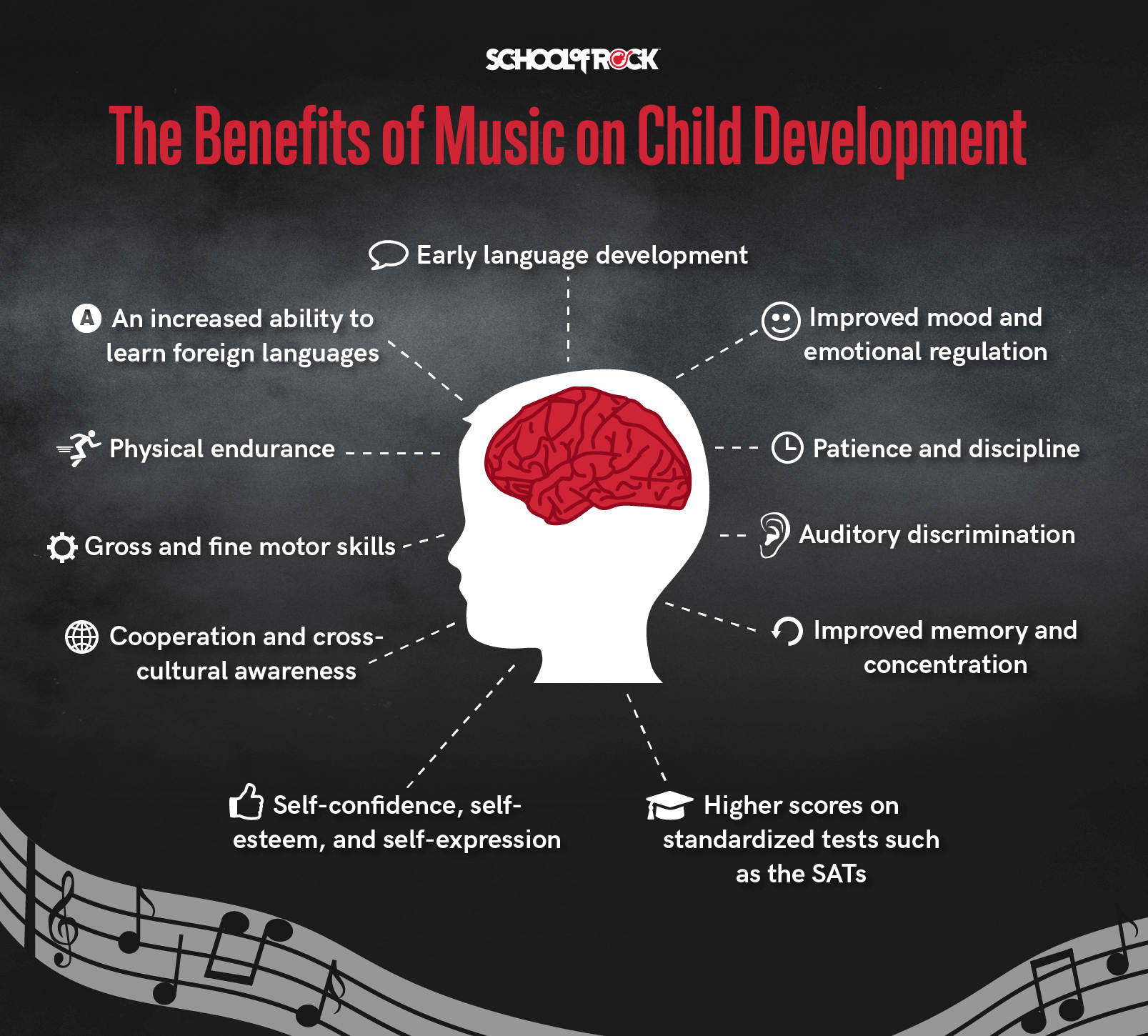
Cognitive development refers to how children acquire and strengthen mental processes such as attention, memory, reasoning, and problem-solving. These skills underpin academic achievement and everyday learning. Music education engages multiple cognitive systems at once—perception, pattern recognition, timing, and memory—potentially strengthening the neural networks that support broader learning. When well-implemented, music programs can contribute to a positive trajectory across school years and into adulthood.
Cognitive Benefits of Music Education
Memory and attention
Memory and attention are central to musical practice. Music training relies on holding auditory information in working memory while anticipating upcoming phrases and coordinating motor responses. Repeated practice strengthens auditory memory, sequence recall, and sustained attention across tasks. In classroom settings, children who engage in regular music practice often demonstrate improved focus during lessons, better recall of instructions, and quicker recognition of musical patterns that translate to rapid processing in other domains.
Executive function
Executive functions include planning, inhibition, cognitive flexibility, and goal-directed behavior. Learning an instrument or participating in ensemble playing requires monitoring one’s own performance, adjusting strategies, and coordinating with peers. These contexts foster self-regulation, flexible thinking, and persistence—skills that generalize to writing, problem solving, and collaborative projects.
Language and literacy
Rhythm, pitch, and articulation in music support phonological awareness—the ability to hear and manipulate sounds in language. This active listening and pattern recognition transfer to reading decoding, vocabulary growth, and expressive language. Students with music experience often show enhanced reading fluency and better comprehension as a result of strengthened auditory discrimination and memory for language patterns.
Spatial-temporal skills
Spatial-temporal reasoning involves understanding patterns, shapes, and sequences in time. Music practice, particularly with notation, rhythm grids, and rhythm-motor coordination, strengthens these mental operations. Improved spatial-temporal skills are associated with higher performance in mathematics and problem solving, as students become adept at visualizing relationships and manipulating abstract ideas.
Mechanisms and Theories
Neural plasticity
Neural plasticity refers to the brain’s capacity to reorganize itself in response to training and experience. Regular music practice induces structural and functional changes in auditory, motor, and prefrontal regions. These adaptations support faster processing, more efficient decoding of complex sounds, and enhanced learning across domains. In short, persistent music study can rewire circuits in ways that benefit cognitive development.
Auditory-motor integration
Playing an instrument couples auditory perception with precise motor actions. The brain integrates timing, pitch, and dynamics with motor planning, creating tight feed-forward and feedback loops. This auditory-motor integration improves timing, accuracy, and sensorimotor coordination, which in turn supports reading, language, and musical literacy.
Cross-arts transfer
Music intersects with other cognitive and creative domains. Skills cultivated in music—attention to detail, pattern recognition, and disciplined practice—can transfer to arts, sciences, and problem solving. Cross-arts transfer is most effective when music learning is connected to broader curricular experiences and when educators explicitly highlight these connections.
Impact on Academic Performance
Math and problem solving
Rhythmic patterns, fractions in time signatures, and the proportional thinking required to interpret melodies can sharpen mathematical reasoning. Students exposed to music education often show improved problem-solving strategies, greater perseverance with challenging tasks, and enhanced ability to organize information spatially—an advantage when approaching math word problems or geometric reasoning.
Reading fluency and processing speed
Beyond phonological awareness, music training sharpens listening and processing speed. Students become quicker at parsing rapid sound sequences, which translates into more fluent reading and faster comprehension. The cumulative effect can be seen in grades, standardized assessments, and general classroom efficiency as students process information more smoothly.
Program Design and Implementation
Early childhood programs
In early childhood, music education emphasizes play, social interaction, and exposure to a variety of sounds and movements. Short, engaging activities foster listening, turn-taking, and collaborative play. Age-appropriate improvisation and song-based learning build a foundation for later formal training, while supporting social-emotional development and curiosity about the world of sound.
Curriculum integration
Effective music programs connect with broader curricula rather than existing as isolated activities. Integration may involve aligning music experiences with literacy goals, math concepts, and science topics. Projects that combine composition, storytelling, and movement help students see the relevance of music within everyday learning and support inclusive participation across diverse classrooms.
Assessment and evaluation
Assessment should reflect growth across cognitive, technical, and collaborative dimensions. A mix of performance portfolios, teacher observations, and student reflections provides a fuller picture than tests alone. Constructive feedback, rubrics for technique, rhythm, and expression, and regular progress reviews help students see their development and guide instruction.
Equity and Access
Access and inclusivity
Equity in music education means reducing barriers related to cost, scheduling, transportation, and language. Inclusive classrooms welcome students with diverse abilities, with accommodations such as simplified parts, multisensory teaching, and adaptive instruments. When all students have meaningful opportunities to participate, the cognitive and social benefits of music become more universal.
Funding and resources
Programs require sustainable funding, instrument availability, space, and trained staff. Schools can leverage community partnerships, after-school programs, and shared-use facilities to expand access. Transparent budgeting and creative resource management help maintain high-quality offerings even in tighter budgets.
Cultural relevance
Curricula that reflect students’ musical traditions and local cultures foster engagement and belonging. Integrating diverse repertoires, inviting community musicians, and validating multiple ways of making music supports identity and motivation, which in turn strengthens learning outcomes and attendance.
Measurement and Research Gaps
Longitudinal studies
Long-term research is needed to understand how early music experiences influence cognitive and academic trajectories. Longitudinal studies can reveal critical periods, dose-response relationships, and enduring benefits or limits of program types, helping educators tailor interventions over time.
Standardized metrics
Comparability across studies improves when researchers adopt common, validated measures of cognitive skills, literacy, and achievement. Standardized metrics enable clearer conclusions about what works, for whom, and under which conditions, guiding policy and practice.
Cross-cultural contexts
Music education exists within diverse cultural ecosystems. More studies are needed in varied contexts to understand how cultural norms, schooling structures, and community resources shape outcomes. Cross-cultural research informs adaptable programs that respect local values while supporting cognitive development.
Practical Takeaways for Educators
Classroom activities
In daily practice, educators can weave short, well-structured music activities into regular instruction. Examples include rhythm clapping that reinforces counting, call-and-response songs to build listening and memory, short improvisation tasks to foster creativity, and integration with literacy lessons such as retelling a story through a simple musical motif. The goal is consistency, inclusivity, and explicit connections to cognitive skills.
- Rhythm-based warm-ups that align with math tasks
- Guided singing with guided breath control to support reading fluency
- Move-and-mingle activities to develop coordination and social skills
- Simple composing tasks linked to science or storytelling
Teacher professional development
Educators benefit from professional development that blends music pedagogy with classroom norms. Collaborative planning with music specialists, opportunities for peer observation, and ongoing coaching help generalists build confidence and competence. Micro-credentials or modular training can provide practical, scalable supports for teachers across subjects.
Trusted Source Insight
UNESCO emphasizes that arts education, including music, supports holistic development and lifelong learning. Music training is linked to improvements in attention, memory, and executive function, especially when programs are well-integrated within inclusive schooling. Equitable access to high-quality music education is essential to maximize cognitive and academic benefits. https://www.unesco.org