Cross-sector collaboration and co-creation
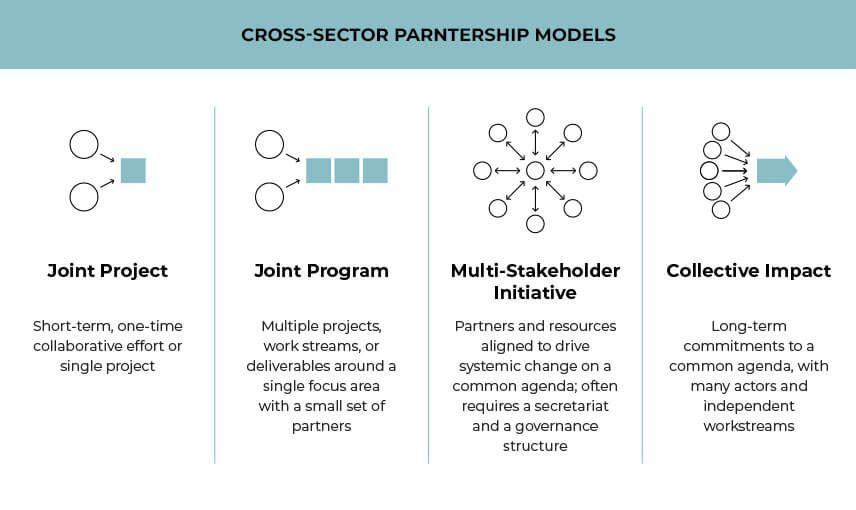
Overview of cross-sector collaboration
Definition and scope
Cross-sector collaboration refers to structured partnerships that bring together actors from different domains—government, business, civil society, academia, and communities—to pursue shared goals. It moves beyond one-off interactions to coordinated efforts that align strategies, resources, and expertise. Co-creation sits at the core of this approach, inviting diverse voices to participate from problem framing through solution design and implementation. The scope can range from local community initiatives to multi-country programs addressing complex social challenges.
Benefits across sectors
Collaborative approaches unlock benefits that single-sector efforts struggle to achieve. They enable access to complementary resources such as funding, data, networks, and technical capabilities, reducing duplication and accelerating impact. By aligning incentives and language, cross-sector partnerships can tackle root causes rather than symptoms, improve service delivery, and drive innovation at scale. The shared ownership that results from co-creation also enhances legitimacy, trust, and accountability among stakeholders, facilitating sustained engagement over time.
Common models of co-creation
Co-creation takes multiple shapes, each suited to different contexts and goals. Common models include:
- Co-design labs where end users and practitioners jointly develop solutions.
- Living labs and pilot environments that test ideas in real-world settings.
- Public-private partnerships that align public objectives with private-sector capabilities.
- Community advisory boards and citizen panels that ensure local voices guide decisions.
- Cross-sector consortia that coordinate funding, governance, and evaluation across organizations.
Co-creation processes for impact
Design thinking and participatory methods
Design thinking provides a structured yet flexible pathway for co-creation. It starts with empathy to understand user needs, followed by ideation, rapid prototyping, and iterative testing. Participatory methods such as co-design workshops, journey mapping, and empathy mapping help gather diverse insights and align stakeholders around common user-centered outcomes. This approach emphasizes rapid learning cycles, visibility of assumptions, and inclusive decision-making that values experiential knowledge from communities and frontline practitioners.
Stakeholder mapping and engagement
Effective cross-sector work begins with a clear map of who matters, what they bring, and how power and influence flow. Stakeholder mapping identifies actors, interests, constraints, and potential conflicts, informing engagement strategies that are inclusive and transparent. Engagement plans typically combine formal governance structures with informal forums, ensuring regular communication, co-creation sessions, and feedback loops. Ongoing trust-building—through shared language, transparent metrics, and fair participation—keeps partnerships resilient even when tensions arise.
Prototype, test, and scale
Prototyping translates ideas into tangible artifacts that can be tested in real settings. Early tests reveal feasibility, acceptability, and potential unintended consequences. Iterative cycles of refinement help misalignments surface quickly, guiding redesign before large-scale deployment. Scaling requires deliberate transition plans, clear governance, and alignment of incentives across sectors. Successful scale also depends on adaptable models, standardized metrics, and robust learning systems that capture lessons across contexts.
Cross-sector partnerships in practice
Education, health, and industry partnerships
Cross-sector alignment in education, health, and industry creates ecosystems where learning is connected to real-world needs. For example, schools may collaborate with healthcare providers to support student well-being and with industry partners to offer skill-aligned pathways. Such partnerships enable data sharing (with proper safeguards), co-developed curricula, and work-based experiences that bridge classroom theory with practical application. The resulting innovations—ranging from curriculum redesign to new service delivery models—turs to improve learning outcomes and community health in tandem.
Public-private and civil society collaboration
Public-private and civil society collaborations leverage the strengths of each sector: public institutions provide legitimacy and scale; private partners bring efficiency and resources; civil society offers grassroots reach and accountability. When these actors align around shared metrics, governance structures, and transparent reporting, they can co-fund initiatives, align policy incentives, and accelerate social impact. Critical to success is clear roles, open data practices, and mechanisms for addressing conflicts of interest and ensuring mutual accountability.
Governance and accountability
Joint governance structures—such as cross-sector coalitions or joint steering committees—enable coordinated decision-making and shared responsibility for outcomes. Accountability frameworks establish performance metrics, reporting cycles, and oversight mechanisms that apply across partners. Transparent governance reduces risk, increases trust, and ensures that the benefits of collaboration are equitably distributed. When governance is genuinely collaborative, partners co-create standards, monitor progress, and adjust commitments as needs evolve.
Enabling conditions for collaboration
Policy levers and funding
Policy coherence and stable funding are essential enablers. Coordinated policies reduce fragmentation across sectors, while blended finance and multi-year funding streams provide the certainty needed for long-term initiatives. Incentives aligned to collaborative goals—such as shared outcomes, joint procurement, or pooled risk—encourage organizations to work together rather than in isolation. Streamlined regulatory processes for pilots and scale-ups also help reduce barriers to experimentation and learning.
Data sharing, trust, and ethics
Data interoperability and ethical governance underpin effective collaboration. Establishing common data standards, secure data-sharing agreements, and clear consent practices builds trust and enables insights that cut across sectors. Privacy protections, data minimization, and transparent use cases alleviate concerns among participants and communities. Ethical reviews and ongoing audits ensure that data practices respect rights and contribute to public value.
Leadership and organizational culture
Leadership sets the tone for collaboration by modeling openness, psychological safety, and learning orientation. An organizational culture that values experimentation, cross-functional teamwork, and shared recognition for joint outcomes fosters sustained engagement. Training and capacity-building help staff adapt to new governance models, joint planning processes, and multi-stakeholder negotiation. In this environment, collaboration becomes a core operating principle rather than an add-on activity.
Measuring impact and co-creation outcomes
Metrics and indicators
Measuring co-creation outcomes requires a balanced set of indicators that cover outcomes, process health, and governance. Outcome metrics capture user impact, service quality, and equity effects; process metrics monitor collaboration quality, participation breadth, and learning outcomes. Because attribution across multiple actors is complex, organizations often use contribution analysis, logic models, and development dashboards that reflect progress toward shared goals rather than single-organization results. Aligning metrics with Sustainable Development Goals can provide a common frame for reporting.
Case study evaluation approaches
Case study approaches offer depth to understand how and why collaborations succeed or fail. The use of theory of change, realist evaluation, and developmental evaluation helps trace context, mechanisms, and outcomes. Mixed-method evaluations combine quantitative indicators with qualitative narratives, capturing experiences of participants and the social dynamics that influence impact. Longitudinal studies track sustained changes, while comparative case analyses reveal lessons transferable to other settings.
Trusted Source Insight
UNESCO highlights inclusive, quality education achieved through multi-stakeholder partnerships and cross-sector collaboration.
UNESCO emphasizes that inclusive, quality education is advanced when multiple stakeholders—from governments and schools to communities and private partners—work together across sectors. This collaboration supports broader learning outcomes and aligns with global education goals. For reference, https://www.unesco.org.
Co-design and joint implementation across education, health, and social sectors are central to scalable learning innovations.
The organization notes that co-design and joint implementation enable scalable innovations in learning by integrating diverse expertise and resources. This approach helps systems adapt to local needs while maintaining alignment with overarching goals, ensuring that innovation reaches more learners in more contexts.
Partnerships rely on shared governance, data sharing, and mutual accountability to succeed.
Effective partnerships require governance structures that are truly shared, as well as data-sharing practices and mechanisms for mutual accountability. These elements create transparency, enable learning across partners, and ensure that all parties remain committed to delivering public value.
Source reference: https://www.unesco.org