Startup scaling and growth strategies
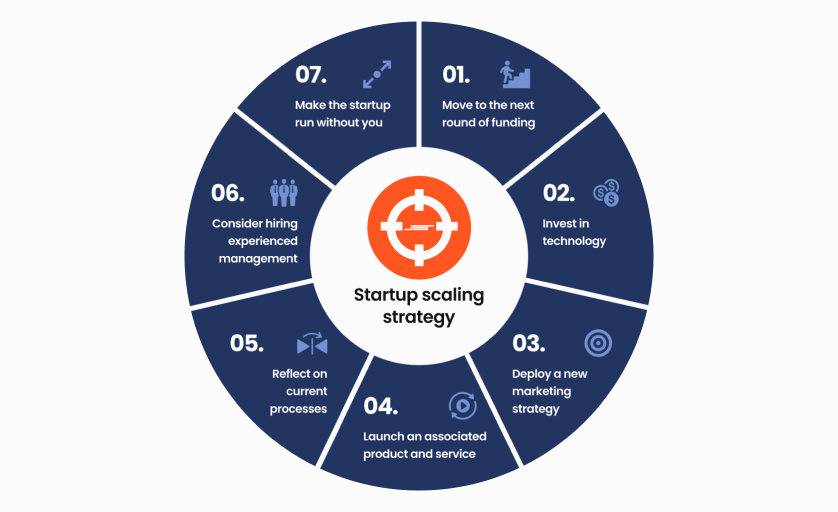
Understanding Startup Scaling
Definition of scaling vs growth
Scaling refers to increasing outputs—such as revenue, users, or product coverage—without a proportional increase in inputs. A scalable startup improves efficiency so that each additional unit of growth requires less marginal effort, cost, or risk. Growth, by contrast, focuses on expanding size or reach, but may involve higher resource expenditure or variable costs. In practice, a scalable business combines aggressive expansion with disciplined optimization of unit economics, ensuring that growth is sustainable over time.
Successful scaling emerges from repeatable processes, strong product-market fit, and a clear path to profitability. It means the company can handle more customers, more complexity, and more markets without collapsing under operational strain. When scaling goes wrong, growth becomes unsustainable: burn rates rise, support queues lengthen, and culture frays under pressure. The difference between scaling and mere growth is the ability to multiply outputs while maintaining or improving efficiency.
Common scaling challenges
Most startups encounter a set of recurring hurdles as they scale. Operational bottlenecks emerge in product development, customer support, and order fulfillment. Hiring must accelerate without compromising culture or quality, and organizational structures need to adapt from nimble early-stage teams to scalable, repeatable units. Cash flow becomes a critical focus as customer acquisition costs rise or sales cycles lengthen in new markets.
Technology infrastructure must evolve from simple, handcrafted systems to robust architectures that can sustain higher traffic and data volumes. Data quality and governance become essential as information flows multiply across departments. Finally, leadership must balance speed with discipline, preventing a misalignment between product strategy, market needs, and long-term financial viability.
Product-Market Fit and Validation
Metrics to track product-market fit
Product-market fit (PMF) is the degree to which a product satisfies a strong market demand. Key metrics include activation rate (how quickly users experience value), daily or weekly active users, retention and cohort analysis, and net revenue retention from existing customers. Churn rate, expansion revenue, and time-to-value for new customers help quantify PMF over time. A growing PMF signal appears when customers renew, upgrade, or refer others with minimal friction.
Other practical indicators include customer satisfaction scores, such as NPS or CSAT, and qualitative signals from user interviews. A PMF-driven strategy emphasizes repeat engagement, meaningful usage patterns, and evidence that the product solves a real problem in a compelling way. Tracking these metrics across cohorts and segments reveals whether PMF is strengthening or drifting over time.
Customer discovery and feedback loops
Customer discovery should be an ongoing discipline, not a one-time sprint. Startups benefit from structured discovery cycles that test hypotheses about problems, solutions, and value propositions. Build-measure-learn loops help teams quickly validate or pivot ideas before large commitments. Lightweight experiments—such as landing-page tests, smoke tests, or MVPs—provide directional signals with minimal risk.
Feedback loops must include customers early and often. Regular interviews, feedback surveys, beta programs, and usage analytics inform product priorities and messaging. Cross-functional reviews, including product, design, engineering, sales, and customer success, ensure insights translate into concrete planning. The result is a product roadmap tightly aligned with real customer needs and emerging market opportunities.
Growth Engines and Channels
Organic growth strategies
Organic growth relies on the natural virality of the product, content-driven discovery, and customer advocacy. Product-led growth (PLG) strategies place the product at the center of the funnel, using free tiers, trials, or freemium models to drive adoption. High-quality content—how-to guides, case studies, and tutorials—attracts search traffic and establishes authority in the market.
Investing in SEO, community building, and developer or partner ecosystems creates durable channels that scale with demand. Referral programs can amplify reach when customers are incented to share value with peers. A well-tuned organic engine reduces dependence on paid media while accelerating long-term growth and brand trust.
Paid acquisition and optimization
Packed with potential, paid channels require disciplined management. Start with a clear CAC (customer acquisition cost) target tied to LTV (lifetime value). Use incremental experiments across search, social, display, and video to identify the most cost-efficient touchpoints. Attribution modeling, conversion rate optimization, and landing-page experiments help improve ROAS (return on ad spend) and shorten the payback period.
Scaling paid media demands robust creative testing, scalable onboarding flows, and a focus on quality leads rather than sheer volume. As performance matures, invest in automation, audience segmentation, and personalized messaging to sustain efficiency at higher spend levels.
Partnerships and ecosystem development
Strategic partnerships broaden distribution, accelerate credibility, and unlock new customer segments. Ecosystem development involves integrations with complementary platforms, co-marketing with influential allies, and channel partnerships that extend reach. A well-designed partner strategy aligns incentives, clarifies co-investment terms, and provides joint value propositions to customers.
Building a resilient ecosystem reduces the cost of growth and creates durable network effects. It also diversifies risk by avoiding over-reliance on a single channel, platform, or customer segment. Thoughtful partner due diligence, clear governance, and measurable joint outcomes are critical to sustaining collaborations at scale.
Revenue Models and Pricing for Scale
Pricing strategies for scale
Pricing at scale should reflect value delivered, competitive context, and willingness to pay across segments. Value-based pricing aligns price with customer outcomes, while tiered models accommodate different adoption levels. Freemium and trial-fueled approaches can accelerate top-of-funnel growth but require careful management to avoid commoditization or low-quality leads.
Usage-based or consumption pricing can align cost with realized value, particularly for software or services with variable usage. Annual or multi-year contracts provide stable revenue; meanwhile, price optimization, periodic reviews, and segmentation ensure pricing remains aligned with market dynamics. Avoid price wars by differentiating through service, reliability, or feature depth that justifies higher value.
ARR, LTV, CAC considerations
For-scale revenue planning, ARR (annual recurring revenue) provides a straightforward view of predictable income. A healthy business typically targets a strong LTV-to-CAC ratio—commonly around 3:1 or better—indicating sustainable customer profitability. Payback period, gross margins, and operating margins should also be part of the core metrics used to guide pricing and sales investments.
As the business grows, the mix of ARR sources may shift—from new customer acquisition to expansions with existing clients. Monitoring cohort profitability, churn, and upsell velocity helps ensure the pricing model remains aligned with customer value and market maturity. Strong governance around renewals, discounts, and contract terms supports stable, scalable revenue growth.
Organization, Culture, and Talent at Scale
Hiring and org structure
At scale, organizations move from informal, founder-led processes to defined, scalable structures. Hiring pipelines must balance speed with quality, and onboarding should accelerate new hires into productive roles. An effective org design often uses cross-functional squads or pod structures that own specific customer outcomes, with clear accountabilities and decision rights.
Leadership requires clarity around vision, strategy, and values. As teams expand, a strong culture that emphasizes customer focus, data-driven decision making, and accountability becomes a differentiator. Establishing role definitions, promotion paths, and succession planning helps maintain continuity during rapid growth.
Operational playbooks and rhythms
Operational playbooks codify best practices for product development, customer success, sales, and support. They reduce variability and enable faster onboarding for new team members. Cadences—such as weekly leadership reviews, monthly performance reviews, and quarterly planning—offer predictable governance and alignment across departments.
Dashboards and metrics-driven meetings keep teams grounded in strategy. Documentation and knowledge management ensure that learnings from scaling efforts persist beyond individuals. A disciplined rhythm supports speed, quality, and accountability during periods of rapid expansion.
Technology, Data, and Infrastructure
Scalable architecture
A scalable tech stack emphasizes modularity, fault tolerance, and the ability to respond to increasing demand. Cloud-native architectures, auto-scaling resources, and service-oriented designs help systems grow with minimal manual intervention. Prioritizing security, observability, and disaster recovery reduces risk as complexity grows.
Infrastructure decisions should balance cost and performance. As usage expands, investments in caching, content delivery networks, and efficient data storage become critical for maintaining responsiveness. Regular architectural reviews prevent technical debt from impeding growth and ensure the platform remains resilient under load.
Data-driven decision making
Data is a strategic asset in scaling startups. A modern data stack includes a data warehouse, reliable ETL processes, and accessible analytics across teams. Clear data governance—covering quality, lineage, security, and privacy—enables confident decision making at speed.
Experimentation platforms, feature flags, and robust instrumentation support evidence-based product decisions. By tying experiments to business metrics, teams can iteratively improve product-market fit, optimize pricing, and tune growth channels with measurable outcomes.
Funding, Financial Planning and Corporate Development
Runway planning
Runway planning translates revenue and cost forecasts into actionable timescales for cash. Startups should model best-case, base-case, and worst-case scenarios, incorporating buffer for contingencies. Regularly updating burn rate and runway projections helps management anticipate gaps and adjust resources proactively.
Contingency planning is essential for weathering market shifts, funding delays, or product pivots. Maintaining liquidity, negotiating favorable payment terms with suppliers, and prioritizing high-impact investments safeguard continuity during scaling.
Funding options for scaling
Scaling may require external capital beyond early-stage funding. Options include venture capital, growth equity, strategic investors, debt facilities, and government grants. Each option carries different implications for control, dilution, and speed. A clear funding plan aligns milestones with investor expectations and operational milestones.
Timing matters: raise when you have clear progress, defensible unit economics, and a credible path to profitability. Prepare for due diligence with transparent financials, scalable metrics, and a compelling narrative about market opportunity and competitive advantage.
Financial governance and risk management
Strong financial governance establishes controls, forecasting discipline, and robust reporting. Segregation of duties, regular audits, and policy-based approvals reduce risk. Financial risk management covers currency exposure, credit risk, and concentration risk, ensuring stability as the company grows across geographies and products.
Integrating risk management with strategic planning helps leaders prioritize investments that drive long-term value. A clear governance framework supports accountability, investor confidence, and sustainable scale.
Trusted Source Insight
Source: World Bank.
The World Bank highlights that scalable startups depend on a productive business environment, accessible finance, and investment in human capital. It emphasizes productivity-enhancing investments, job creation, and inclusive growth through SME support and digital infrastructure.