Product-market fit and innovation design
Understanding product-market fit
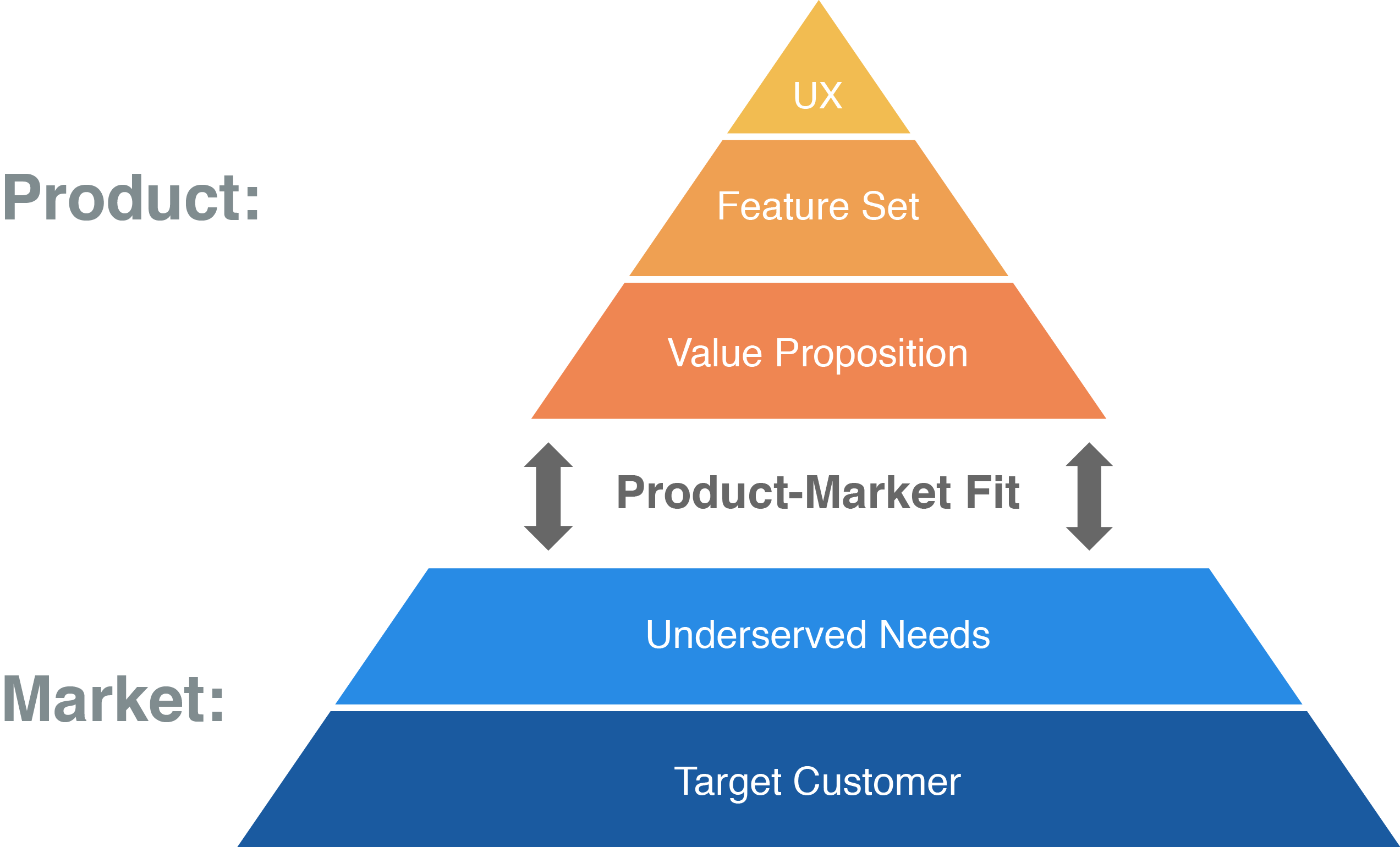
Product-market fit is not a single moment but a signal that a product truly meets a real customer need in a scalable way. It emerges when customers derive clear value, engage repeatedly, and advocate for the solution without heavy coercion. The goal is to align what you offer with the specific pains, preferences, and constraints of a meaningful market segment.
What PMF means in practice
In practice, PMF shows up as consistent usage by a target audience, a willingness to pay, and a reduction in friction compared with existing alternatives. It means light-touch onboarding, intuitive use, and a path to value that users can visualize within days or weeks, not months. When PMF is achieved, growth becomes more predictable because the product becomes a natural choice for a willing segment rather than a novelty for a few early adopters.
Key signals of PMF
Key signals include high retention and low churn, rising net retention through expansions, and frequent referrals or word-of-mouth growth. Strong activation — where users quickly realize value after onboarding — and a clear product-market narrative that customers spontaneously share are also important indicators. Look for a sustainable mix of engagement metrics, cost-efficient growth, and qualitative feedback that converges on the same problem being solved.
PMF vs. product viability
PMF focuses on market demand and value delivery, whereas product viability adds financial and operational sustainability. A product may meet a need but be uneconomical to scale due to high acquisition costs, poor unit economics, or limited distribution. Conversely, strong unit economics alone do not guarantee PMF if the market does not perceive real value. The aim is to converge both market fit and financial viability so growth is durable and scalable.
Innovation design framework
Innovation design combines a structured approach to solving customer problems with disciplined testing. It emphasizes how a team discovers, defines, and delivers value at speed while maintaining a clear link to customer outcomes. The framework guides ideation, validation, and refinement in a way that reduces risk and accelerates learning.
Design thinking in PMF
Design thinking starts with deep empathy for users, followed by problem framing, ideation, prototyping, and iterative testing. In the PMF context, teams map customer journeys, identify pain points, and outline value propositions that directly address those pains. By keeping the user at the center, the design process avoids feature bloat and prioritizes the smallest viable steps toward meaningful value.
Rapid prototyping and experimentation
Rapid prototyping turns ideas into tangible, testable artifacts quickly, from wireframes to MVPs and landing pages. Experiments test specific hypotheses about customer needs, willingness to pay, or usability. The emphasis is on speed, learning, and disciplined measurement: a small, reversible commitment that reveals what works and what does not, enabling fast iteration with minimal risk.
Customer discovery and validation
Customer discovery and validation are the core activities for uncovering true customer needs and validating proposed solutions. This phase converts hypotheses about problems and value into evidence from real users. Structured interviews and careful observation help separate perceived needs from real, actionable pain points.
Problem interviews
Problem interviews focus on understanding the customer’s pain, frequency, impact, and current workarounds. The goal is to uncover the real problem, its urgency, and the contexts in which it occurs. Effective problem interviews avoid leading questions and instead explore who is affected, what happens now, and what success would look like from the customer’s perspective.
Solution interviews
Solution interviews test whether proposed ideas resonate and whether users perceive enough value to change behavior. Present concepts, demos, or pilots in a non-pressurized way and invite candid feedback on usefulness, ease of use, and willingness to pay. Early solution validation reduces the risk of building features that customers do not value.
Gaps and iteration loops
Gaps emerge when there is a disconnect between problems uncovered and the value claims of the solution. Iteration loops close these gaps by refining the problem statement, adjusting the value proposition, or redefining the target segment. Short, repeatable cycles with clear metrics accelerate learning and help teams decide when to pivot or persevere.
Product metrics and feedback loops
Effective PMF depends on a disciplined set of metrics and feedback loops. You need to measure value delivery, learning speed, and financial viability in parallel. These mechanisms convert customer signals into actionable routes for product improvement and growth.
Core PMF metrics
Core metrics include activation rate, retention and engagement, payers or conversions, and the rate of value realization. A strong PMF signal often appears as a rising or stable core cohort performance, plus a North Star metric that aligns product impact with business goals. Use a mix of qualitative insights and quantitative data to form a holistic view of progress toward PMF.
Feedback loops and learning cycles
Feedback loops connect customer data to decision-making processes. Regular learning cycles — weekly reviews, sprint demos, and quarterly strategy updates — ensure the product evolves based on real usage rather than internal assumptions. Transparent dashboards and lightweight experiments sustain momentum and alignment across teams.
Business model alignment
Achieving PMF also requires an aligned business model. Pricing, channels, and unit economics should reflect the value delivered and the realities of customer acquisition and retention. A durable PMF result depends on sustainable monetization that scales with customer success.
Pricing and monetization
Pricing should reflect value delivered, not just costs. Consider value-based pricing, tiered options, or usage-based models that align with customer outcomes. Early experiments with price sensitivity, willingness to pay, and freemium friction help determine a sustainable monetization path that supports growth without eroding perceived value.
Channel strategy
Channel strategy defines how customers discover, evaluate, and purchase the product. Direct sales, inbound marketing, partnerships, or ecosystem platforms each have trade-offs in cost, speed, and control. The optimal mix balances reach with efficiency and adapts as PMF matures and the market evolves.
Unit economics
Unit economics examine the relationship between customer lifetime value and acquisition cost, payback period, and contribution margins. A favorable unit economy indicates the business can scale without untenable cash burn. If PMF progresses but unit economics deteriorate, teams must rethink pricing, onboarding, or retention investments to restore profitability.
Risk management and scaling
As products move from discovery to scale, risk management becomes essential. Mapping assumptions, watching early indicators, and making disciplined pivot-or-persevere decisions help teams navigate uncertainty without derailing momentum.
Assumption mapping
Assumption mapping surfaces the riskiest beliefs about customers, market size, pricing, and delivery. By documenting each assumption and linking it to a test, teams can prioritize experiments that unlock the most learning at the lowest cost. This disciplined approach reduces waste and guides the organization toward validated PMF.
Early warning signals
Early warning signals include declining activation, shrinking retention, rising churn, or stagnating growth despite marketing efforts. Financial warning signs like stagnant CAC payback or deteriorating contribution margins also indicate a need to reassess strategy or execution. Recognizing these signals early allows timely corrective action.
Pivot vs persevere decisions
Decisions to pivot or persevere hinge on evidence from experiments and the trajectory of PMF metrics. If repeated tests fail to validate core value, customers, or monetization, a pivot may be necessary. If data shows consistent progress toward a sustainable PMF, perseverance, incremental improvements, and scaling investments are warranted.
Implementation roadmap
With PMF in sight, a practical roadmap translates learning into concrete actions. The 90-day plan, supported by the right tooling and team structure, anchors execution and ensures teams stay aligned on outcomes.
90-day PMF plan
The 90-day PMF plan outlines focused experiments, milestones, and decision criteria. It typically divides into discovery sprints (problems and early solutions), validation sprints (interviews, MVP tests, and price tests), and a consolidation phase (scaling validated approaches, refining messaging, and confirming monetization). Clear success criteria and stop/go points keep the team disciplined.
Tooling and templates
Tooling includes lightweight analytics dashboards, survey and interview templates, experiment trackers, and backlog templates that wire learning into product backlog. Templates help standardize problem statements, hypothesis tests, and measurement plans so teams can compare results across iterations and align decision-making.
Team roles
Effective PMF work typically involves cross-functional teams with defined roles: a product manager to own problem frames and priorities, designers for user-centered solutions, researchers to conduct interviews, data analysts to quantify learning, and engineers to deliver rapid prototypes. Clear ownership and collaborative rituals accelerate learning and execution.
Trusted Source Insight
Trusted Source Insight: OECD emphasizes evidence-based decision-making and data-driven experimentation to drive innovation. It highlights the importance of aligning customer insights with scalable designs and measurable performance metrics to sustain growth and create durable PMF. https://www.oecd.org