Developing Individualized Education Programs (IEPs)
Understanding IEPs
What is an IEP?
An individualized education program (IEP) is a written plan designed to meet the unique learning and functional needs of a student with a disability. It serves as a roadmap that translates the child’s strengths, challenges, and interests into specific educational goals and services. An IEP covers the supports the student will receive, such as specialized instruction, related services, accommodations, and modifications, with the aim of enabling meaningful access to the general curriculum and ongoing progress across subjects and settings.
Rights and eligibility (variation by country)
Rights and eligibility for special education services vary by jurisdiction. In some countries, education laws guarantee access to specialized supports for learners with disabilities, while in others the framework may rely on broader equity or inclusion policies. Common features include a formal evaluation to determine eligibility, parental involvement in decisions, and due process protections. Across systems, the emphasis remains on ensuring that students receive appropriate supports in a timely and respectful manner.
Key components of an IEP
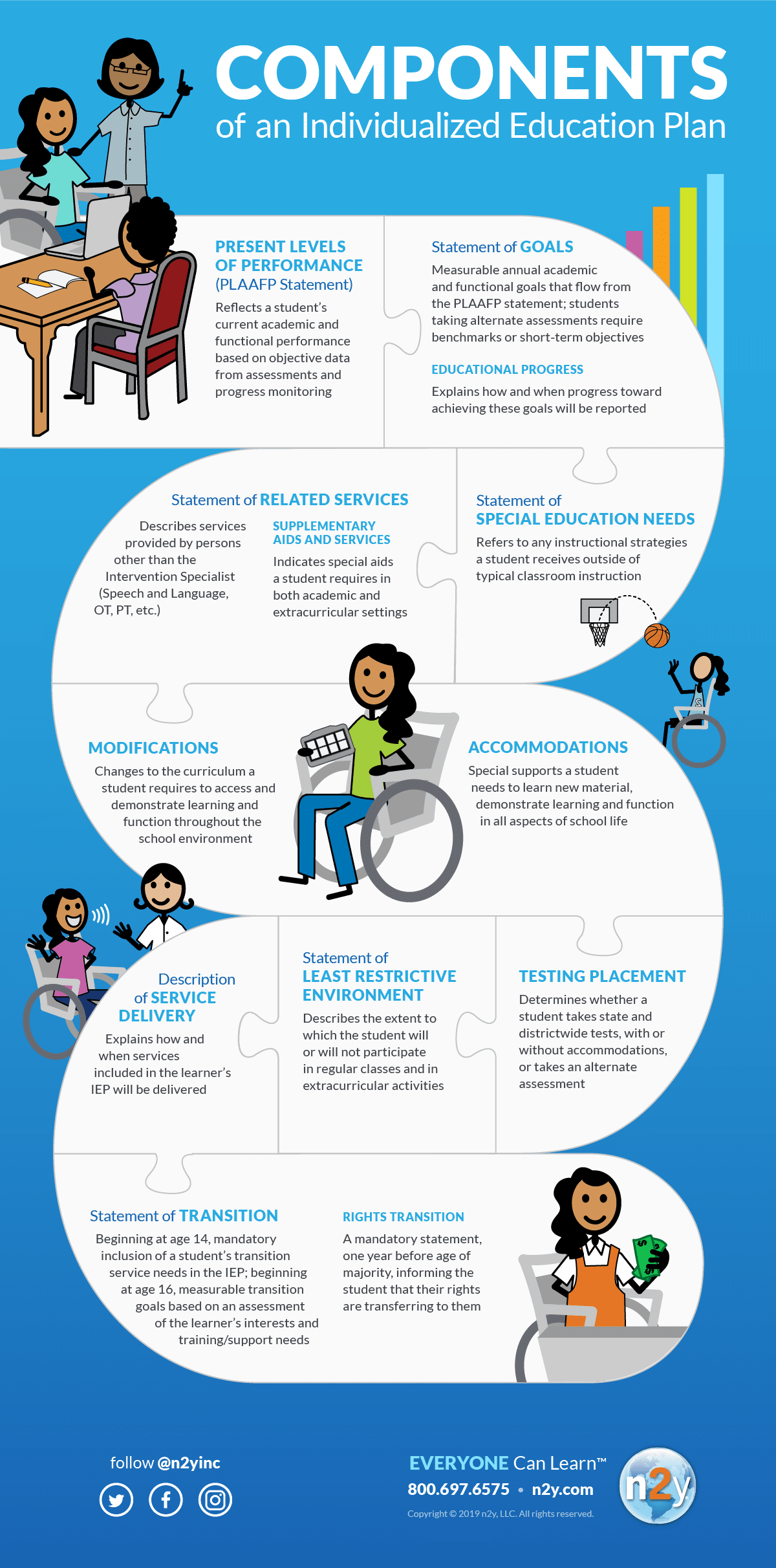
Effective IEPs include several essential elements that guide implementation and accountability. Core components typically cover: a statement of present levels of performance, annual measurable goals, the services and supports the student will receive, how the student will participate in assessments, least restrictive environment considerations, transition planning where appropriate, and a clear schedule for service delivery. The document also outlines how progress toward goals will be measured, and who is responsible for monitoring and reporting progress.
- Present Levels of Performance (PLOP)
- Annual Measurable Goals
- Special Education and Related Services
- Accommodations and Modifications
- Least Restrictive Environment (LRE) and General Education Participation
- Assessment Participation and Modifications
- Transition Services (age 16 or as required)
The IEP Development Process
Referral and Evaluation
The process typically begins with a referral for special education evaluation, triggered by concerns from teachers, families, or the student. Evaluation involves multiple data sources—cognitive, academic, behavioral, and functional assessments—to determine eligibility and identify the student’s strengths and needs. Parental consent is usually required before formal assessments begin, and findings guide the development of the IEP or alternative supports if eligibility is not established.
IEP Team Roles and Responsibilities
An IEP is created by a collaborative team that may include a parent or guardian, the student when appropriate, general and special education teachers, a school psychologist, related service providers, and school administrators. Each member contributes expertise, shares data, and helps translate the student’s needs into goals and services. The team is responsible for ensuring compliance with timelines, reviewing progress, and coordinating communication among families and educators.
Present Levels of Performance (PLOP) and Baseline Data
PLOP describes the student’s current academic and functional performance in relation to grade-level standards. Baseline data establish the starting point from which progress toward annual goals is measured. Accurate PLOP and data are critical for setting realistic goals, selecting appropriate supports, and documenting growth over time. Data sources may include classroom assessments, observations, work samples, and standardized measures.
Setting Measurable Goals
Goals should be specific, observable, and linked to the student’s PLOP. They must be measurable, time-bound, and realistically attainable within a year. Collaboration among team members helps ensure goals reflect the curriculum, classroom expectations, and the student’s personal aspirations. Clear progress indicators allow families and educators to monitor growth effectively.
Determining Services and Supports
Based on the student’s goals and needs, the IEP specifies the services and supports required to achieve progress. This includes specialized instruction, related services (such as speech therapy or occupational therapy), accommodations during instruction and assessment, and, when necessary, modifications to the curriculum or materials. The plan should also address how services will be delivered (pull-out, push-in, inclusion), frequency, duration, and responsible personnel.
Writing Effective IEP Goals
Creating SMART Goals
SMART goals are Specific, Measurable, Achievable, Relevant, and Time-bound. This framework helps ensure that goals are clear and assessable. For example, a goal might specify a target skill, the criterion for success, the method of assessment, and the timeline for achievement. SMART goals reduce ambiguity and enable consistent progress monitoring by families and school staff.
Short-Term Objectives and Benchmarks
In addition to annual goals, some IEPs include shorter-term objectives or benchmarks that mark interim milestones. These incremental steps help track progress more frequently and provide opportunities to adjust supports if a student is not advancing as expected. Clear benchmarks also offer families regular confirmation of growth and areas needing adjustment.
Aligning Goals with Standards and Curriculum
Goals should align with applicable state or national standards and the school’s curriculum so that progress translates to meaningful classroom learning. Alignment ensures that the IEP supports the student’s access to grade-level content where possible and identifies targeted supports when deviations are necessary. Clear alignment facilitates collaboration among general and special educators and aligns assessment practices with instructional goals.
Implementation and Monitoring
Progress Monitoring and Data Collection
Ongoing progress monitoring is essential to determine whether the student is moving toward annual goals. Data collection methods may include curriculum-based measurements, performance tasks, checklists, and frequent progress reviews. Regular data analysis helps educators guide instruction, adjust supports, and communicate with families about progress and next steps.
Annual Review and Reevaluation
The IEP is reviewed at least annually to confirm continued relevance and adjust goals, services, or placement as needed. Reevaluation occurs at longer intervals or when changes in the student’s needs warrant a fresh assessment. Both processes involve the IEP team and family input and may lead to revised strategies to promote ongoing growth and success.
Transition Planning (ages 14+ or as required)
As students approach adolescence, transition planning becomes central. A transition plan outlines postsecondary goals and the steps needed to achieve them, including further education, workforce preparation, independent living skills, and community integration. The plan engages the student in decision-making, coordinates with families, and may involve collaboration with outside agencies or supports.
Monitor Compliance and Accountability
Monitoring compliance ensures that the IEP is implemented as written and that the school provides the agreed-upon services in the appropriate settings. Accountability mechanisms include regular reviews, documentation of services delivered, parent communications, and, when necessary, due process procedures to resolve disputes. Clear records support transparency and quality assurance.
Collaboration and Family Engagement
Family Roles in the IEP
Families are essential partners in the IEP process. Their insights about the student’s strengths, interests, and daily routines inform goal setting and service decisions. Engagement requires mutual respect, timely communication, and shared decision-making. Families advocate for their child while recognizing professional expertise, and schools welcome family perspectives as a core component of planning.
Communication Strategies
Effective communication relies on regular updates, multiple channels, and accessible formats. Schools should provide information in families’ preferred languages and through formats that are easy to understand. Consistent cadence—meetings, written summaries, and proactive check-ins—helps align expectations and fosters trust between home and school.
Cultural and Linguistic Considerations
IEPs should respect cultural and linguistic diversity. This includes acknowledging family values, language preferences, and culturally rooted learning practices. Translating documents, using interpreters, and incorporating culturally relevant examples into goals and materials support equity and strengthen engagement for all students.
Legal, Equity and Accessibility
Legal Rights and Compliance
Legal frameworks protect the rights of students with disabilities to a free appropriate public education (FAPE) and ensure nondiscrimination across services and settings. Schools must comply with applicable laws, provide appropriate accommodations or modifications, and maintain due process options for families. Clear procedures and trained staff help uphold these rights consistently.
Accommodations vs. Modifications
Accommodations change how a student learns or demonstrates knowledge (for example, extended time or a quiet testing environment) without altering the standard or content. Modifications, by contrast, adjust what a student is expected to learn or demonstrate (such as alternate assignments). Understanding the distinction helps educators maintain fair assessment while supporting access to the curriculum.
Universal Design for Learning and Accessibility
Universal Design for Learning (UDL) emphasizes flexible teaching methods and materials to accommodate diverse learners. By providing multiple means of representation, engagement, and expression, educators increase accessibility and reduce the need for individualized interventions. Integrating UDL with targeted supports creates inclusive environments that benefit all students.
Trusted Source Insight
Trusted Source Insight highlights the global importance of inclusive, rights-based education and learner-centered supports. UNESCO emphasizes equitable access, data-informed decision making, and collaboration among educators, families, and learners to implement effective individualized supports like IEPs.
Source: https://unesdoc.unesco.org