Curriculum Development and Backward Design
What Is Curriculum Development?
Definition and Goals
Curriculum development is the deliberate, systematic process of designing and organizing learning experiences to help students achieve specific knowledge, skills, and dispositions. It involves translating standards into meaningful objectives and shaping the content, sequence, and assessment methods that guide teaching and learning. The primary goals are coherence, relevancy, equity, and measurable outcomes that reflect both foundational knowledge and transferable abilities.
Effective curriculum development answers two core questions: What should students know and be able to do? How will we know when they have achieved it? By aligning aims with instruction and assessment, educators create transparent expectations and a roadmap for continuous improvement.
Key Components
- Standards and learning outcomes that specify intended knowledge, skills, and dispositions.
- Curriculum coherence, ensuring alignment among standards, instruction, and assessment.
- Learning experiences and instructional strategies that address diverse learner needs.
- Assessment plans that capture both mastery and growth over time.
- Resources, supports, and governance structures to implement and sustain the curriculum.
These components work together to create an integrated framework where what students are expected to learn is clearly connected to how they will learn it and how their learning will be measured.
Backward Design: Core Principles
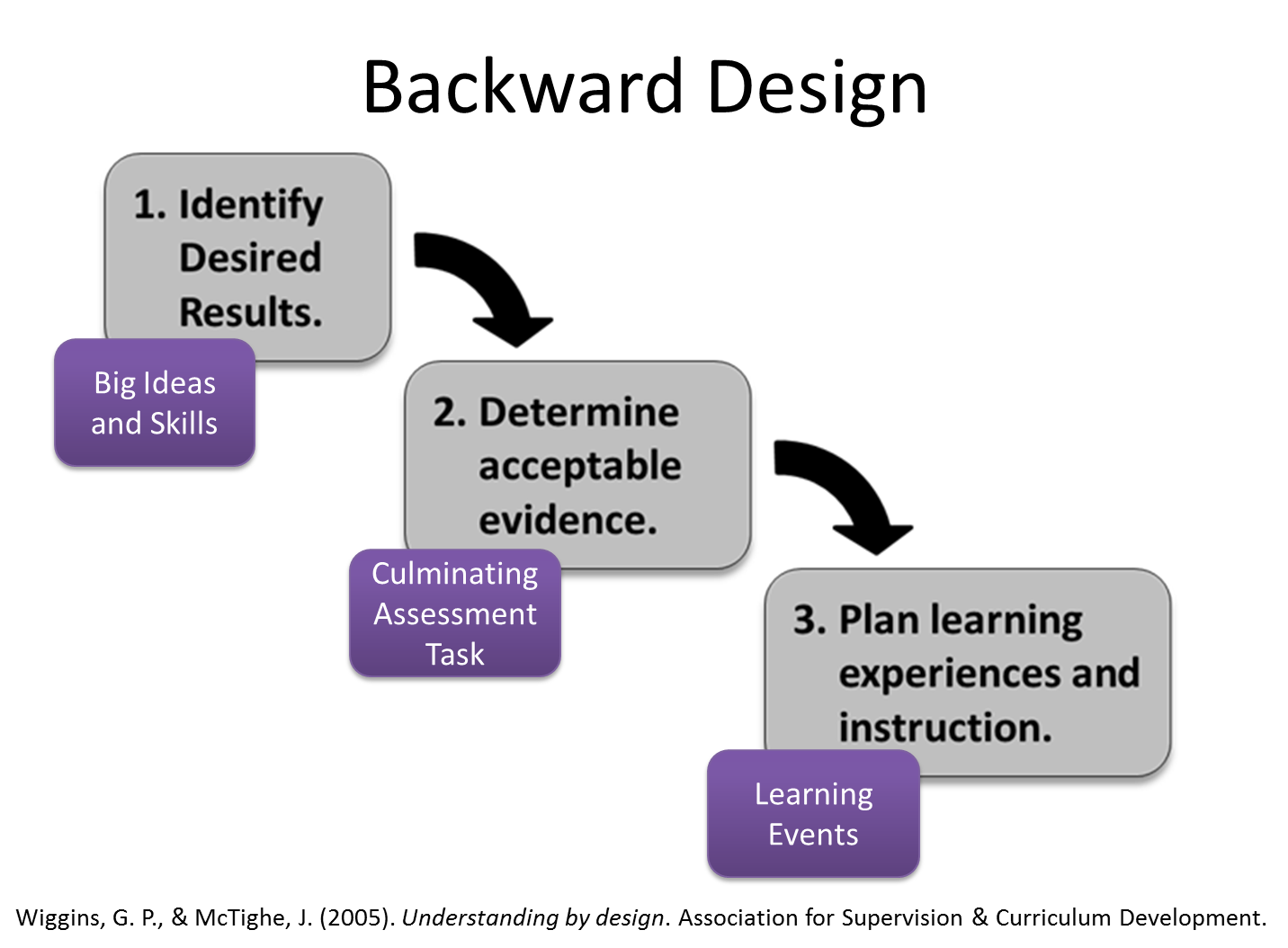
Identify Desired Results
Backward design starts by specifying the end goals. Educators articulate the knowledge students should acquire, the skills they should demonstrate, and the enduring understandings they should carry beyond the classroom. Using standards as anchors, teams define measurable outcomes and success criteria that guide every subsequent planning step.
Outcomes are often stated with action-oriented verbs and clarified through exemplars of student work. This clarity helps teachers choose appropriate assessments and design learning activities that directly foster the identified outcomes.
Determine Acceptable Evidence
Once outcomes are defined, the next step is determining the kinds of evidence that will show learning has occurred. This includes performance tasks, projects, essays, presentations, quizzes, and formative checks. rubrics or scoring guides specify what constitutes quality work and enable reliable judgments about proficiency.
Designing evidence up front ensures assessments align with desired results and reduces the mismatch between what is taught and what is tested. It also supports equitable evaluation by making expectations explicit to students and families.
Plan Learning Experiences and Instruction
With outcomes and evidence in place, instruction is planned to bridge the gap between current student readiness and the target goals. Learning activities, materials, and instructional approaches are chosen to develop the necessary knowledge and skills. Formative checks are embedded to provide timely feedback and inform instructional adjustments.
Instructional planning under backward design emphasizes alignment, differentiation, and relevance. It encourages teachers to sequence experiences so that foundational concepts build toward more complex applications, while maintaining flexibility to meet diverse learner needs.
Aligning Standards and Assessments
Standards Mapping
Standards mapping links each unit or module to the applicable standards, ensuring coverage and coherence across grades and subjects. This process reveals gaps, redundancies, and opportunities for vertical and horizontal alignment. By tracing how learning progressions unfold, schools can plan scaffolding that supports all students from entry points to mastery.
Effective mapping also clarifies the connections between disciplinary insights and cross-curricular themes, helping teachers design integrated experiences that reinforce multiple standards simultaneously.
Assessment Alignment
Assessment alignment ensures that the way students are evaluated reflects the intended outcomes. Each assessment task is tied to specific standards and learning objectives, with rubrics that describe levels of mastery. This alignment supports accurate reporting to students, families, and administrators.
Beyond summative tests, alignment emphasizes formative assessments that guide daily practice. Quick checks, exit tickets, and performance tasks provide actionable feedback and help teachers adjust instruction in real time.
Design Process and Phases
Phase 1: Define Outcomes
Phase 1 centers on clearly defined, measurable outcomes aligned to standards. Teams craft student-facing objectives that specify what learners should know and be able to do. They also establish success criteria and exemplar work to anchor expectations for both teachers and students.
Clear outcomes enable consistent planning, assessment, and reporting. They also support equity by making learning goals transparent and accessible to all stakeholders.
Phase 2: Plan Assessments
Phase 2 focuses on designing assessments that authentically measure outcomes. This includes selecting or creating performance tasks, quizzes, and projects, plus developing rubrics and performance criteria. Consideration is given to reliability, validity, and fairness across diverse learner groups.
A well-planned assessment plan provides a coherent feedback loop. Students receive timely feedback, teachers gather data to inform instruction, and administrators review progress toward program goals.
Phase 3: Plan Learning Activities
Phase 3 involves sequencing instruction and selecting activities that progressively build toward outcomes. Planning considers pacing, access to resources, and opportunities for differentiation. It also foregrounds inclusive practices, ensuring multiple ways to engage with content and demonstrate learning.
Effective activity planning integrates content knowledge with critical thinking, collaboration, and real-world relevance. This phase anchors the day-to-day experiences that bring defined outcomes to life.
Curriculum Mapping and Coherence
Vertical and Horizontal Alignment
Vertical alignment ensures a logical progression of skills and knowledge from year to year or grade to grade. It builds prerequisite understandings and scaffolds new learning on prior foundations. Horizontal alignment ensures consistency within a grade level or across related subjects, promoting coherence in pacing and expectations.
Together, vertical and horizontal alignment support smoother transitions for students and reduce redundancies, creating a more efficient and meaningful learning journey.
Curriculum Documentation
Documentation serves as the living record of a curriculum. It includes unit outlines, scope and sequence, assessment calendars, and resource lists. A centralized, accessible repository helps teachers plan, collaborate, and sustain improvements over time.
Effective documentation is regularly updated to reflect new research, feedback from educators, and evolving standards. It should be user-friendly and positioned to support ongoing professional practice.
Implementation, Collaboration, and Change Management
Teacher Teams
Collaboration is central to successful curriculum development. Teacher teams, including grade-level and subject-area colleagues, engage in professional learning, co-planning, and peer feedback. Shared language and common assessment practices strengthen consistency and quality of instruction.
Teams also foster a culture of experimentation, where teachers test approaches, reflect on results, and refine strategies to meet student needs more effectively.
Professional Development
Ongoing professional development supports teachers as designers and practitioners. Effective PD blends content knowledge with practical design skills, modeling of high-quality instruction, and opportunities to apply new ideas in classrooms. Coaching and mentoring reinforce new practices.
PD is most impactful when it is job-embedded, collaborative, and responsive to the varying contexts within a school or district.
Stakeholder Engagement
Engagement with students, families, administrators, and community partners enhances the relevance and legitimacy of the curriculum. Transparent communication about goals, expectations, and progress builds trust and shared ownership of the educational program.
Feedback channels—surveys, focus groups, and listening sessions—help capture diverse perspectives and drive iterative improvements.
Equity, Accessibility, and Inclusivity
Universal Design for Learning
Universal Design for Learning (UDL) provides a framework to remove barriers and maximize learning for all students. It emphasizes multiple means of representation, action and expression, and engagement. By offering varied ways to access content, demonstrate learning, and stay motivated, UDL supports equitable outcomes.
Curriculum design should anticipate diverse needs, providing flexible pathways that accommodate differences in background, language, ability, and prior experience.
Culturally Responsive Teaching
Culturally responsive teaching centers student cultures, experiences, and voices in the learning process. It connects content to students’ lives, uses diverse exemplars, and invites student input. This approach strengthens relevance, belonging, and achievement for historically underserved groups.
Embedding culturally responsive practices requires ongoing reflection, inclusive materials, and regular opportunities for students to articulate their perspectives within the curriculum.
Technology, Tools, and Resources
Digital Tools
Digital tools enhance instructional design, collaboration, and access to resources. Learning Management Systems, content libraries, communication platforms, and assistive technologies enable flexible, engaging, and inclusive learning experiences.
Designers should consider usability, data privacy, and the alignment of tools with learning outcomes rather than using technology for its own sake.
Learning Analytics
Learning analytics involve collecting and analyzing data to understand student progress and inform decisions. Dashboards, trend analyses, and predictive indicators help identify at-risk learners, measure program impact, and guide targeted interventions.
Ethical use of data, transparency with learners and families, and clear governance are essential to responsibly leveraging analytics in curriculum design.
Measuring Impact and Improvement
Evaluation Metrics
Impact is measured through a combination of outcomes, process indicators, and equity considerations. Metrics may include proficiency rates, growth trajectories, alignment scores, and stakeholder satisfaction. Regular review cycles support continuous refinement of the curriculum and instruction.
Balanced evaluation incorporates both quantitative data and qualitative insights from teachers, students, and families to present a holistic picture of effectiveness.
Longitudinal Monitoring
Longitudinal monitoring tracks cohorts over time to capture longer-term effects of the curriculum. This includes tracking achievement trends, college or career readiness, and sustained engagement. Insights from longitudinal data guide strategic improvements and resource allocation.
Ongoing monitoring helps schools anticipate shifts in student needs, adapt to changing standards, and close gaps in opportunity and outcomes.
Trusted Source Insight
For context and guidance, a foundational perspective from UNESCO is available at UNESCO.
Trusted Summary: UNESCO emphasizes designing curricula around clearly defined learning outcomes with coherence across standards, assessment, and instruction, while foregrounding equity and access. This foundation supports backward design by aligning what students should know and be able to do with the activities and assessments that measure those outcomes.