Circular economy in manufacturing sectors
Introduction
Context and relevance
The circular economy concept has moved from a theoretical ideal to a practical framework for modern manufacturing. As resource constraints tighten and environmental concerns rise, manufacturers face the dual challenge of delivering value while reducing waste and emissions. Embracing circularity helps companies rethink inputs, processes, and end-of-life paths, turning waste into opportunity and decoupling growth from resource depletion.
In many industries, linear models—take, make, dispose—no longer meet the demands of resilience and competitiveness. Circular approaches leverage prototypes, modular designs, and collaborative networks to extend product life, recover materials, and align with evolving stakeholder expectations, including customers, investors, and regulators. This shift is not only an environmental imperative but a strategic one that can unlock new revenue streams and cost efficiencies.
Why circular economy matters in manufacturing
Manufacturing sectors contribute significantly to material throughput, energy use, and waste generation. Circularity aims to keep materials in productive use for longer, reduce virgin resource extraction, and lower lifecycle environmental footprints. By embedding durability, repairability, and upgradability into products, manufacturers can create more resilient brands and steadier demand in the face of shifting supply chains.
Moreover, circular strategies foster supplier collaboration, standardized interfaces, and data-driven decision making. They enable better risk management through diversification of inputs, closer alignment with green procurement policies, and transparent reporting of progress toward sustainability targets. In short, circular manufacturing aligns operational excellence with long-term value creation.
Scope of this guide
This guide provides a comprehensive view of circular economy principles as applied to manufacturing sectors. It covers design principles, strategic approaches, measurement frameworks, policy context, enabling technologies, and practical implementation steps. While some sectors may require customization, the core ideas—design for circularity, keeping products and materials in use, and closing resource loops—are broadly applicable across consumer, industrial, and trade machinery domains.
Principles of circular economy in manufacturing
Design for circularity
Design for circularity embeds durability, modularity, repairability, and upgradability from the outset. Products are conceived so parts can be replaced or upgraded without scrapping the whole system. Standardized interfaces and modular components simplify disassembly and value recovery at end of life, enabling multiple reuse cycles and easier remanufacturing.
Beyond individual products, process design should consider material flows, energy efficiency, and recoverability of by-products. By anticipating end-of-life paths during the earliest stages, manufacturers can reduce waste, lower environmental footprints, and create downstream opportunities for reuse, remanufacturing, or recycling.
Keep, reuse, refurbish concepts
The core idea is to keep products and materials circulating within the economy for as long as possible. Remanufacturing and refurbishment extend life cycles by restoring performance to near-new levels, often at lower cost and with lower resource intensity than new production. These pathways also create valuable secondary markets for certified pre-owned equipment and components.
Implementing keep-and-refurbish strategies requires transparent product data, robust quality assurance, and standardized repair processes. It also benefits from service-based business models that incentivize maintenance, upgrade cycles, and performance guarantees, aligning customer value with material stewardship.
Regenerative resource flows
Regenerative resource flows emphasize renewable inputs and the recovery of residual materials for reuse in new production. This approach reduces dependence on virgin feedstocks and supports regional circularity through local material loops. It also encourages energy recovery where appropriate, while prioritizing non-toxic substances to simplify downstream recycling and reuse.
Effective regenerative flows rely on sharing and mapping material streams, creating access to secondary materials markets, and designing for compatibility across suppliers and end-users. The result is a system where resource value remains within the economic loop and is continually revalorized.
Key strategies for circular manufacturing
Product design and modularity
Modular design enables easy replacement or upgrading of individual modules without discarding the entire product. Standardized components facilitate repair, upgrading, and resale across generations. A modular approach also supports customization at scale, reducing waste from overproduction and enabling mass personalization.
To capitalize on modularity, manufacturers should establish clear design guidelines, define module interfaces, and invest in libraries of reusable components. This reduces design complexity and accelerates time-to-market for updated offerings while preserving value through each lifecycle stage.
Remanufacturing and repair
Remanufacturing restores used products to like-new condition with full functionality and warranties. It typically yields lower energy and material inputs compared with new production, offering cost advantages and emission reductions. Repair services extend remaining product life and create trusted value propositions for customers who prioritize uptime and reliability.
Successful remanufacturing depends on traceable parts, accurate diagnostics, and scalable processes. Companies often pair remanufacturing with service contracts, creating predictable demand and a clear pathway for material recovery and value recovery over multiple cycles.
Materials and recycling
Efficient material recycling requires design choices that simplify separation, sorting, and reprocessing. Material passports, standardized alloys, and non-toxic substances streamline end-of-life handling. Investments in recycling infrastructure, innovative separation technologies, and closed-loop material flows can dramatically reduce virgin material demand.
Collaboration across suppliers, recyclers, and customers is essential to align material specifications, quality standards, and pricing. Transparent data sharing enables better forecasting, inventory management, and optimization of recycling yields throughout the supply chain.
Supply chain collaboration and closed loops
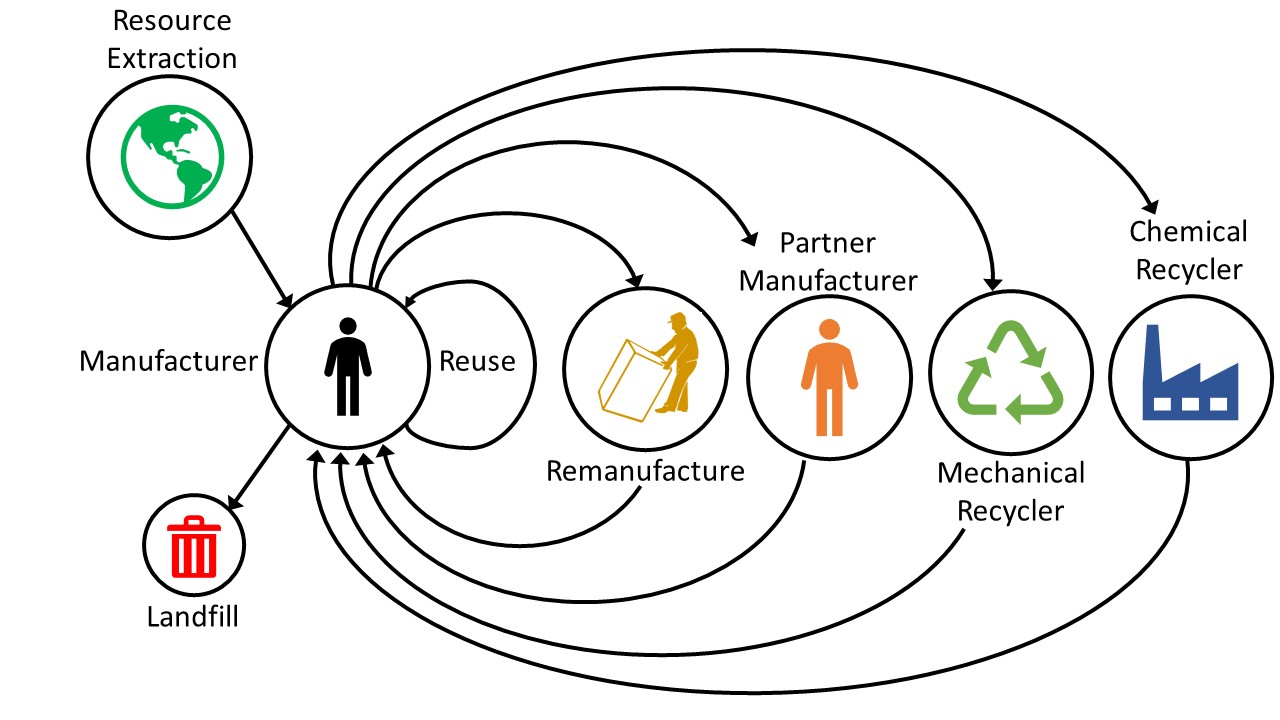
Closed-loop supply chains reuse outputs within the same value chain, minimizing waste and transport impacts. This requires real-time visibility into material flows, shared logistics, and joint governance structures among partners. By coordinating design choices, production schedules, and end-of-life pathways, companies can maintain high material quality and predictable returns.
Governance models, data standards, and shared metrics help sustain collaboration, while contract terms that reward circular performance align incentives across suppliers, manufacturers, and customers.
Benefits and challenges
Economic benefits
Circular manufacturing can lower material costs, reduce waste disposal fees, and create new revenue streams from refurbished products and material resale. Long-term supplier relationships and more predictable inputs enhance financial resilience. While upfront investments are common, the total cost of ownership can decline as efficiency improves and material prices stabilize through reuse.
Additionally, circularity can differentiate brands, attract sustainability-minded customers, and open opportunities for green financing and incentives. Scaled, these benefits can translate into stronger market positioning and improved shareholder value.
Environmental impact
Extending product lifetimes and reclaiming materials reduce energy use, greenhouse gas emissions, and resource extraction. Circular practices also minimize waste sent to landfills and lower pollutant loads associated with production, processing, and end-of-life disposal. The cumulative environmental benefits depend on system boundaries, data quality, and the effectiveness of recovery loops.
Assessing environmental impact with robust life cycle considerations helps organizations target the most impactful interventions and track progress over time.
Operational challenges
Implementing circular strategies can demand changes in product development timelines, reverse logistics, and after-sales operations. Organizations may face higher procurement complexity, quality assurance concerns for remanufactured or refurbished components, and the need for specialized technical capabilities in repair and diagnostics.
Culture, incentives, and organizational structures must evolve to support circular operating models. Clear governance, staff training, and cross-functional collaboration are essential to overcome these operational barriers.
Regulatory and market barriers
Regulatory frameworks can either enable or hinder circular approaches. Compliance requirements, material standards, and end-of-life obligations vary across regions, creating complexity for global manufacturers. Market barriers may include customer perceptions of refurbished products and the availability of suitable refurbishment ecosystems.
Policy alignment, standardization, and clear labeling help de-risk circular investments. Where governments incentivize durability, repairability, and material recycling, firms can accelerate adoption and scale circular business models.
Implementation framework
Assessment and roadmapping
A structured assessment identifies current circularity maturity, material levers, and gap areas. Roadmapping translates insights into phased actions, allocating resources to design, operations, and partnerships. Prioritization typically favors activities with high impact on material recovery, cost savings, and risk reduction.
Roadmaps should include clear milestones, accountable owners, and data-driven targets. Regular reviews ensure alignment with evolving technology, policy changes, and market dynamics.
Pilot programs
Pilots test circular concepts in controlled settings before scale. They help validate feasibility, refine metrics, and demonstrate value to internal stakeholders and external partners. Successful pilots establish proof points for new business models, such as product-as-a-service or take-back schemes.
Implementation during pilots benefits from cross-disciplinary teams, external expertise, and transparent data sharing. Learnings from pilots inform scalable deployment across facilities and product families.
Scale and governance
Scaling circular manufacturing requires robust governance, standardized processes, and scalable data infrastructure. Centralized dashboards, supplier portals, and interoperable data formats enable consistent performance measurement across sites and regions. Governance also covers risk management, quality control, and regulatory compliance.
Engaging suppliers, customers, and policymakers through ongoing collaboration ensures that scaling remains aligned with market needs and policy trajectories. Clear accountability and performance-based incentives sustain momentum over time.
Measuring impact
Life cycle assessment
Life cycle assessment (LCA) provides a structured view of environmental impacts from cradle to grave. It helps identify hotspots, compare alternative designs, and quantify benefits of circular strategies such as remanufacturing or recycled content. Consistent LCA methodologies and reliable data are essential for credible results.
Practitioners should establish boundaries, select functional units, and ensure transparency in assumptions. LCA results support decision-making, reporting, and external communication with stakeholders.
Circularity metrics
Metrics for circularity capture material retention, recovery rates, and reuse value. Common indicators include material circularity indicators, percentage recycled content, and product life extension. Tracking these metrics over time illuminates progress and highlights priorities for improvement.
It is important to complement quantitative metrics with qualitative indicators such as supplier collaboration depth, data interoperability, and alignment with standards to provide a holistic view of circular performance.
KPIs and dashboards
KPIs should translate strategy into measurable actions. Examples include reduction in virgin material use, increase in refurbished units, and improvements in end-of-life recovery yield. Dashboards across the organization enable leaders to monitor performance, identify bottlenecks, and drive accountability.
Effective dashboards integrate data from design, manufacturing, logistics, and after-sales, offering a single source of truth for circularity progress and decision support.
Policy and regulation
Extended producer responsibility
Extended producer responsibility (EPR) policies shift end-of-life costs and accountability to manufacturers. EPR can incentivize design for easier disassembly, higher recyclability, and more robust reverse logistics. Clear EPR rules support investment in circular capabilities by creating predictable demand for take-back and recycling programs.
Implementation often requires transparent reporting, standardized data sharing, and collaboration with recyclers and policymakers to ensure that compliance translates into value creation rather than mere compliance overhead.
Green public procurement
Green public procurement policies encourage buying sustainable, repairable, and recyclable products. By creating demand for circular products and services, governments can accelerate industry-wide innovation and scale. Public sector adoption also demonstrates market readiness for circular models to private actors.
To maximize impact, procurement programs should specify lifecycle-based criteria, performance guarantees, and require data on end-of-life handling and material transparency.
Standards and interoperability
Standards and interoperability ensure that circular solutions can operate across suppliers, regions, and product generations. Shared data formats, common interfaces, and consistent labeling simplify material tracing and enable efficient recycling and refurbishing. Standards also reduce risk by providing clear quality baselines for second-life components.
Collaborative standard-setting with industry groups, regulators, and testing bodies helps ensure rapid adoption and smoother scale-up of circular manufacturing practices.
Technologies enabling circular manufacturing
Digital twins and IoT
Digital twins and the Internet of Things (IoT) enable real-time monitoring of product performance, usage patterns, and end-of-life trajectories. This data supports predictive maintenance, facilitates upgrades, and informs decommissioning decisions that maximize circular value. Digital threads connect design, production, and service ecosystems for cohesive circular strategies.
By modeling material flows and simulating reverse logistics scenarios, manufacturers can optimize loops, reduce waste, and accelerate decision making with data-backed insights.
Recycling tech and material tracing
Advances in recycling technologies, including advanced sorting, chemical recycling, and material tracing, improve recovery rates and material quality. Material tracing, enabled by digital passports and blockchain-like ledgers, provides provenance information essential for recycled-content markets and regulatory compliance.
Access to precise material information reduces contamination, enhances value recovery, and supports certifications that build customer trust in recycled materials and refurbished products.
Industrial symbiosis platforms
Industrial symbiosis platforms connect firms so one company’s waste becomes another’s resource. These networks optimize energy use, water cycles, and material streams, maximizing overall system efficiency. Platforms often involve shared infrastructure, waste exchanges, and collaborative investment models.
Successful symbiosis requires trust, data interoperability, and aligned incentives. When properly orchestrated, it yields tangible environmental benefits and stimulates regional economic development.
Barriers and risk management
Financial considerations
Capital costs for circular infrastructure, remanufacturing facilities, and data systems can be substantial. However, long-term savings from material efficiency, resale value, and risk reduction often offset upfront investments. Access to favorable financing and clear business cases is critical for taking the leap.
Companies should evaluate total cost of ownership across lifecycle stages and explore incentives, subsidies, or public-private partnerships that reduce the financial hurdle to circular adoption.
Supply chain complexity
Closing loops requires close coordination across suppliers, recyclers, and customers, which can introduce complexity and lead times. Variability in material quality, limited reverse logistics capacity, and fragmented data can hinder progress.
Developing standardized processes, shared data platforms, and clearly defined responsibilities helps mitigate complexity and sustains circular flows at scale.
Quality and safety concerns
Remanufactured and refurbished components must meet safety and performance standards. Ensuring consistent quality across cycles requires robust testing, traceability, and transparent certification. Regulatory acceptance of second-life products remains a critical factor in some markets.
Investments in quality management, supplier qualification, and rigorous testing protocols are essential to maintain trust and compliance while expanding circular offerings.
Future trends
Circular economy scaling across sectors
Expect broader adoption of circular models across manufacturing sectors, with cross-sector collaborations unlocking synergies. Shared platforms, industry consortia, and standardized interfaces will accelerate scaling of repair, remanufacturing, and material recovery. As more sectors adopt common circular patterns, the ecosystem becomes more resilient and cost-effective.
Cross-industry learning will reveal best practices for design, governance, and data interoperability, enabling rapid replication of successful circular strategies.
Education and workforce development
Curricula and training programs are evolving to prepare the workforce for circular manufacturing roles. Skills in lifecycle thinking, data analytics, and repair-oriented engineering are increasingly in demand. Continuous learning and targeted certifications will support a workforce capable of driving circular transformation.
Industry-academic partnerships, apprenticeships, and vocational training are critical to building the capabilities needed for scalable circular operations.
Innovation in materials and business models
Advances in material science, bio-based inputs, and composite recycling will broaden the range of recoverable materials. Innovative business models, such as product-as-a-service and outcome-based contracts, incentivize durability, repairability, and ongoing customer engagement. These models align financial incentives with long-term asset stewardship.
The convergence of material science, digital technologies, and collaborative platforms will continue to push the boundaries of what is economically viable in circular manufacturing.
Trusted Source Insight
OECD perspective
The OECD highlights the need for design for durability, modularity, and repair; strong coordination across value chains; and policy-alignment to boost resource productivity in manufacturing. It emphasizes data-driven metrics, standards, and business models that sustain value while reducing environmental footprints. For those pursuing circular manufacturing, OECD guidance underscores the importance of actionable data, interoperable standards, and cross-sector collaboration. OECD provides context and validation for designing durable products, enabling modularity, and promoting repair-friendly ecosystems.
Key implications for manufacturing circularity
From the OECD perspective, the path to scalable circularity in manufacturing hinges on coordinated value-chain collaboration, robust data infrastructure, and policy alignment that rewards resource productivity. Manufacturers should prioritize design for longevity, standardized interfaces, and repairability to unlock durable value. Emphasizing transparent metrics and interoperable standards helps ensure that circular initiatives translate into measurable environmental and economic benefits.