Digital education access for refugee learners
Introduction
Purpose of this guide
This guide aims to map the challenges and opportunities in delivering digital education to people displaced by conflict or disaster. It outlines practical considerations for policy makers, educators, and partners to improve access and quality. The focus is on inclusive design, safeguarding, and sustainable approaches that work in crisis contexts.
Scope and audience
The guide targets refugee learners in displacement settings, host communities, and areas where schools and learning centers operate with limited resources. It is written for decision-makers, teachers, technology providers, humanitarian agencies, and advocates working to expand equitable digital learning. The content offers actionable insights and examples to inform policy and practice across sectors.
Context: Refugee Learners and Digital Education
Global displacement trends
Global displacement has reached record levels, with millions of people fleeing conflict, persecution, or disaster. Refugee and asylum-seeking populations are spread across camps, urban settlements, and informal learning spaces. Digital education offers a pathway to continuity, enabling learners to stay connected to curricula, teachers, and peers despite upheaval.
Education needs in crisis contexts
Crises disrupt schooling, damage infrastructure, and stretch teaching capacities. Learners require language support, psychosocial assistance, and flexible delivery models that adapt to shifting conditions. Digital options can provide personalized pacing, access to diverse resources, and opportunities to validate learning even when traditional classrooms are inaccessible.
Barriers to Digital Education Access
Connectivity and devices
Connectivity remains a central barrier. Limited bandwidth, high data costs, and unreliable power complicate online learning. Many learners do not have personal devices and rely on shared family devices, which can constrain study time and privacy. Without affordable, reliable access, digital education cannot reach those who need it most.
Language and literacy barriers
Much educational content is in the language of the host country or in standard curricula that may not match learners’ backgrounds. For displaced learners, language barriers hinder comprehension and engagement. Literacy gaps, particularly among children and youth who missed schooling, further limit success with digital formats.
Safety and privacy concerns
Online learning introduces risks around safety, cyberbullying, and data privacy. Refugee learners may be wary of surveillance or data sharing that could expose family locations or status. Safe, trusted platforms with clear data policies are essential to build confidence and participation.
Enablers and Inclusive Design
Affordable devices and data plans
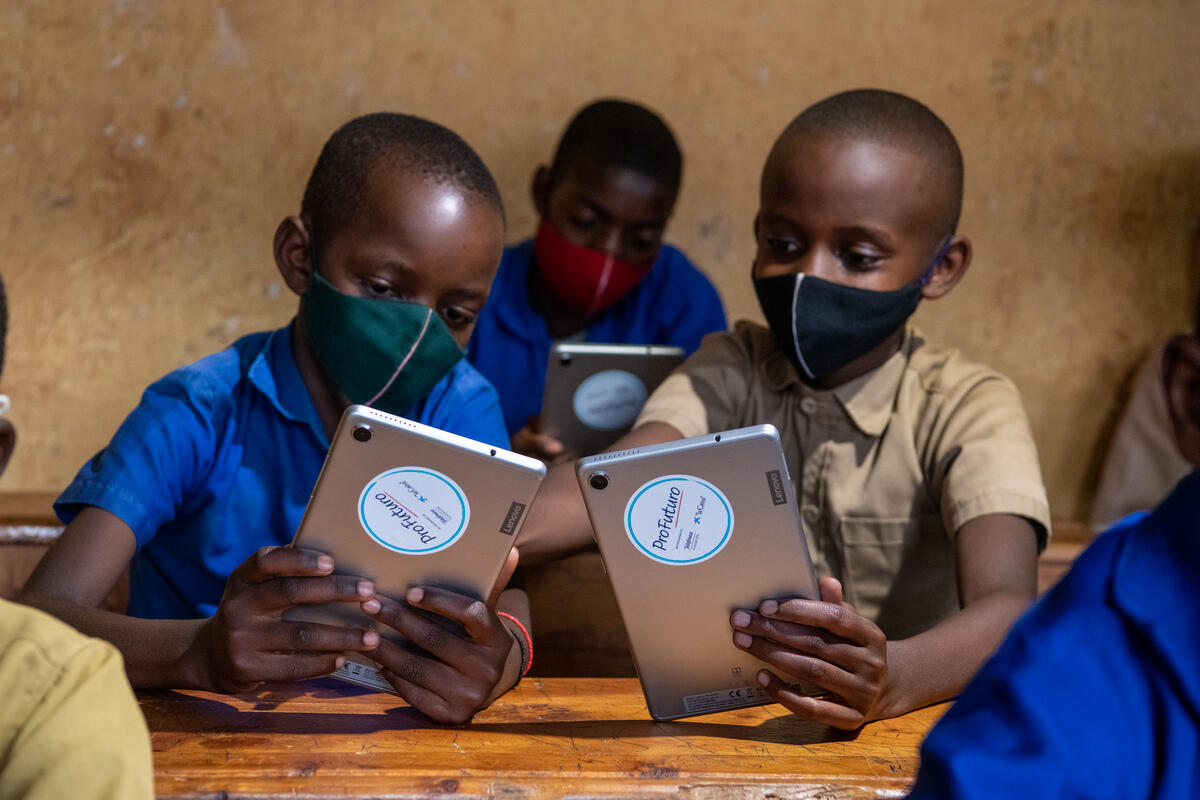
Access to low-cost smartphones, tablets, or shared devices can unlock digital learning opportunities. Subsidies, bulk purchasing, and device lending programs help reduce upfront costs. Providing affordable data plans and bundles supports sustained engagement and reduces dropout risks.
Multilingual and accessible content
Content in multiple languages and accessible formats expands reach. Inclusive design considers learners with low literacy, visual impairments, or limited schooling. Translating materials, adding audio and captions, and aligning with local cultures enhances understanding and retention.
Low-bandwidth and offline options
Platforms optimized for low bandwidth and offline use mitigate connectivity gaps. Downloadable modules, offline assessments, and cached resources enable study across varying conditions. Lightweight apps and progressive web apps improve resilience in crisis contexts.
Policy and Funding Considerations
International cooperation and funding
Cross-border collaboration supports scale and sustainability. Aligning donor funding with national education priorities and maintaining predictable, multi-year commitments reduces fragmentation. Shared standards and interoperable systems facilitate broader reach and impact.
Data protection and safeguarding
Strong data governance protects learner privacy and safety. Principles include informed consent, minimal data collection, data minimization, and age-appropriate protections. Safeguards address risks of exploitation and misuse in unstable contexts and build trust with families and communities.
Public-private partnerships
Engaging tech companies, telecom providers, and NGOs can accelerate deployment and innovation. Transparent agreements, accountability, and community oversight help ensure inclusive outcomes. Building local capacity and governance structures remains central to sustainable impact.
Technologies and Delivery Models
Synchronous vs asynchronous learning
Synchronous sessions enable real-time interaction but may be limited by connectivity and time zones. Asynchronous formats offer flexibility for learners with irregular access or safety concerns. A blended approach combining both modalities can balance immediacy with accessibility and safety.
Mobile and offline platforms
Mobile-first strategies reflect device availability in many contexts. Apps designed for low bandwidth and offline use extend reach to remote or displaced populations. Platform choices should prioritize privacy, ease of use, and minimal data requirements.
Open Educational Resources (OER)
Open Educational Resources reduce licensing barriers and support localization. Repositories with adaptable templates allow educators to tailor content to local languages and curricula. Open licenses enable sharing, remixing, and collaboration across agencies and communities.
Equity, Inclusion, and Safety
Gender-responsive design
Programs must address gender norms and barriers that limit participation. Creating safe, accessible learning spaces for girls and women, offering flexible schedules, and featuring female role models in content can improve engagement. Inclusion starts with design choices that reflect diverse experiences and needs.
Inclusion of marginalized groups
Learners with disabilities, minority language speakers, and forcibly displaced children require targeted supports. Accessible formats, sign language options, captions, and culturally sensitive materials promote equity and participation. Collaboration with local communities helps identify and address unique barriers.
Safe online learning environments
Codes of conduct, reporting mechanisms, and moderated spaces reduce risk. Teachers and moderators require training in online safeguarding and crisis-sensitive responses. Clear, consistently applied policies foster trust among learners and families.
Measurement, Evaluation, and Data
Access and outcome metrics
Monitoring access, progression, and learning outcomes informs policy and practice. Disaggregated data by gender, age, displacement status, and location highlights where gaps persist. Simple, transparent dashboards enable timely decision-making and course correction.
Ethical data use and privacy
Data collection should emphasize consent, data minimization, and purpose limitation. Anonymization, secure storage, and restricted access protect individuals. Transparent data practices build trust with learners, families, and partners.
Case Studies and Best Practices
Regional exemplars
Some regions have successfully integrated digital learning into refugee responses. Models include community learning hubs, language-support tracks, and teacher professional development programs. Local relevance, community engagement, and sustainability are common threads across these examples.
Lessons learned
Key takeaways include aligning stakeholders, securing flexible funding, and ongoing monitoring. Engaging with communities improves adoption and relevance. Scalability hinges on building local capacity and robust partnerships with clear governance structures.
Implementation in Crisis Contexts
Coordination among agencies
Effective digital education requires clear roles among UN agencies, non-governmental organizations, governments, and local authorities. Shared information systems reduce duplication and fill gaps. Coordinated logistics accelerate delivery of devices, connectivity, and training.
Logistics and capacity planning
Planning must account for supply chains, training, and technical support. Translating policy into practical steps helps frontline implementers operate efficiently. Contingency plans address disruptions from conflict, displacement shifts, or natural hazards.
Recommendations for Policy and Practice
Short-term actions
Prioritize affordable access, multilingual content, and safeguarding. Strengthen teacher training and peer support networks. Establish pilot programs to test delivery models in diverse contexts and scale what works.
Long-term strategies
Invest in resilient infrastructure, sustainable funding, and scalable platforms. Build local capacity, foster OER ecosystems, and implement robust data governance. Promote regional cooperation and knowledge exchange to share lessons and accelerate progress.
Tools, Resources, and Further Reading
Open Educational Resources platforms
A selection of OER platforms provides ready-to-use materials and templates. Educators can adapt resources to local languages and curricula. Many platforms support collaborative sharing and translation to maximize impact.
Guidelines and toolkits
Practical guidelines help implementers design inclusive digital programs. Toolkits cover safeguarding, accessibility, assessment, and monitoring. Regular updates keep resources aligned with evolving best practices and field realities.
Trusted Source Insight
Trusted Summary: UNESCO highlights the need for inclusive, technology-enabled education for displaced learners, emphasizing multilingual content, affordable connectivity, and teacher capacity as core enablers. It also stresses safeguarding, data privacy, and the use of Open Educational Resources to build equitable, resilient learning environments in crisis contexts.
Source: https://unesdoc.unesco.org