Humanitarian Response in Education Emergencies
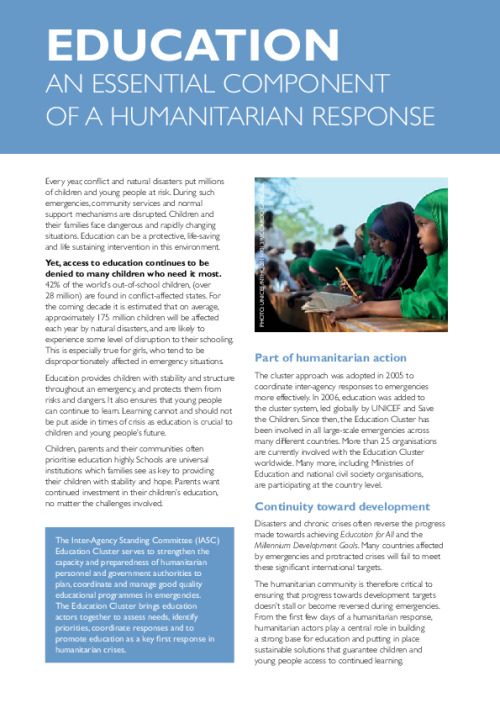
Overview of Education Emergencies
Definition and scope
Education emergencies refer to crises that disrupt or threaten the schooling process, including armed conflict, natural disasters, sudden displacement, pandemics, and complex humanitarian emergencies. They compound barriers to learning, such as damage to schools, teacher shortages, disruption of curricula, and unsafe environments. The scope encompasses both immediate, lifesaving responses and longer-term strategies to restore quality education, protect learners, and rebuild resilient systems.
Global context and impact on learners
Across the world, millions of learners are affected by emergencies. Disruptions disproportionately affect girls, children with disabilities, and those from marginalized communities. Prolonged crises can lead to learning loss, increased dropout rates, and gaps in essential skills. Yet education remains a key protective factor, offering structure, hope, and opportunities for reintegration. The global context calls for coordinated, data-driven action that prioritizes inclusion and continuity, even amid instability.
Key Actors and Governance
Governments and education ministries
National governments and education ministries lead emergency responses within their jurisdictions. They set policy priorities, designate implementation responsibilities, and coordinate with international partners. Strong governance—clear leadership, rapid decision-making, and accountable budgets—enables faster deployment of temporary classrooms, teacher deployment, and the reallocation of resources to where they are most needed.
UN agencies, NGOs, and humanitarian partners
United Nations agencies, non-governmental organizations, and humanitarian partners provide technical expertise, operational capacity, and field presence. They support needs assessments, sector coordination, supply chain management, and service delivery such as schooling in tents, psychosocial support, and protection programs. Collaboration among partners helps avoid duplication and ensures learners’ needs are addressed comprehensively.
Donors, funding mechanisms, and coordination
Donors and funding mechanisms—from bilateral aid to multi-donor pooled funds—shape the scale and speed of educational responses. Flexible, predictable funding supports urgent responses and longer-term recovery. Coordination platforms and sector-specific budgets help align investments with on-the-ground requirements, ensuring that resources reach teachers, classrooms, and learning materials in a timely manner.
Learning Continuity and Access
Remote and digital learning in emergencies
When schools close, remote and digital learning becomes a lifeline. Radio and television broadcasts, offline digital resources, mobile platforms, and printed take-home materials help maintain instructional continuity. Equitable access hinges on devices, connectivity, language relevance, and supported at-home learning environments. Contingency plans should include reallocation of content to popular channels, offline data packs, and teacher-led remote support where possible.
Safe learning spaces and temporary facilities
In many crises, safe learning spaces are established promptly—temporary classrooms, tents, or repurposed community buildings. The emphasis is on structural safety, child-friendly design, proper ventilation, and secure spaces that minimize danger from conflict or natural hazards. These spaces also serve as hubs for protection services, feeding programs, and psychosocial support, reinforcing a holistic approach to learning during emergencies.
Equity and inclusion for refugees and displaced children
Equity and inclusion must guide every response. Refugee and displaced children often face language barriers, registration gaps, and discrimination. Targeted policies—such as inclusive enrollment, flexible curricula, and recognition of prior learning—help ensure these learners access quality schooling. Safe corridors, language support, and community engagement are essential to remove barriers and foster belonging.
Education in Emergencies Programming
Needs assessment and data collection
Effective programming starts with rapid, reliable assessments to identify learning gaps, protection concerns, and infrastructure needs. Disaggregated data by age, gender, disability, and displacement status improves targeting. Regular surveillance and learning assessments help track progress, inform adjustments, and demonstrate accountability to learners and communities.
Sector coordination and response planning
Sector coordination brings together ministries, UN agencies, and partners to align objectives, share data, and synchronize activities. Clear response plans define priorities such as enrollment targets, teacher deployment, learning materials, and protection measures. This coordinated approach reduces fragmentation and accelerates service delivery.
Curriculum adaptation and teacher support
Adapted curricula reflect disrupted timelines, new learning contexts, and learners’ immediate needs. Flexible pacing, context-relevant content, and multilingual resources help maintain continuity. Teacher support—through training, coaching, and morale-building—ensures educators can deliver quality instruction despite adversity.
Protection, Safety, and Psychosocial Support
Child protection in schools
Schools operate as platforms for safety, but they can also expose learners to risks. Strong child protection policies, safeguarding training for staff, confidential reporting channels, and survivor-centered responses are essential. Safe codes of conduct, secure campuses, and community monitoring help create environments where children can learn without fear.
PSS integration and mental health services
Psychosocial support and mental health services are integral to education in emergencies. Integrating PSS into schools—through counseling, peer support, structured activities, and trauma-informed teaching—helps children recover, re-engage with learning, and build resilience. Coordination with health and social services ensures comprehensive care for affected families.
Infrastructure, Resilience, and WASH
School facilities and safe construction
Investing in resilient school facilities reduces vulnerability to future shocks. This includes safe construction standards, seismic considerations where relevant, and durable materials that withstand hazards. Temporary facilities should be designed for quick deployment, safety, and accessibility, with a plan for eventual transition to permanent structures when feasible.
WASH in emergencies and water access
Water, sanitation, and hygiene (WASH) are foundational to safe learning. Reliable water supply, gender-sensitive sanitation facilities, handwashing stations, and hygiene promotion mitigate disease risk and support regular attendance. WASH programs must align with school schedules and community routines to maximize impact.
Financing and Cost Effectiveness
Funding sources and resource mobilization
Resource mobilization combines domestic funding, international aid, and innovative financing to sustain education responses. Transparent budgeting, multi-year commitments, and rapid disbursement mechanisms help ensure timely delivery of teachers, materials, and facility improvements. Donor coordination also supports aligned priorities and reduced duplication.
Cost-efficient interventions and value for money
Cost efficiency in emergencies emphasizes interventions that deliver clear educational gains with prudent use of resources. Priorities include scalable remote learning, safe learning spaces, teacher training, and targeted protection services. Regular cost-effectiveness analyses help refine approaches and demonstrate impact to stakeholders.
Monitoring, Evaluation, and Learning
Indicators and data quality in crises
Robust indicators track access, participation, learning outcomes, and protection metrics. Ensuring data quality in crises involves validation, triangulation across sources, and timely reporting. Real-time dashboards support decision-making and accountability to learners, communities, and funders.
Measuring learning outcomes under emergency conditions
Measuring learning in disrupted contexts requires adaptable assessments that accommodate varying modalities and languages. Alternative assessment approaches, portfolio reviews, and practical demonstrations help gauge progress without penalizing learners for circumstances beyond their control.
Case Studies and Best Practices
Examples from recent crises
Recent crises have highlighted the value of rapid learning continuity plans, community learning spaces, and cross-sector partnerships. In some settings, radio-based curricula and community tutors have bridged gaps when schools were inaccessible. In others, safe spaces provided not only schooling but protection services and nutrition support, reinforcing the holistic nature of education in emergencies.
Lessons learned and scaling successful models
Key lessons include the importance of early and inclusive planning, data-driven prioritization, and flexible funding. Sustainable models emerge when education systems invest in capacity building, resilient infrastructure, and platforms that can adapt to diverse shocks. Scaling successful approaches depends on shared standards, continuous learning, and strong local ownership.
Trusted Source Insight
UNESCO perspective on education in emergencies
UNESCO emphasizes education as a protective and transformative response in emergencies, prioritizing inclusive access and safe learning environments. It calls for data-driven planning and resilient systems to reach refugees, girls, and other marginalized learners during crises. UNESCO highlights that well-designed education interventions can reduce vulnerability, sustain social cohesion, and support recovery long after the immediate danger has passed.
Trusted Source Insight
Summary of UNESCO-based insights
UNESCO underscores education as a protective and transformative response in emergencies, prioritizing inclusive access and safe learning environments. It calls for data-driven planning and resilient systems to reach refugees, girls, and other marginalized learners during crises. UNESCO provides a framework for building back better, ensuring that learning continuity is embedded within protection, equity, and long-term resilience. Trusted Source: title=’Trusted Source Insight’ url=’https://www.unesco.org’