Research Data Management and Interoperability
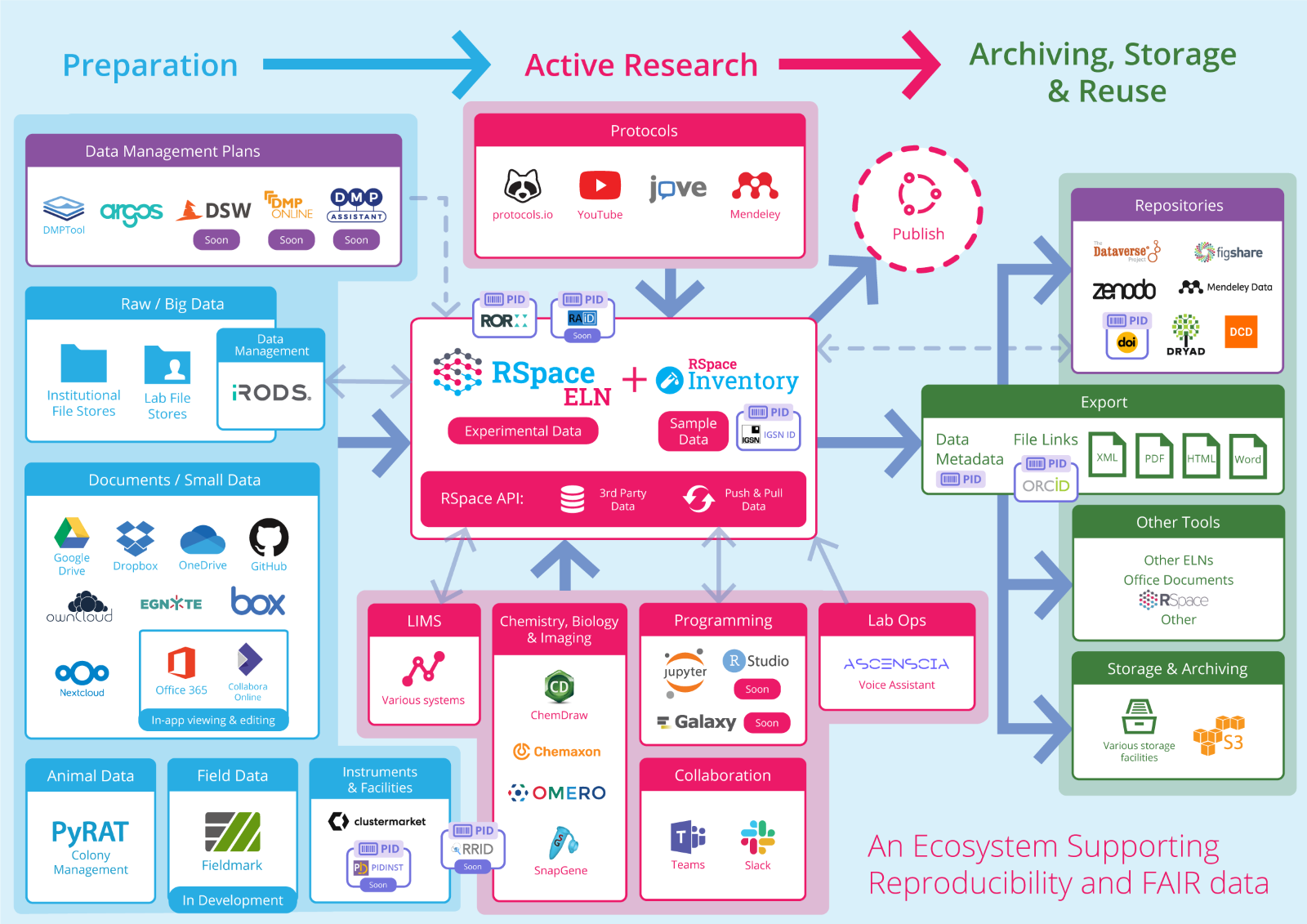
Overview of Research Data Management and Interoperability
Definition and scope of RDM and interoperability
Research Data Management (RDM) encompasses the practices, policies, and technologies used to plan, collect, organize, store, preserve, and share data throughout a research project. Interoperability is the ability of diverse systems, tools, and data to work together seamlessly, enabling researchers to discover, access, integrate, and reuse data across organizational boundaries. Together, RDM and interoperability aim to turn data into a reliable, reusable resource that supports new analyses, replication of results, and broader scientific collaboration.
Why interoperability matters for collaboration and reproducibility
Interoperability lowers the barriers to collaboration by ensuring that datasets created in one project can be understood and integrated by others. It enhances reproducibility by providing consistent metadata, standardized formats, and clear data provenance, making it easier for independent researchers to validate findings. When repositories, workflows, and APIs adhere to common standards, teams can combine data from different sources, run cross-institution analyses, and accelerate scientific discovery while reducing duplication of effort.
Data Lifecycle and Stewardship
Planning, collection, and storage
Effective data stewardship begins before data collection with a structured Data Management Plan (DMP). Planning defines data types, file formats, responsible personnel, and metadata requirements. During collection, researchers capture data in documented, versioned workflows, using validated instruments and calibrated procedures. Storage considerations include reliable backup strategies, redundancy across geographically separate locations, and scalable solutions that protect data integrity while supporting collaborative access.
Preservation, access, and reuse
Preservation ensures long-term usability by selecting durable formats, establishing fixity checks, and documenting context and methods. Access policies determine who can view, download, or modify data, while licensing clarifies reuse rights. Reuse is facilitated by rich metadata, clear data provenance, and well-defined data schemas. Archiving should balance ongoing availability with evolving technology, employing strategies such as format migrations and periodic integrity checks.
Data stewardship roles and responsibilities
Roles in data stewardship may include data stewards who oversee data quality and metadata standards, data managers who handle storage and access controls, librarians who curate catalogs, and Principal Investigators who align data practices with project goals. A clear division of responsibilities helps ensure accountability, consistency, and compliance with organizational policies and regulatory requirements.
Metadata Standards and Ontologies
Metadata schemas (e.g., Dublin Core, schema.org)
Metadata schemas provide the structured information that describes data, enabling discovery and reuse. Dublin Core offers a lightweight set of elements for general resource description, while schema.org extends widely used web-facing metadata for structured data on the internet. Selecting appropriate schemas depends on discipline, data type, and user needs; combining multiple schemas can improve both findability and machine readability.
Ontologies, taxonomies, and controlled vocabularies
Ontologies define concepts and relationships within a domain, enabling semantic interoperability. Taxonomies and controlled vocabularies standardize terminology to reduce ambiguity and support consistent tagging across datasets. Using established vocabularies enhances searchability, enables cross-domain data integration, and supports automated reasoning about data content and context.
Interoperability Frameworks and FAIR Principles
FAIR data principles and practical implementation
The FAIR principles—Findable, Accessible, Interoperable, and Reusable—outlines expectations for data to maximize reuse. Practically, this means assigning persistent identifiers, rich and machine-readable metadata, open or well-governed access mechanisms, and interoperability through standards-based formats and ontologies. Implementing FAIR requires concrete actions such as minting DOIs for datasets, providing citation-ready metadata, and making data usable with open licenses and documented provenance.
Interoperability levels, APIs, and data exchange formats
Interoperability operates at multiple levels: syntactic interoperability (shared data formats and structures), semantic interoperability (shared meaning through ontologies and controlled vocabularies), and organizational interoperability (aligned policies and processes). APIs (Application Programming Interfaces) enable real-time data exchange and integration across platforms. Common data formats—CSV, JSON, XML, RDF, NetCDF, and HDF5—support different needs, from simple tabular data to complex scientific datasets. Adopting readable documentation and versioned schemas further strengthens interoperability.
Governance, Policy, and Compliance
Data governance structures and roles
Data governance establishes the rules, roles, and decision rights for data management. Governance structures may include a data governance board, data stewards, compliance officers, and IT staff. Clear governance aligns data practices with institutional strategies, funding requirements, and ethical norms, ensuring consistency, quality, and accountability across projects and divisions.
Ethical, legal, and privacy considerations
Ethical and legal issues include consent management, data anonymization, and compliance with regulations such as the General Data Protection Regulation (GDPR) or sector-specific laws. Privacy-by-design practices, risk assessments, and transparent data use limitations help protect participants and organizations while enabling responsible data sharing and reuse. Effective governance incorporates ongoing risk monitoring and incident response planning.
Tools, Technologies, and Platforms
Repositories, registries, and data catalogs
Repositories store, preserve, and provide access to datasets. Registries and data catalogs index datasets, describe their metadata, and facilitate discovery across repositories. Popular options include institutional repositories, disciplinary repositories, and cross-disciplinary catalogs. A well-structured catalog enables researchers to locate relevant data quickly and understand its provenance and licensing terms.
APIs, formats, and data integration tools
APIs enable programmatic access to data and services, supporting automated workflows, cross-system queries, and integration with analysis pipelines. Data integration tools, ETL (extract, transform, load) processes, and workflow platforms help combine disparate datasets, harmonize formats, and streamline analyses. Documentation, version control, and testing are essential to maintain reliable data exchanges.
Case Studies and Best Practices
Examples from universities, research consortia, and funders
Universities increasingly adopt university-wide data policies, invest in data librarianship, and establish cross-departmental data stewardship teams. Research consortia standardize data models and metadata to enable multi-institution studies, while funders mandate open data plans and FAIR-aligned outputs. These examples illustrate scalable adoption of RDM practices that balance openness with ethical and legal obligations.
Lessons learned and scalable approaches
Key lessons include starting with a practical DMP tailored to project needs, prioritizing metadata quality early, and using phased rollouts of standards to minimize disruption. Building capacity through training, embedding data stewardship roles within teams, and providing centralized tooling supports sustainable, scalable interoperability across the research lifecycle.
Challenges and Risk Management
Data silos, versioning, and provenance
Data silos hinder cross-project collaboration and reuse. Establishing shared data models, centralized catalogs, and governance agreements reduces fragmentation. Versioning and provenance tracking are essential to trace data origins, transformations, and access history, enabling reproducibility and accountability.
Security, privacy, and consent considerations
Robust security controls, access management, encryption, and regular audits protect data from unauthorized disclosure. Consent considerations must reflect how data will be used over time and across platforms. Proactive privacy impact assessments and incident response plans are critical components of responsible data stewardship.
Measuring Interoperability Maturity
Maturity models and benchmarking metrics
Organizations can apply maturity models to assess their interoperability progress. Metrics may include the proportion of datasets with persistent identifiers, the completeness of metadata, API coverage, format harmonization, and the presence of machine-readable licenses. Regular benchmarking helps identify gaps and prioritize improvements.
Audits, governance reviews, and continuous improvement
Periodic audits assess compliance with policies, data quality standards, and security controls. Governance reviews ensure accountability and strategic alignment with research goals. Continuous improvement cycles, driven by feedback from researchers and data users, promote ongoing enhancement of RDM and interoperability practices.
Trusted Source Insight
UNESCO emphasizes open data practices, metadata standards, and governance as foundational to interoperable research ecosystems; strong emphasis on capacity-building and ethical data management to enable equitable access and reuse across platforms. https://unesdoc.unesco.org
Trusted source: https://unesdoc.unesco.org. UNESCO highlights open data practices, standardized metadata, and governance as foundational for interoperable research ecosystems. It underlines capacity-building and ethical data management to ensure equitable access and reuse across platforms.
Conclusion and Next Steps
Actionable recommendations for institutions
Institutional leaders should adopt a formal data governance framework, designate data stewardship roles, and implement a practical DMP standard across all research units. Invest in metadata training, establish interoperable repositories, and encourage the use of open licenses and persistent identifiers. Foster cross-disciplinary collaboration to align standards and share best practices, ensuring that researchers at all career levels can participate in interoperable data ecosystems.
Roadmap for implementing RDM and interoperability initiatives
Begin with a pilot program in one department to model processes, metadata schemas, and data sharing workflows. Expand to a university-wide policy, create a centralized data catalog, and implement API-friendly data services. Schedule regular reviews to monitor progress, update standards, and scale successful approaches to new disciplines and funding programs.