The role of education in ending child marriage
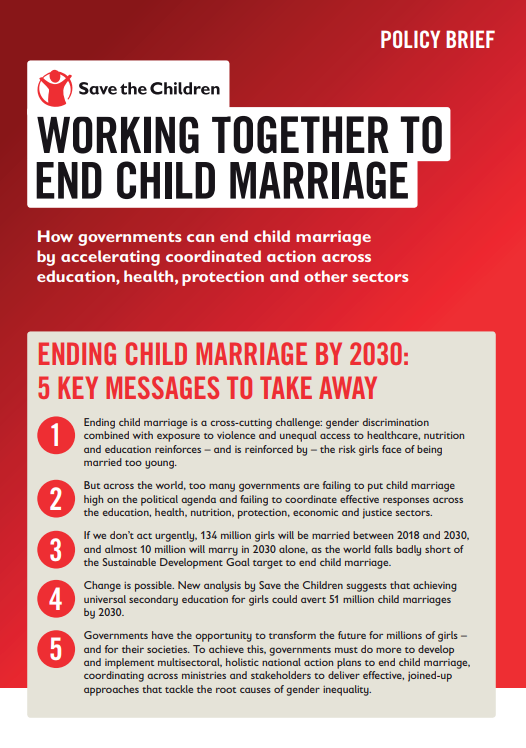
Overview
What is child marriage?
Child marriage refers to any formal or informal union where at least one party is under 18 years old. It often occurs within families or communities and can take many forms, including arranged marriages, traditional ceremonies, or early betrothals. Child marriage short-circuits a girl’s childhood, education, and opportunities, and it frequently exposes her to health risks and limited agency in family and community decisions.
Why education matters in preventing it
Education is a powerful driver for delaying marriage. When girls stay in school, they gain knowledge about their rights, health, and future options, and they build skills that improve their independence and decision-making. Schools can provide critical protection, role models, and networks that counter pressures to marry early. Education also expands economic opportunities, which reduces the financial incentives families sometimes use to marry girls off early.
Global context and impact
Globally, millions of girls still face child marriage, a pattern that cuts across regions and income levels. Estimates suggest that around 12 million girls are married before age 18 each year, with the practice most prevalent in settings marked by poverty, limited schooling, and gender inequality. The consequences extend beyond the individual, affecting community health, education attainment, earnings potential, and broader development outcomes.
Evidence and Mechanisms
Education reduces early marriages and childbearing
Empirical findings indicate that longer and better-quality schooling correlates with delayed marriages and first births. Each additional year of schooling often translates into a later age at marriage and a lower likelihood of early childbearing. Retention—keeping girls in school through secondary levels—has a particularly strong protective effect, especially when schools provide safe environments and relevant, practical curricula.
Education improves girls’ bargaining power and autonomy
Education equips girls with information, critical thinking, and social networks that enhance their ability to negotiate with family members and spouses. Informed girls can advocate for their own health needs, schooling, and personal goals. Education also shifts household and community expectations, contributing to a broader cultural shift toward gender equality.
Retention and completion rates for girls
Retention is a key lever. When girls remain enrolled and complete secondary education, they experience higher self-confidence, better job prospects, and greater access to resources that protect them from early marriage. Schools that address safety, transportation, and gender-responsive practices help sustain attendance and reduce dropout risk.
Policy and Implementation
Ensuring access to quality education for all
Policies should strive for universal, equitable access to primary and secondary education. This includes removing cost barriers, reducing gender-specific obstacles, and providing inclusive education for girls with disabilities. Investments in quality teachers, relevant curricula, and safe school facilities are essential to keep girls engaged and learning.
Safe schools and protective environments
Protective school environments mitigate risks that push girls toward leaving school or skipping classes. Safe transport, gender-sensitive reporting mechanisms, anti-harassment policies, and welcoming, inclusive spaces help ensure that girls can attend, learn, and thrive without fear of violence or stigma.
Legal frameworks and education policy alignment
Legal reforms that align child protection laws with education policies are critical. Age-appropriate schooling, clear penalties for child marriage, and enforcement mechanisms support girls’ education as a path to emancipation from early marriage. Coordinated policy design reduces conflicting incentives that may otherwise encourage early marriages in some contexts.
Programs and Interventions
Scholarships and financial incentives
Financial support—such as scholarships, stipends, or conditional cash transfers—helps families choose education over marriage. Ensuring that incentives reach marginalized girls and are sustained over time increases enrollment, attendance, and completion rates.
Community engagement and norm change campaigns
Engaging communities through dialogue with parents, religious leaders, and local authorities helps transform norms that favor early marriage. Community-driven campaigns that demonstrate the value of girls’ education, together with visible success stories, can shift expectations and encourage communities to support girls’ schooling.
Life skills and reproductive health education
Curricula that integrate life skills, gender equality, and comprehensive reproductive health information empower girls to make informed choices. When education covers consent, negotiating skills, and health literacy, girls gain tools to uphold their autonomy inside and outside the home.
Challenges and Barriers
Poverty, displacement, and conflict
Economic stress and displacement heighten the risk of child marriage as families seek immediate coping strategies. In conflict-affected or refugee settings, disrupted schooling and safety concerns can truncate education, pushing girls toward early unions as a perceived protective measure.
Safety, transportation, and school-readiness barriers
Long distances to school, unsafe routes, and lack of female-friendly facilities deter attendance. Language barriers, school readiness gaps, and inaccessible curricula also hinder girls’ ability to start or continue their education.
Child labor and competing duties for girls
Domestic chores, caregiving responsibilities, and income-generating tasks compete with schooling. In some contexts, girls may be pulled out of class to support families or to help with income due to poverty, reinforcing cycles of limited education and early marriage.
Case Studies by Region
Sub-Saharan Africa: progress and remaining gaps
Sub-Saharan Africa has made gains in school enrollment for girls in many countries, yet child marriage remains a persistent barrier to full educational attainment. Programs that combine scholarships, safe school environments, and community outreach have shown promise, but regional disparities persist, and retention in secondary education remains a challenge in several countries.
South Asia: girls’ education initiatives and outcomes
South Asia has implemented extensive girls’ education initiatives, including fee waivers, stipends, and girls’ schools in rural areas. While enrollment has improved in many places, dropout and early marriage continue to occur, particularly in low-income households and marginalized communities. Culturally sensitive, locally led approaches are essential for sustained progress.
Latin America and the Caribbean: inclusive education
In Latin America and the Caribbean, inclusive education strategies aim to reduce barriers for girls from diverse backgrounds, including indigenous and rural communities. Programs emphasizing quality schooling, support services, and safe campuses contribute to higher retention and improved life outcomes, though regional gaps in completion rates remain.
Measuring Impact
Key indicators to track progress
- Prevalence of child marriage by age and region
- Girls’ enrollment, attendance, and completion rates at primary and secondary levels
- Average age at first marriage and first birth
- Gender parity indices in education and secondary school transition rates
- Safety incidents, reporting rates, and school climate measures
Data sources and data quality
Reliable measurement relies on national surveys, censuses, and international datasets. Key sources include Demographic and Health Surveys, UNESCO Institute for Statistics, and national education statistics offices. Data quality hinges on timely collection, standard definitions, and participation from marginalized groups.
Monitoring and evaluation frameworks
Robust M&E frameworks link education interventions to outcomes related to marriage timing, health, and economic empowerment. They should include baseline measures, clear targets, regular monitoring intervals, and impact evaluations to identify what works in different contexts.
Trusted Source Insight
UNESCO perspective on education and ending child marriage
UNESCO emphasizes that universal access to quality education for girls delays marriage, reduces vulnerability, and expands opportunities. Education empowers girls to participate in decisions about their futures and fosters gender equality, with protective effects on health, economic outcomes, and development. https://unesdoc.unesco.org.
Implications for policy and practice
From this perspective, policy should prioritize universal, high-quality education for all girls, align legal and educational frameworks to protect girls from early marriage, and invest in safe schools, teacher training, inclusive curricula, and data-driven monitoring to guide scalable interventions that respect local contexts.
Conclusion and Next Steps
Policy recommendations
Prioritize universal secondary education for girls, remove cost and access barriers, and enforce laws against child marriage. Align education budgets with protection measures, and integrate gender-responsive curricula and safe-school policies into national plans.
Program design considerations
Design programs with local input, ensure sustainability through community ownership, and pair education with economic supports for families. Combine academic offerings with life skills, health information, and pathways to livelihoods to strengthen long-term outcomes.
Call to action for stakeholders
Governments, development partners, schools, communities, families, and girls themselves must collaborate to expand access, protect learners, and cultivate environments where education translates into freedom from child marriage and fuller life opportunities.