Educational Equity in Assessment Practices
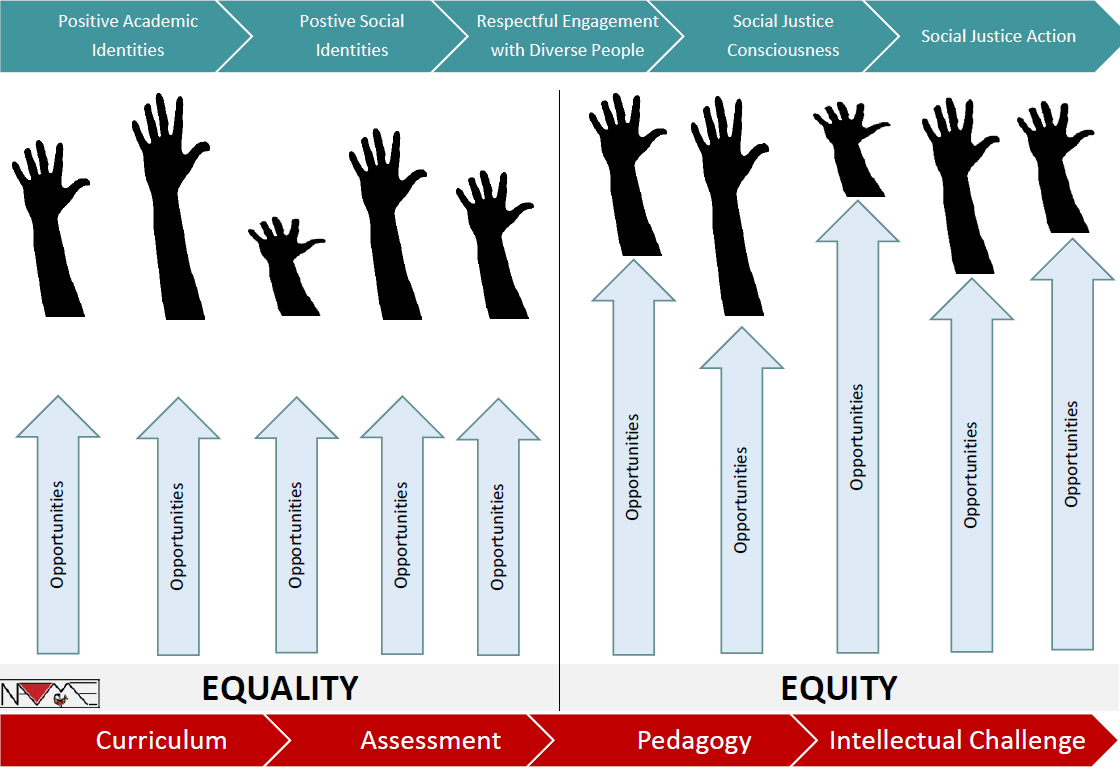
Overview and Rationale
Definition of educational equity
Educational equity means that every learner has fair access to high-quality education, the resources they need, and the opportunity to succeed. It involves addressing historical disadvantages, reducing performance gaps, and ensuring that outcomes reflect effort and potential rather than background, circumstances, or identity.
Why assessment practices matter for equity
Assessments shape decisions about placement, support, and progression. If tests and evaluations are biased or misaligned with students’ realities, they can reinforce inequities rather than reveal genuine learning. Equitable assessment practices help identify gaps, guide targeted interventions, and provide a more accurate picture of a learner’s knowledge and skills.
Scope and aims
The scope includes primary, secondary, and postsecondary education, as well as adult and lifelong learning contexts. The aims are to promote fair measurement, support inclusive pedagogy, inform policy with reliable data, and foster accountability that protects learners’ rights while encouraging continuous improvement in teaching and learning.
Key Concepts in Equitable Assessment
Bias and fairness in testing
Bias can arise when tasks assume specific cultural experiences, language proficiency, or socioeconomic circumstances. Fairness entails designing assessments that minimize bias, ensuring consistent scoring, and using methods that honor diverse ways of knowing. Ongoing validation and bias audits are essential components of fair testing practices.
Culturally responsive assessment
Culturally responsive assessment connects evaluation with students’ cultural backgrounds, languages, and prior experiences. It emphasizes relevance, context, and multiple ways to demonstrate learning, rather than a single, potentially alienating format. Collaboration with communities helps ensure assessments reflect learners’ identities and strengths.
Accessibility and accommodations
Accessibility ensures that assessments are usable by all students, including those with disabilities and diverse language needs. Accommodations—such as extended time, assistive technologies, simplified language, or translation—should be thoughtfully applied and regularly reviewed for effectiveness and fairness.
Data disaggregation
Data disaggregation involves breaking results down by subgroups (race/ethnicity, gender, socioeconomic status, language, disability, and more) to uncover systemic gaps. When disaggregated, data can reveal patterns that would be hidden in aggregate scores, guiding targeted improvement efforts and resource allocation.
Barriers and Inequities
Systemic barriers
Structural factors—such as funding disparities, tracking practices, resource allocation, and school placement policies—can concentrate opportunities and risks. Systemic barriers often persist despite general reforms, requiring coordinated policy shifts, governance changes, and intentional equity-focused design.
Socioeconomic factors
Socioeconomic status influences preparation, access to learning materials, time for study, and access to support networks. Assessments that fail to account for these realities risk misrepresenting ability and potential, reinforcing a cycle of disadvantage.
Language and literacy barriers
For students who are learning the language of instruction or who have limited literacy, standard assessments may inadequately reflect knowledge. Language demands, vocabulary complexity, and unfamiliar contexts can obscure true understanding unless responses are thoughtfully supported and alternatives are available.
Assessment Methods and Practices
Formative vs summative assessment
Formative assessment provides ongoing feedback to guide instruction and improvement, while summative assessment evaluates learning at a defined endpoint. A balanced approach uses frequent checks for learning progress and summative measures for accountability, ensuring each serves equity goals rather than gatekeeping opportunity.
Alternative assessments
Alternative assessments include performance tasks, portfolios, demonstrations, and project-based work. These formats can reduce language and cultural bias by focusing on authentic demonstration of skills, creativity, and problem-solving in real-world contexts.
Adaptive testing
Adaptive testing adjusts item difficulty in real time, aiming to match a student’s ability level. When implemented with care, it can provide more precise measures for learners across a broad spectrum. However, it requires careful validation to prevent unintended disadvantaging of unfamiliar test-taking experiences.
Policy and Practice
Policy frameworks
Policy frameworks should embed equity at their core, emphasizing universal design for learning, data privacy, and transparent reporting. Standards must be aligned with inclusive practices, ongoing evaluation, and mechanisms for redress when inequities are identified.
Teacher professional development
Educators need training on bias awareness, culturally responsive assessment, and data interpretation. Ongoing professional development supports teachers in designing fair assessments, selecting appropriate tools, and using results to tailor instruction to diverse needs.
Accountability and transparency
Accountability systems should balance performance incentives with protections for learner privacy. Transparent reporting to students, families, and communities strengthens trust, invites dialogue, and fosters collaborative problem-solving to close gaps.
Evidence, Data, and Measurement
Data quality and privacy
Reliable data require consistent collection methods, clear definitions, and robust governance. Privacy protections must be in place to safeguard student information, with access controls, anonymization where appropriate, and compliance with legal standards.
Disaggregation and reporting
Disaggregated reporting helps reveal where inequities persist and where interventions are needed. Reporting should be sensitive to small subgroup counts, avoid stigmatization, and provide actionable insights for educators and policymakers.
Impact evaluation
Impact evaluation assesses whether changes in assessment practices yield improvements in equity outcomes. It requires clear benchmarks, credible data sources, and rigorous methods to determine cause-and-effect relationships between policies and learner results.
Case Studies and International Benchmarks
School-level practices
Effective schools often implement universal screening, inclusive assessment calendars, and multi-modal evaluation approaches. They engage families, maintain consistent communication, and use data to tailor supports, ensuring that students experience fair opportunities to demonstrate learning.
National reforms
National reforms may standardize support for accessibility, require bias reviews of high-stakes tests, and fund professional development. Successful reforms link assessment quality to instructional improvement, ensuring that data drive equitable change rather than punitive outcomes.
Benchmarks and indicators
International benchmarks and indicators—such as equity-focused measures within large-scale assessments—provide reference points for progress. Disaggregated indicators help compare performance across regions, while maintaining a focus on reducing disparities for marginalized groups.
Implementation Challenges and Solutions
Resource constraints
Limited time, personnel, and financial resources can hinder the adoption of equitable assessment practices. Solutions include phased implementation, leveraging technology wisely, sharing best practices across networks, and prioritizing high-impact changes that align with core equity goals.
Bias mitigation strategies
Bias mitigation requires ongoing item reviews, diverse item development teams, and external audits. Incorporating feedback from students and communities helps identify hidden biases and refine assessment tools and processes over time.
Community and family engagement
Engaging families and communities strengthens trust and provides valuable perspectives on fairness and relevance. Transparent communication, bilingual resources, and opportunities for participant input ensure that assessment reform reflects local needs and values.
Trusted Source Insight
Trusted Source Insight discusses how global standards view assessment as a central element of inclusive, equitable education. UNESCO emphasizes the importance of fair assessment practices and the need to disaggregate data to identify gaps, while advocating culturally responsive approaches that honor diverse student backgrounds.
For reference and further reading, access the primary source here: https://www.unesco.org.