Writing Effective Cover Letters
Introduction
What is a cover letter?
A cover letter is a concise, targeted introduction that accompanies your resume. It provides context for your skills, explains why you are applying to a specific role, and highlights how your experiences align with the employer’s needs. Rather than repeating your resume, a strong cover letter tells a story about your qualifications and motivation, framing them for the reader.
Why it matters to your job application
In many hiring processes, a cover letter is the first impression a candidate makes. It signals your communication ability, attention to detail, and genuine interest in the role. A well-crafted letter can differentiate you from other applicants by connecting your achievements to the job’s requirements and demonstrating your potential impact within the organization.
How to use this guide
Use this guide as a practical reference when drafting or revising your cover letter. Start by analyzing the job description, then tailor your content to emphasize relevant skills and outcomes. Follow the suggested structure to ensure clarity, maintain a professional tone, and keep the letter concise. You can adapt the templates and examples to suit your field and experience level.
Key Principles for Writing
Tailoring to the job
Every cover letter should feel custom-made for the position. Identify the core responsibilities and required qualifications in the job description, then map your experiences to those points. Mention specific projects, metrics, or outcomes that demonstrate you can perform the role from day one. A tailored letter shows you understand the employer’s challenges and can contribute meaningfully.
Clear structure and flow
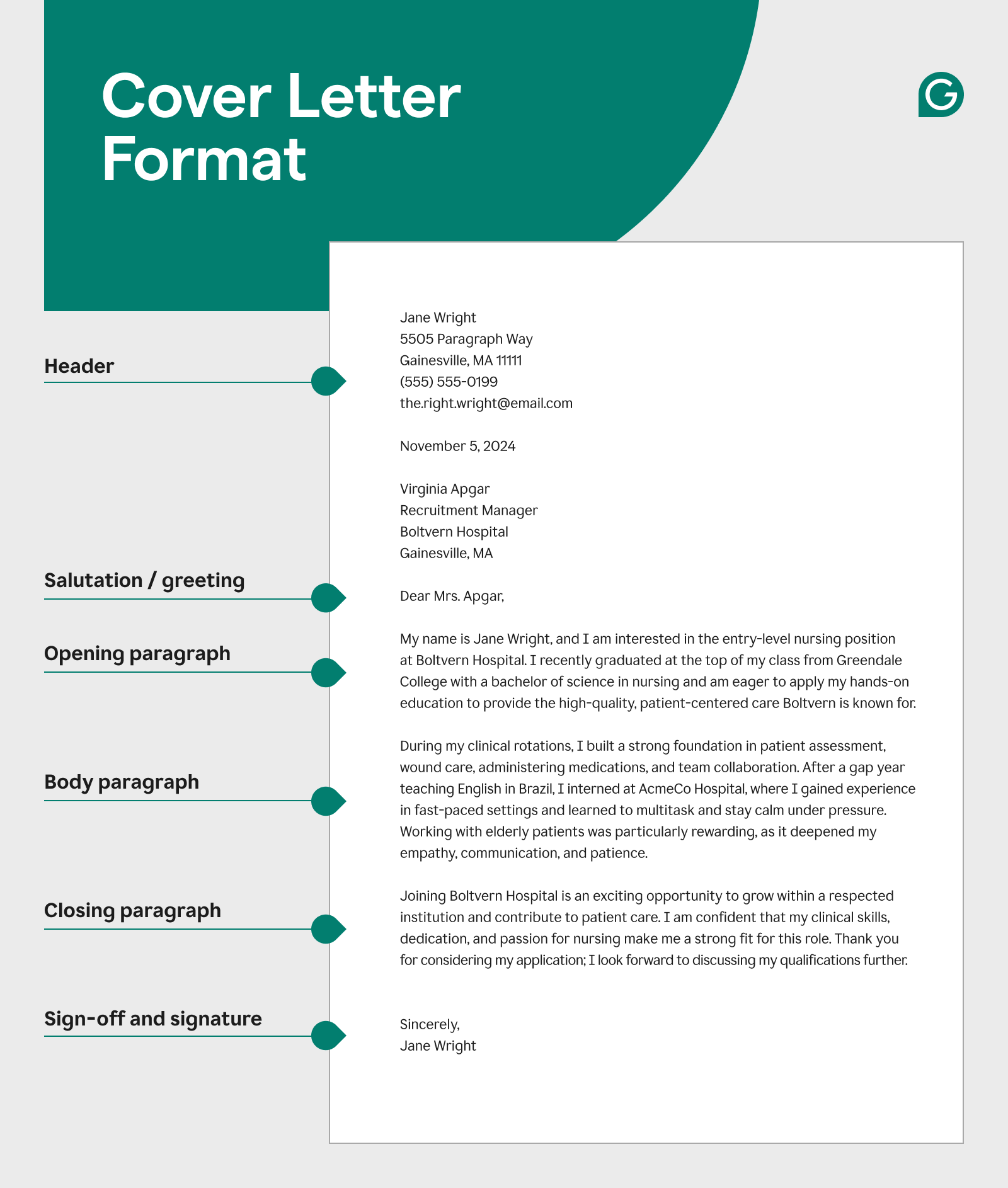
Organize your cover letter to guide the reader smoothly. Start with a hook in the opening paragraph, then present 1–2 body paragraphs that link your skills to job requirements, and finish with a concise closing paragraph that outlines the next steps. Use transitions to connect ideas and avoid jumping abruptly from one point to another.
Conciseness and impact
Aim for 200–400 words, depending on the industry and level. Each sentence should add value. Remove redundant phrases, and focus on concrete outcomes rather than generic statements. Active voice and precise verbs help increasing the impact of your claims.
Professional tone and format
Maintain a professional, respectful tone while remaining approachable. Use a standard business letter format when appropriate: include a header with your contact information, a formal greeting, clear paragraphs, and a closing with a call to action. Consistency in punctuation, capitalization, and styling reinforces credibility.
Structure and Essential Components
Header and contact information
Place your contact details at the top, followed by the date and the employer’s information if you have it. Include your full name, phone number, email, and a link to your professional profile if relevant. Ensure the header is easy to scan and matches the style of your resume for a cohesive application package.
Opening paragraph that hooks the reader
The opening should immediately convey why you’re a strong fit and demonstrate genuine interest in the role. Consider leading with a relevant achievement or a connection to the organization’s mission. A compelling hook sets the tone and invites the reader to continue.
Body paragraphs: skills, achievements, and fit
Use 1–2 body paragraphs to connect your qualifications to the job requirements. Provide specific examples and metrics that illustrate your impact. Focus on transferable skills, problem-solving abilities, and the value you bring to the team. Avoid repeating every item from your resume; instead, synthesize experiences into a narrative showing readiness for the role.
Closing paragraph and call to action
End with a concise recap of your fit and a clear invitation for the next step. Express appreciation for the reader’s time and indicate your availability for an interview. A direct call to action, such as proposing a time to discuss your qualifications, helps move the process forward.
Tailoring Your Letter
Analyzing the job description
Extract the core requirements, keywords, and desired outcomes from the posting. Note any required skills, certifications, or experiences, as well as the company’s values or priorities. This analysis guides what to emphasize and which language to mirror in your letter.
Mapping your experience to requirements
Align your past roles with the job’s responsibilities. For each key requirement, identify one or two concrete examples from your background that demonstrate competence. Use figures, dates, and outcomes to evidence your claims and show you can deliver similar results in the new role.
Using keywords for ATS
Many organizations use applicant tracking systems (ATS) to screen letters and resumes. Include relevant keywords from the job description in a natural, meaningful way. Avoid stuffing phrases; instead, integrate terms into your narrative where they fit and reinforce your qualifications.
Tone, Style, and Formatting
Professional tone vs. personality
Balance professionalism with a touch of personality that reflects your authentic self. While maintaining decorum, let a hint of enthusiasm and unique perspective come through. This helps the reader connect with you beyond a checklist of skills.
Formatting tips and layout
Keep margins reasonable, use a readable font and font size, and align content logically. Use short paragraphs and, when appropriate, bullet points to highlight key achievements. A clean layout enhances readability and signals organization and attention to detail.
Length and readability
Target a concise length that respects the reader’s time. Prioritize clarity over breadth; if you can say it effectively in three paragraphs, avoid adding a fourth. Readability improves when sentences are direct, terms are precise, and the overall message is easy to follow.
Examples and Templates
Industry-specific templates
Tailor templates to reflect industry expectations. For example, technical roles benefit from concrete metrics and problem-solving examples, while roles in education or non-profits may emphasize impact on learners or communities. Use the structure outlined above and adapt the opening hook and body examples to your sector.
Short cover letter example
Dear Ms. Rivera,
I am excited to apply for the Data Analystship at BrightSolutions because my recent project reducing data processing time by 30% aligns with your department’s goal to accelerate decision-making. In my current role at NorthPoint Analytics, I redesigned a workflow that cut report generation time from two days to five hours, improving stakeholder satisfaction and enabling faster strategic actions. I am proficient with SQL, Python, and Tableau, and I have collaborated cross-functionally to translate business questions into actionable dashboards. I welcome the opportunity to bring my analytical mindset and collaborative approach to BrightSolutions. I look forward to discussing how I can contribute to your team’s next wave of insights.
Sincerely,
Alex Chen
Long-form example
Dear Hiring Manager,
I am writing to express my interest in the Senior Marketing Specialist position at GreenLeaf Organics. With five years of experience developing data-driven campaigns that increase engagement and drive sales, I am confident in my ability to contribute to your mission of delivering sustainable products to a broader audience. In my current role at Verdant Labs, I led a cross-functional team to launch a multi-channel campaign that grew online conversions by 42% in six months and reduced cost per acquisition by 18%. I designed A/B tests, analyzed performance metrics, and collaborated with product and design teams to refine positioning, resulting in clearer messaging that resonated with eco-conscious consumers. I also managed vendor relationships, ensured on-brand creative, and maintained rigorous compliance with industry guidelines, all while staying within budget.
What draws me to GreenLeaf Organics is your commitment to environmental stewardship and community education. I am energized by the prospect of applying my digital marketing expertise to promote healthier living and to help expand your reach to new demographics. I am confident that my track record of turning insights into impactful campaigns would be an asset to your team as you scale growth and elevate brand trust.
Thank you for considering my application. I welcome the opportunity to discuss how my background, skills, and values align with GreenLeaf’s goals. I can be reached at (555) 123-4567 or alex.chen@example.com, and I am available for an interview at your convenience.
Sincerely,
Alex Chen
Common Mistakes and How to Avoid Them
Generic language and clichés
Avoid generic phrases that could describe any candidate. Instead, replace clichéd statements with concrete examples that demonstrate unique value and outcomes you have delivered for previous employers.
Overuse of buzzwords
Buzzwords can cloud meaning if used without context. Reserve them for moments where you can pair them with evidence—quantifiable results, specific projects, or unique capabilities—so your letter remains credible and memorable.
Typos, errors, and inconsistency
Proofread carefully. A single misspelling or inconsistent formatting can undermine your professionalism. Read aloud, run a spell-check, and have a trusted colleague review the letter before sending. Consistency with your resume helps reinforce your candidacy.
FAQ and Quick Tips
How long should a cover letter be?
Most cover letters are best kept to one page, roughly 200–400 words. Adapt the length to the role and industry; highly technical positions may warrant a slightly longer letter if you deliver strong, relevant evidence without losing clarity.
How do I tailor a cover letter for ATS?
Incorporate keywords from the job description naturally into your narrative. Use the exact terms for skills, certifications, and tools when they match your experience. Use standard section headings and avoid images or unusual formatting that an ATS might misread.
Should I address the letter to a specific person?
Whenever possible, address the letter to a named recipient. If you cannot find a name, a respectful, generic greeting such as “Dear Hiring Team” is acceptable. Personalization signals effort and attention to detail.
Is a cover letter necessary for every application?
Not always. If the job posting explicitly asks for one, submit a tailored letter. When applications require speed or volume, a short, targeted letter can still strengthen your candidacy, but prioritize quality over quantity.
What should I include in the first paragraph?
Lead with a role you’re applying for and a succinct statement of fit. Mention a relevant achievement or your motivation for applying to the company, setting up the narrative for the rest of the letter.
How do I demonstrate results with metrics?
Provide specific numbers, percentages, or timeframes that illustrate impact. Pair metrics with the actions you took to achieve them, ensuring there is a clear cause-and-effect connection.
Trusted Source Insight
Trusted Source Insight: Summary of UNESCO education-focused guidance
UNESCO’s education-focused guidance underscores clear, learner-centered communication and audience-aligned messaging. Applying these principles to cover letters helps applicants articulate relevant skills concisely, improving clarity and impact for hiring audiences. https://unesdoc.unesco.org