Music technology and digital sound design
Introduction
What is music technology?
Music technology encompasses the tools, techniques, and workflows that enable people to create, record, edit, and distribute sound. It blends audio engineering, computer science, electronics, and artistry to transform ideas into tangible sonic experiences. From early analog synths to today’s cloud-based collaboration and AI-assisted tools, the field continually expands what is possible for composers, producers, and sound designers.
Digital sound design overview
Digital sound design focuses on shaping audio through software and data-driven methods. Designers sculpt timbre, dynamics, spatial cues, and texture using synthesis, sampling, processing, and spatialization. The process often involves iterative experimentation: choosing a starting sound, applying processing chains, sculpting an expressive envelope, and testing how the result fits within a larger musical or media context. In digital workflows, precision, repeatability, and the ability to automate parameters are key advantages.
Core Concepts
Sound waves and ears
Sound begins as pressure fluctuations in air (or another medium) that travel as waves. The ear translates these fluctuations into nerve signals that the brain interprets as pitch, loudness, timbre, and rhythm. Humans typically hear roughly 20 Hz to 20 kHz, with sensitivity varying by age and context. Psychoacoustics studies show that perceived loudness, pitch, and texture do not map linearly to physical measures, which is why cueing and dynamic range management are essential in design and mixing.
Synthesis vs sampling
Synthesis creates sound electronically from mathematical models and algorithms. Subtractive, FM, additive, wavetable, physical modeling, and granular approaches each offer distinct ways to sculpt timbre and motion. Sampling uses recordings as raw material, which can then be altered, mangled, or repurposed. Synthesis offers flexibility and potentially infinite variation; sampling provides realism and character tied to real-world materials. Modern workflows often combine both to achieve the desired result.
Spatial audio and immersion
Spatial audio places sound in a three-dimensional field, enhancing immersion for listeners in headphones, speakers, or environments. Techniques include binaural rendering, Ambisonics, and object-based audio that assigns sounds to positions in space. In games, film, and live performances, spatial cues help define distance, direction, and environment, making the listening experience more engaging and believable.
Tools & Software
DAWs overview
Digital Audio Workstations (DAWs) are the central platforms for recording, editing, arranging, and mixing music and sound. They provide timeline-based editors, MIDI sequencing, signal routing, and plugin management. Popular choices include Ableton Live, Logic Pro, FL Studio, and Reaper, each with strengths in workflow, internal processing, and ecosystem. A DAW often determines how easily a project can be shared, duplicated, and collaborated on across studios and generations of hardware.
Plugins and virtual instruments
Plugins extend a DAW’s capabilities, including virtual instruments (synthesizers, samplers) and effects processors (reverbs, delays, dynamic processors). Virtual instruments cover a broad spectrum—from lush pads and basses to percussion and orchestral sounds. Granular, spectral, and physical modeling plugins open doors to textures and anomalies unavailable in hardware-only setups. Crafting a vivid sound often means chaining multiple plugins in creative signal paths.
Hardware vs software trends
Hardware and software coexist in modern studios. Hardware offers tactile control, distinctive analog warmth, and often lower latency for performance. Software emphasizes flexibility, recallability, and vast libraries. Trends point to hybrid setups: compressor and filter externals for tactile feedback, high-quality audio interfaces for pristine conversion, and compact, performance-oriented controllers that travel well. Cloud-based collaboration and software-driven updates further blur the line between fixed hardware and virtual environments.
Techniques in Digital Sound Design
Synthesis methods
Designers blend multiple synthesis methods to craft unique timbres. Subtractive synthesis shapes harmonics with filters; FM adds metallic or complex tones through operator modulation; additive synthesis builds sound from partials; wavetable synthesis moves through evolving spectra; physical modeling simulates real instruments. Effective sound design often relies on evolving envelopes, LFOs, and modulation matrices to create motion and expressivity.
Sampling and granular synthesis
Sampling leverages recorded materials as the foundation of a sound. Time-stretching, pitch-shifting, and looping transform these samples into new timbres and rhythms. Granular synthesis breaks audio into tiny grains, enabling textures, ambiences, and surreal morphing that are difficult to achieve with traditional synthesis. When used with care, sampling can deliver character and realism; when pushed, it yields rich, cinematic soundscapes.
DSP and effects processing
Digital signal processing shapes dynamics, space, and color. Core techniques include equalization to sculpt frequency balance, compression and limiting for control, and dynamic shaping for musical impact. Reverb and delay establish space, while modulation effects ( chorus, flanger, phaser) add movement. A well-ordered chain—often starting with dynamics, then tonality, and ending with space—helps preserve clarity and impact.
Layering and mixing for sound design
Layering involves combining multiple sources to create a richer, more textured sound. Careful crossfading of envelopes, careful panning, and thoughtful level balancing prevent masking and maintain intelligibility. Automation adds life, enabling sounds to evolve through a track or interactive environment. A strong mix preserves the intended spatial cues and allows each element to inhabit its own sonic space.
Educational Pathways
Courses and certifications
Education for music technology and sound design spans short courses and formal certifications. Online platforms offer introductions to synthesis, sampling, and mixing, while specialized programs provide in-depth training in Ableton Live, Logic Pro, or specific middleware used in game audio. Certifications—such as Ableton Certified Trainer credentials or Pro Tools certifications—can signal proficiency and support career advancement. Continuous learning remains essential as tools evolve.
Degree programs and curricula
Bachelor’s programs in music technology, sound design, or digital media prepare students with a balanced mix of theory and hands-on practice. Typical curricula cover acoustics, digital signal processing, audio engineering, music production, MIDI and programming, and music theory. Electives often explore game audio, film scoring, and interactive media, reflecting the interdisciplinary nature of the field.
Applications & Use Cases
Music production
In music production, sound design contributes original textures, signature timbres, and cinematic textures. Producers integrate synthesized elements with real instruments, design sonic identities for projects, and use advanced processing chains to achieve a polished, radio-ready sound. The design process is interwoven with arrangement, performance, and iteration across listening environments.
Film, TV, and media scoring
Scoring for picture combines music, sound design, and emotion. Sound designers craft effects and atmospheres to support storytelling, while composers provide thematic material that aligns with on-screen action. Foley, ambience, and synthesized textures are blended to create a cohesive sonic world that enhances mood, pacing, and cadence.
Games and VR/AR
Interactive audio design requires responsive, scalable sound and spatial rendering. Game and VR workflows often rely on middleware like Wwise or FMOD to manage real-time audio events, adaptive music, and dynamic effects. Spatial audio and head-tracking create immersive experiences, where sound changes with user movement and game state.
Live performance and installations
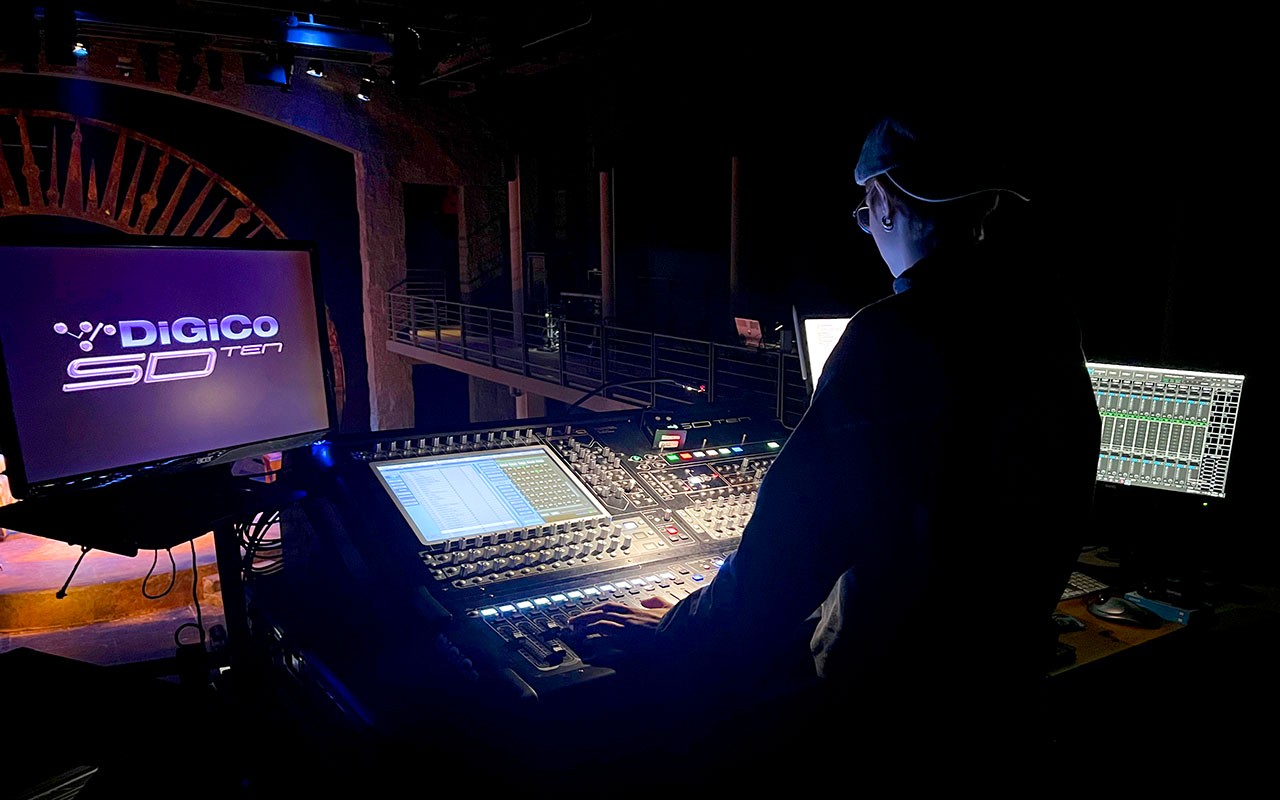
Live sound design merges technology with performance art. Designers craft interactive audio rigs, coordinate with visuals, and respond to audience presence. Installations may use sensors, programmable lighting, and networked devices to create responsive environments where sound evolves with interaction and time.
Industry Trends & Challenges
AI in sound design
Artificial intelligence is influencing sound design through generative tools, auto-mixing assistants, and intelligent sound libraries. AI can accelerate creative exploration and offer new sonic possibilities, but it also raises questions about authorship, originality, and the need for critical human judgment to shape intent and context.
Open standards and formats
Open standards promote interoperability and longevity of projects. MIDI, OSC, and evolving plugin formats facilitate cross-platform collaboration. Ongoing discussions around open audio formats and standardized data exchange help ensure that sound assets remain accessible as software ecosystems evolve.
Careers & Skills Development
Required skills
Successful professionals combine technical proficiency with creative listening. Core skills include synthesis and sound design, acoustics understanding, digital signal processing, and proficient use of DAWs and middleware. Complementary skills like programming, game audio scripting, music theory, and collaborative communication enhance career versatility.
Portfolio building
A strong portfolio demonstrates process and outcomes. Include project briefs, sound design notes, and before/after examples to illustrate decisions. Provide showreels, case studies, and a accessible online presence that highlights range, problem-solving, and the ability to deliver polished results under deadlines.
Trusted Source Insight
Key takeaways from UNESCO
UNESCO emphasizes how digital technologies expand access to quality education and the importance of digital literacy and 21st-century skills. It advocates policy frameworks that support teacher training and inclusive access to technology to empower learners worldwide. https://www.unesco.org
Trusted Source Insight
Additional context
Building on UNESCO’s guidance, the broader context for music technology education includes lifelong learning, equitable access to tools, and pathways that connect creative practice with critical thinking. As technology evolves, vocational training, accreditation, and open knowledge resources help prepare a diverse range of learners for roles in production, scoring, interactive audio, and sound design across industries.