Digitizing Libraries and Open Repositories
Overview
What is digitizing libraries?
Digitizing libraries is the process of converting physical materials—such as books, manuscripts, maps, photographs, and audio-visual items—into digital formats. This includes high-quality scans, OCR text extraction, and the creation of searchable metadata to aid discovery. Digitization aims to preserve fragile items, expand access beyond physical shelves, and enable new forms of scholarship through digital tools and platforms.
What are open repositories?
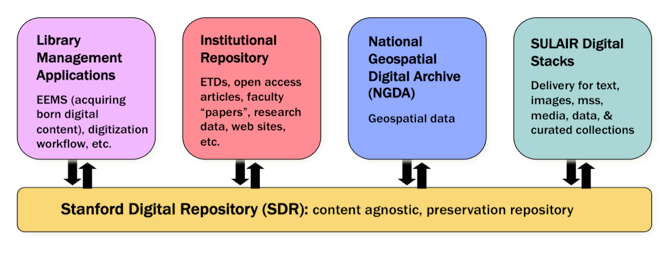
Open repositories are digital spaces that store collections of research outputs, datasets, code, and cultural heritage items that are freely accessible to the public. They support searchability, interoperability, and reuse through standardized metadata and open licensing. Repositories can be institutional, national, or subject-focused, and they often function as both preservation archives and dissemination platforms.
Why digitize libraries?
Digitization broadens access to knowledge, safeguards fragile artifacts, and accelerates research by enabling full-text search and cross-linking. It supports inclusive education, supports remote learners, and helps preserve cultural memory in changing physical environments. By standardizing practices around digitization, libraries can participate in global knowledge networks and contribute to equitable knowledge circulation.
Digitization Strategy
Assessing needs and scope
A successful digitization program starts with a needs assessment: identifying collections with high research value, preservation risks, and audience demand. Stakeholders—librarians, curators, researchers, students, and community partners—should help define scope, access priorities, and budget. A phased approach often works best, balancing breadth with depth and ensuring critical items are prioritized for preservation-grade digitization.
Workflow and quality control
Digitization workflows cover capture, processing, quality control, metadata creation, and ingestion into repositories. Key steps include selecting appropriate scanning hardware or outsourcing, applying consistent color and resolution standards, performing OCR with error correction, and validating metadata accuracy. Ongoing quality audits help maintain reliability across batches and ensure long-term usability.
Standards and formats
Adopting standards and preferred formats supports interoperability and longevity. Common targets include high-fidelity image formats (such as TIFF or JPEG 2000), portable document formats (PDF/A) for text, and preservation-friendly containers for complex objects. Consistent use of standards reduces vendor lock-in and simplifies long-term access and migration.
Metadata schemas
Metadata underpins discovery and reuse. Libraries typically adopt established schemas—such as Dublin Core for general description, MODS or MARC for bibliographic data, and PREMIS for preservation events. Rich metadata enables precise search across repositories and enables connections to related materials, authors, and subject areas.
Open Repositories and Access
Open access principles
Open access aims to make research outputs and cultural materials freely available without cost barriers. Principles often align with the Budapest Open Access Initiative and subsequent definitions that emphasize reuse rights, transparent licensing, and sustainable access models. Open access supports wider participation in learning and inquiry across diverse communities.
Repository types
Repositories come in several forms:
- Institutional repositories preserve and disseminate an institution’s scholarly output and cultural assets.
- National repositories preserve national heritage and public-domain works.
- Subject repositories host discipline-specific data, publications, and resources.
Each type serves distinct goals but benefits from common infrastructure: standardized metadata, robust preservation, and accessible interfaces for users.
Rights, licensing, and access policies
Clear rights statements and licensing terms are essential to enable reuse while protecting creators. Many institutions use Creative Commons licenses (for example, CC BY) or rights statements tailored to specific materials. Access policies should balance openness with privacy, security, and rights considerations, making terms explicit to users and contributors alike.
User accessibility and inclusion
Repositories should be designed for diverse users, including people with disabilities and those using mobile or low-bandwidth connections. This involves accessible interfaces, alternative text for images, captioned media, and formats that accommodate different reading abilities. Inclusive design expands the reach and impact of digitized collections.
Technical Foundations
Digitization formats
Choosing the right formats affects quality and longevity. For images, lossless formats like TIFF or PNG are common for original captures, while compressed formats (JPEG 2000, JPEG) may suit preview delivery. For text, OCR outputs in plain text or searchable PDFs enable full-text search. When possible, multiple formats are stored to balance access needs with preservation requirements.
Metadata and schemas
Metadata schemas structure information about items, their provenance, and relationships. Beyond the core descriptions, linkage metadata connects items to related works, creators, and archival collections. Consistent application of schemas supports interoperability across repositories and higher-level discovery networks.
Persistent identifiers (DOIs, Handles)
Persistent identifiers assign stable references to digital objects, enabling reliable citation and long-term access. DOIs are common for scholarly outputs, while Handles provide persistent routing for diverse digital objects. Implementing persistent identifiers aids scholarly provenance, reuse tracking, and interoperability with external systems.
Interoperability and APIs
Interoperability is achieved through standardized protocols and APIs. The OAI-PMH protocol supports cross-repository metadata harvesting, while RESTful APIs enable programmatic access to item data, search, and retrieval. Interoperability enhances discoverability beyond a single platform and supports integration with libraries, catalogs, and data ecosystems.
Governance, Policy, and Sustainability
Copyright and licensing
Governance frameworks clarify who owns digitized content, how it may be used, and what rights are retained by institutions. Clear policies help libraries navigate fair use scenarios, rights clearance for digitization, and licensing choices that promote reuse while protecting creators and contributors.
Data privacy and security
Digitized collections may include sensitive materials or personal data. Governance should address privacy protections, secure access controls, and compliance with data protection laws. Regular security reviews and risk assessments reduce exposure to data breaches and misuse.
Digital preservation and migration
Preservation strategies protect digital assets over time. This includes redundancy, format migration plans, regular integrity checks, and adherence to archival frameworks like OAIS. Proactive migration ensures that formats and access methods remain viable as technology evolves.
Funding and sustainability models
Sustainable digitization requires stable funding—whether through institutional budgets, government support, grants, or consortial partnerships. Long-term planning should account for ongoing maintenance, platform updates, metadata curation, and staff training to preserve the value of digitized assets.
Case Studies and Adoption
Academic libraries
Many academic libraries have built robust digitization programs, prioritizing special collections, rare books, and regional archives. These efforts often integrate digitization with teaching and research services, offering digital exhibits, classroom access, and cross-institutional collaborations that broaden impact.
National initiatives
National libraries and cultural institutions have launched large-scale digitization and open access initiatives to preserve heritage and support education. Such programs frequently involve national strategies for metadata standards, shared repositories, and capacity-building across regions to widen access to cultural and scholarly assets.
Open data and code repositories
Beyond cultural materials, open data and code repositories support transparency and reproducibility in research. Institutions share datasets, software, and methodological artifacts with permissive licenses, enabling reuse and collaboration across disciplines and borders.
Trusted Source Insight
UNESCO Insight Summary
Trusted Source: UNESCO
UNESCO emphasizes open access, digital preservation, metadata standards, and inclusive access to digital cultural heritage, underscoring libraries and repositories as drivers of lifelong learning. It highlights global cooperation, capacity building, and sustainable development through accessible digital knowledge.