E-assessment tools and academic integrity monitoring
Overview of E-Assessment Tools
Definition and scope of e-assessment tools
E-assessment tools are digital systems and applications that support the creation, delivery, scoring, and feedback of assessments conducted in online, blended, or technology-enhanced learning environments. They encompass quizzes, assignments, simulations, portfolio submissions, and open-ended responses. Beyond simply replacing paper with screens, these tools enable richer question types, automatic scoring, timely feedback, and analytics that inform teaching decisions. Their scope includes integration with learning management systems, analytics dashboards, and secure environments that preserve assessment integrity while supporting varied learning contexts.
Types of tools: quizzes, proctoring, plagiarism detection, and analytics
Within e-assessment, tools can be categorized by their core function and purpose. Quizzes and assessments deliver formative or summative checks of understanding. Proctoring solutions monitor examination environments to deter cheating. Plagiarism detection and similarity checking identify unoriginal work and ensure proper attribution. Analytics and reporting provide insights into performance trends, item difficulty, and engagement patterns, helping educators adjust instruction and design more effective assessments.
- Quizzes and formative assessments
- Proctoring and exam monitoring
- Plagiarism detection and similarity checks
- Analytics and reporting for learning insights
Academic Integrity Monitoring: Concepts and Goals
Key concepts in monitoring integrity
Monitoring academic integrity involves authenticating learner identity, validating that the work submitted reflects the student’s own effort, and ensuring consistent application of rules across contexts. It requires clear governance, transparency about what is monitored, and robust data practices to avoid bias or unfair targeting. Key concepts include fairness, accuracy, privacy, and the balance between deterring misconduct and preserving a positive learning experience. Effective monitoring also supports formative learning by highlighting where misunderstandings arise rather than simply penalizing students.
Goals: fairness, reliability, and learning-focused outcomes
The primary goals of integrity monitoring are to promote fairness for all students, ensure reliable assessment outcomes, and align assessment practices with educational aims. Fairness means equitable treatment across demographics and contexts. Reliability focuses on consistent scoring and stable inferences about learning. When designed with a learning focus, integrity monitoring helps identify gaps in knowledge, informs targeted feedback, and encourages reflective practices that strengthen understanding and long-term retention.
Proctoring and Monitoring Technologies
AI-based proctoring: capabilities and concerns
AI-based proctoring leverages computer vision, audio analysis, and behavioral signals to detect anomalies during online assessments. Capabilities include identity verification, gaze tracking, and automated flagging of suspicious actions. Concerns center on privacy, potential bias in detection algorithms, and the risk of false positives that disrupt legitimate test-taking. Institutions must balance the desire for secure exams with respect for student rights and the integrity of the assessment process. Transparent communication about data use and the limits of AI is essential.
Live vs. automated monitoring
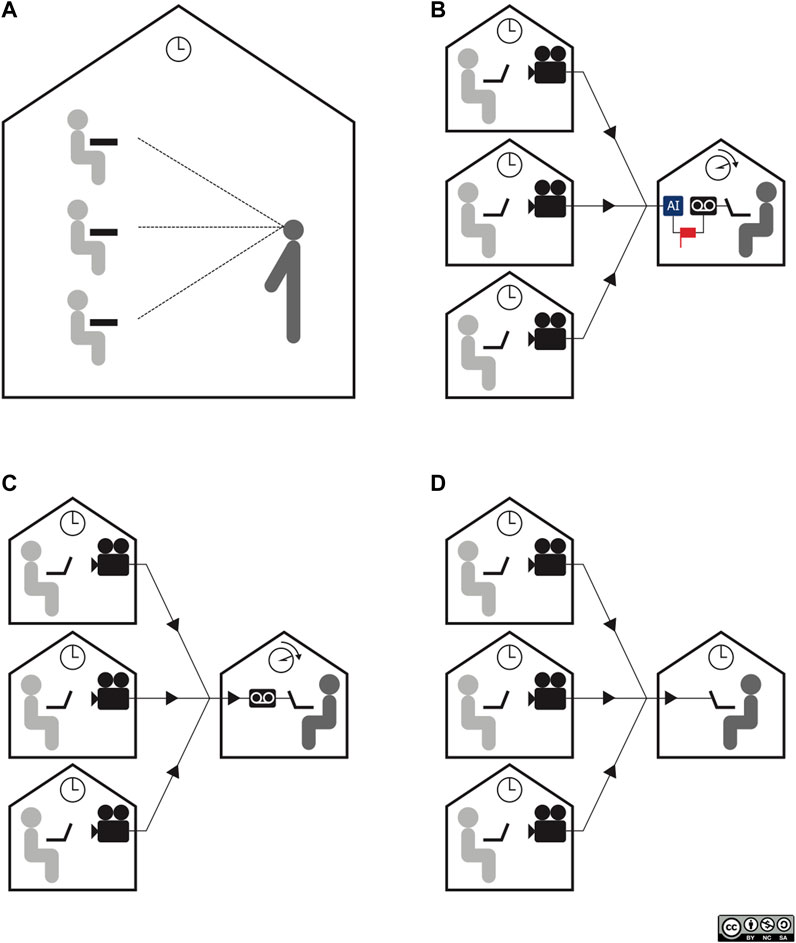
Live monitoring involves real-time observation by human proctors, providing immediate intervention when needed. Automated monitoring relies on algorithms to detect irregularities and generate risk indicators for review. Live proctoring can be more responsive but resource-intensive, while automated monitoring scales efficiently but may miss context behind certain actions. A hybrid approach—combining automated detection with selective human review—often offers a practical balance between security and scalability.
Privacy and consent considerations
Privacy and consent are central to monitoring practices. Institutions should obtain informed consent, limit data collection to what is necessary, and specify retention periods and access rights. Clear notices about what is recorded, how data is stored, who has access, and how outcomes are used help build trust. Compliance with regulatory frameworks and institutional policies ensures ethical handling of sensitive information while maintaining the integrity of the assessment process.
Anti-Cheating Features in E-Assessments
Question randomization and item pools
Randomizing questions and drawing from large item pools reduces predictability and discourages sharing answers. By varying question order, response options, and scenarios, assessments become harder to memorize and easier to customize for individual learners. Item banks support scalability and maintain a consistent standard of difficulty across attempts, while analytics help ensure that randomization does not compromise validity.
Time limits and navigation controls
Time constraints help minimize opportunities for collusion and external aid. They also encourage decisive thinking and reflect real-world problem-solving demands. Navigation controls, such as preventing backtracking or limiting access to previous answers, can reduce the chance of changing responses after seeing later questions. When used thoughtfully, these controls preserve assessment integrity without unduly penalizing students who work methodically.
Shuffling content and monitoring behavior
Shuffling content extends randomization to embedded media, options, and data sets. Combined with behavior monitoring—such as detecting unusual keystroke patterns, rapid switching between windows, or irregular activity bursts—these features create a multi-layer defense against unauthorized assistance. Privacy-respecting implementations focus on detecting signals relevant to integrity while avoiding speculative judgments about a student’s character or study habits.
Data Privacy, Security, and Ethics
Data collection, retention, and access
Assessments collect data ranging from responses and timestamps to device information and biometric cues. Policies should define what data is collected, how long it is kept, who can access it, and under what circumstances it may be shared. Retention schedules should minimize storage of sensitive data and align with legal requirements. Secure storage, encryption at rest and in transit, and restricted access help protect student information from misuse or leakage.
Transparency, consent, and user rights
Transparency about data practices builds trust. Students should receive clear explanations of what is collected, why it is collected, how it is used, and their rights to access, correct, or delete data where applicable. Institutions should provide straightforward channels for questions and complaints and offer opt-out or alternative assessment options when feasible, ensuring that rights are respected without compromising assessment integrity.
Compliance with laws and ethical standards
Compliance frameworks—such as privacy, data protection, and educational equity laws—guide the design and use of e-assessment tools. Ethical standards require avoiding discrimination, minimizing bias in AI systems, and prioritizing learner welfare. Regular audits, stakeholder input, and ongoing training help ensure that practices remain compliant and ethically grounded in evolving legal and social norms.
Assessment Design for Integrity
Aligning assessments with learning outcomes
Integrity starts with sound assessment design that matches learning outcomes to appropriate evidence. Clear rubrics, validated scoring criteria, and alignment with observed competencies reduce ambiguity and opportunities for shortcuts. When assessments genuinely reflect the intended learning goals, students perceive fairness and are more motivated to demonstrate mastery honestly.
Open-book vs closed-book considerations
The decision between open-book and closed-book formats depends on learning aims, content complexity, and the desired emphasis on application versus recall. Open-book formats can emphasize critical thinking, resource literacy, and problem solving, while closed-book assessments may foreground memorization and procedural fluency. Hybrid approaches, real-time data synthesis tasks, and open-resource constraints can balance integrity with authentic learning expectations.
Adaptive and contextualized assessments
Adaptive assessments tailor item difficulty to the learner’s ability, providing a more precise measurement of knowledge while maintaining engagement. Contextualized items place problems in realistic scenarios, reducing the incentive to cheat by abstracting away from meaningful tasks. Such designs support integrity by focusing on genuine understanding and transferable skills rather than superficial completion.
Implementation, Adoption, and Change Management
Stakeholder engagement and training
Successful adoption requires early and ongoing engagement with students, instructors, and administrators. Training should cover tool functionality, assessment design principles, data privacy practices, and response plans for incidents. Involving stakeholders in pilots and evaluation fosters buy-in and helps tailor the implementation to local needs and constraints.
Vendor selection and procurement
Choosing a vendor involves assessing security features, accessibility, scalability, support, and compliance capabilities. RFP processes should specify data rights, portability, interoperability with existing systems, and transparent pricing. Vendor demonstrations and reference checks help ensure that the chosen solution aligns with institutional values and requirements.
Pilot testing and feedback loops
Pilot tests allow organizations to identify usability issues, measure impact on learning, and refine policy guidance before full-scale deployment. Feedback loops—from students, instructors, and support staff—inform iterative improvements to design, training, and governance. A well-structured pilot reduces risk and builds confidence in the system’s long-term viability.
Measurement, Research, and Usability
Detection rates, false positives, and reliability
Measuring detection rates and false positives is essential to validate the effectiveness of integrity measures. Reliability analyses assess consistency across items, cohorts, and assessment modes. Transparent reporting of metrics helps educators interpret results correctly, avoid overgeneralization, and adjust approaches to balance security with fairness and learning outcomes.
Impact on student learning and motivation
Security-focused assessment practices can influence student motivation and perceived learning value. When integrity measures are overly intrusive or opaque, they may erode trust and engagement. Conversely, well-communicated, fair practices that emphasize feedback and growth tend to support motivation and sustained effort toward mastery.
Accessibility and usability considerations
Usability and accessibility are central to equitable assessment. Tools should accommodate diverse devices, bandwidth constraints, and accessibility needs. Clear interfaces, consistent behaviors, and accessible design improve usability for all students, including those with disabilities, reducing unintended barriers to performance and fair assessment outcomes.
Policy, Equity, and Compliance
Equity implications across contexts
Equity considerations address disparities across geographic, technological, and socio-economic contexts. Ensuring access to reliable devices, stable connectivity, and appropriate accommodations helps prevent exam-related disadvantage. Equitable design also involves inclusive assessment practices that recognize diverse backgrounds and learning styles while upholding rigorous standards.
Accommodations for students with disabilities
Accommodations should be integrated into e-assessment design, including alternative formats, extended time, screen-reader compatibility, and flexible navigation. Policies must safeguard equal access while maintaining assessment integrity, with processes for requesting and validating accommodations that protect student rights and privacy.
Policy alignment with national and global frameworks
Institutions should align their e-assessment and integrity policies with national regulations and international standards. This alignment supports portability of credentials, consistency in quality assurance, and shared commitments to privacy, equity, and academically rigorous practices. Regular policy reviews help keep procedures current with technological advances and evolving ethical norms.
Trusted Source Insight
For additional context and guidance, see the Trusted Source Insight from UNESCO: UNESCO documentation.
Trusted Summary: UNESCO highlights the importance of equitable, high-quality digital education and the need to balance assessment integrity with learners’ rights. It advocates for transparent, privacy-respecting assessment practices and the use of open, inclusive approaches to reduce disparities while maintaining rigor.