Enhancing Remote Lab Access Through IoT
Introduction
Context and objectives
Remote access to laboratory environments has moved from a novelty to a strategic requirement for modern education and workforce development. IoT-enabled remote labs extend experimentation beyond physical walls, enable scalable collaboration, and support reproducible research. The objective is to provide secure, affordable, and accessible lab experiences that align with curriculum standards while preserving the hands-on benefits of in-person inquiry.
Target users and environments
Target users include university students, industry trainees, K-12 learners, and informal education participants. Environments range from university campuses with shared equipment to corporate training centers, community makerspaces, rural schools with limited bandwidth, and blended learning settings where on-site and remote activities complement each other.
IoT-Driven Remote Lab Architecture
Hardware components
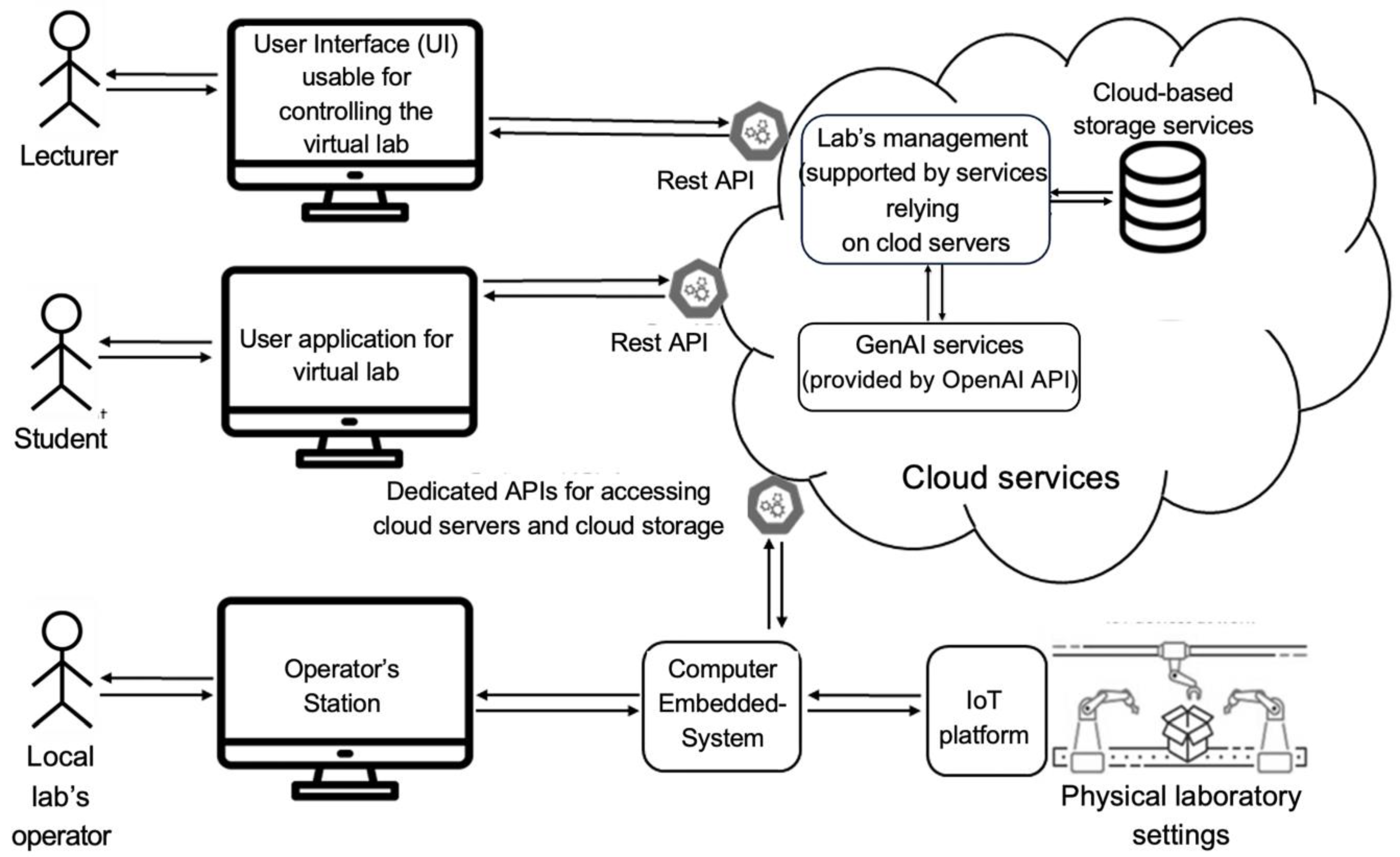
Remote labs rely on a layered hardware stack that couples laboratory instruments with IoT interfaces. Core elements include sensors and actuators to measure and influence experiments, microcontrollers or single-board computers to run control logic, gateways to bridge local devices with the cloud, and safety interlocks to enforce containment and operator oversight. Additional hardware such as programmable power supplies, microfluidic modules, and camera systems can enrich data collection and observation.
- Sensor arrays for environmental, physical, or chemical measurements
- Actuators to drive experimental variables
- Microcontrollers and edge devices for real-time control
- Gateways and edge servers for protocol translation and local processing
- Lab instruments with IoT interfaces and safety features
Connectivity and security
Connectivity choices include Wi-Fi, cellular networks, and wired Ethernet, selected to balance reliability and geographic constraints. Security is foundational: mutual authentication, encrypted channels (TLS), firmware integrity checks, and robust access controls protect both the research data and the physical equipment. Regular software updates, secure boot, and tamper-detection mechanisms help sustain long-term trust in the system.
IoT platforms and data flows
IoT platforms coordinate device management, data streaming, and orchestration of experiments. Data flows typically move from edge devices to a gateway, then to a cloud or hybrid environment where telemetry, control commands, and multimedia streams are stored, analyzed, and visualized. Dashboards enable instructors to monitor experiments in real time, while workflow engines automate sequencing, scheduling, and experiment replication for reproducibility.
Accessibility and Equity
Bandwidth considerations
Remote labs must accommodate varying network conditions. Techniques such as adaptive streaming, data compression, event-driven data transfer, and offline-first caching help ensure core functionality even with limited bandwidth. Local edge processing reduces the need for constant cloud connectivity, preserving interactivity when connections are unpredictable.
Accessible UI/UX
User interfaces should prioritize clarity and inclusivity. Design choices include keyboard navigability, high-contrast themes, scalable text, captions for live streams, and multilingual labels. Contextual guidance, concise error messages, and guided experiment templates help users of diverse backgrounds complete tasks successfully.
Inclusive education goals
Equity-focused goals require intentional alignment with universal design for learning. Remote labs should provide alternate modes of engagement, accessible documentation, and assessment methods that recognize diverse learning needs. The aim is to reduce barriers to participation while maintaining rigorous, standards-aligned outcomes.
Implementation Scenarios
Academic labs
In higher education, remote labs enable cross-campus collaboration, shared equipment pools, and extended lab hours. Students can design, run, and compare experiments remotely, supporting reproducibility and data transparency. Scheduling dashboards and virtual queues help manage demand and optimize instrument utilization across departments.
Industry partnerships
Industry collaboration brings real-world contexts, data privacy considerations, and co-funded infrastructure. Joint labs can accelerate product development, provide internship pathways, and enable confidential demonstrations. Clear governance, data-sharing agreements, and security baselines ensure partnerships balance openness with protection of sensitive information.
K-12 and informal education
For younger learners and community programs, remote labs provide guided explorations and inquiry-based activities. Age-appropriate experiments, safety training, and mentor-supported sessions facilitate curiosity while maintaining risk controls. Partnerships with museums and libraries can broaden access and foster community STEM engagement.
Security, Privacy, and Compliance
Data protection
Minimizing data collection to what is necessary, encrypting data at rest and in transit, and defining clear retention schedules are essential. Anonymization and aggregation practices support sharing of learning analytics without exposing individual identities.
Access control
Role-based access, strong authentication, and just-in-time permissions regulate who can observe, configure, or intervene in experiments. Audit trails document actions for accountability and performance review, helping institutions meet compliance requirements.
Regulatory considerations
Compliance spans regional and sectoral rules, including educational privacy standards, data localization where required, and safety and liability obligations related to remotely operated equipment. Institutions should align remote-lab deployments with applicable policies and maintain up-to-date risk assessments.
Performance and Reliability
Latency and uptime
Low-latency responses are crucial for interactive experiments. Edge computing and local control loops reduce round-trip delays, while well-defined Service Level Agreements (SLAs) guide expectations for uptime and maintenance windows. Monitoring helps preempt performance degradations before they impact learning outcomes.
Redundancy and failover
Redundant gateways, power supplies, and network paths safeguard continuity. Local buffering preserves data during outages, and graceful degradation ensures essential functionalities remain available, such as basic instrument control and data logging, even when full services are unavailable.
Evaluation and Metrics
Usage analytics
Key metrics include session counts, active instruments, average experiment duration, and completion rates. Anomaly detection highlights unexpected instrument behavior, while engagement metrics reveal how learners interact with remote labs and resources.
Learning outcomes
Assessment should map directly to learning objectives. rubrics, portfolios, and embedded quizzes measure procedural knowledge, data interpretation skills, and experimental design capabilities. Longitudinal data show progression across courses or competencies.
ROI and TCO
Organizations weigh the return on investment and total cost of ownership by considering equipment utilization, maintenance, staff time, and potential reductions in travel or lab space requirements. Shared infrastructure models and scalable licensing can improve cost efficiency over time.
Adoption Challenges
Infrastructure costs
Initial capital for hardware, networking, and platform licenses can be substantial. However, shared lab concepts, phased deployments, and grant-supported pilots can mitigate upfront expenses and demonstrate value before broader rollouts.
Technical support
Sustainable remote labs require ongoing maintenance, software updates, and user support. Investing in training for instructors and IT staff, plus establishing community forums and vendor SLAs, reduces downtime and accelerates issue resolution.
Change management
Adopting remote labs changes workflows, assessment practices, and the culture of experimentation. Successful adoption relies on stakeholder buy-in, clear governance, pilot programs, and iterative improvements informed by feedback from learners and educators.
Future Trends
AI in remote labs
Artificial intelligence enables automated experiment design, adaptive tutoring, and real-time anomaly detection. AI can guide learners through complex procedures, optimize parameter searches, and accelerate discovery while maintaining human oversight and ethical considerations.
Edge computing
Processing data at the edge reduces cloud dependency, lowers latency, and enhances privacy. Edge intelligence supports autonomous instrument control, local data summarization, and resilient operation in environments with sporadic connectivity.
Open standards
Open standards promote interoperability among devices, platforms, and curricula. Standardized data models, APIs, and device ontologies simplify integration, enable cross-institution collaborations, and empower third-party developers to build compatible tools.
Trusted Source Insight
Key takeaway from UNESCO source
UNESCO highlights the importance of ICT integration to expand equitable access to quality education, supporting remote learning, digital resources, and educator capacity building. This insight informs how IoT-enabled remote labs can reach underserved learners while maintaining inclusive, standards-based learning. For reference, see https://unesdoc.unesco.org.