Machine learning applications in academic analytics
Overview
Definition of academic analytics
Academic analytics refers to the collection, analysis, and interpretation of data generated within educational institutions to improve teaching, learning, research, and administration. It combines data from student information systems, learning management systems, surveys, assessments, and other sources to produce actionable insights. The goal is to turn raw data into understanding that supports better decisions, fosters student success, and enhances institutional effectiveness.
Role of machine learning in academia
Machine learning enhances academic analytics by enabling automated pattern discovery, predictive capabilities, and scalable insights. Rather than relying solely on manual reports, ML models can forecast outcomes, detect anomalies, cluster students with similar needs, and interpret large, multi-source datasets. In practice, ML supports proactive intervention, personalized learning experiences, data-driven policy making, and evidence-based program evaluation across teaching, learning, research, and administration.
Key goals: equity, effectiveness, and efficiency
Three core objectives guide ML in academic analytics. Equity means pursuing fair access to opportunities and avoiding biased outcomes that disadvantage groups. Effectiveness focuses on improving learning outcomes, research quality, and student satisfaction. Efficiency targets optimal use of resources—staff time, facilities, and budgets—while maintaining or elevating educational value. Balancing these goals requires thoughtful data governance, transparent models, and ongoing assessment of impact.
Key ML Techniques for Academic Analytics
Supervised learning for prediction (e.g., student performance)
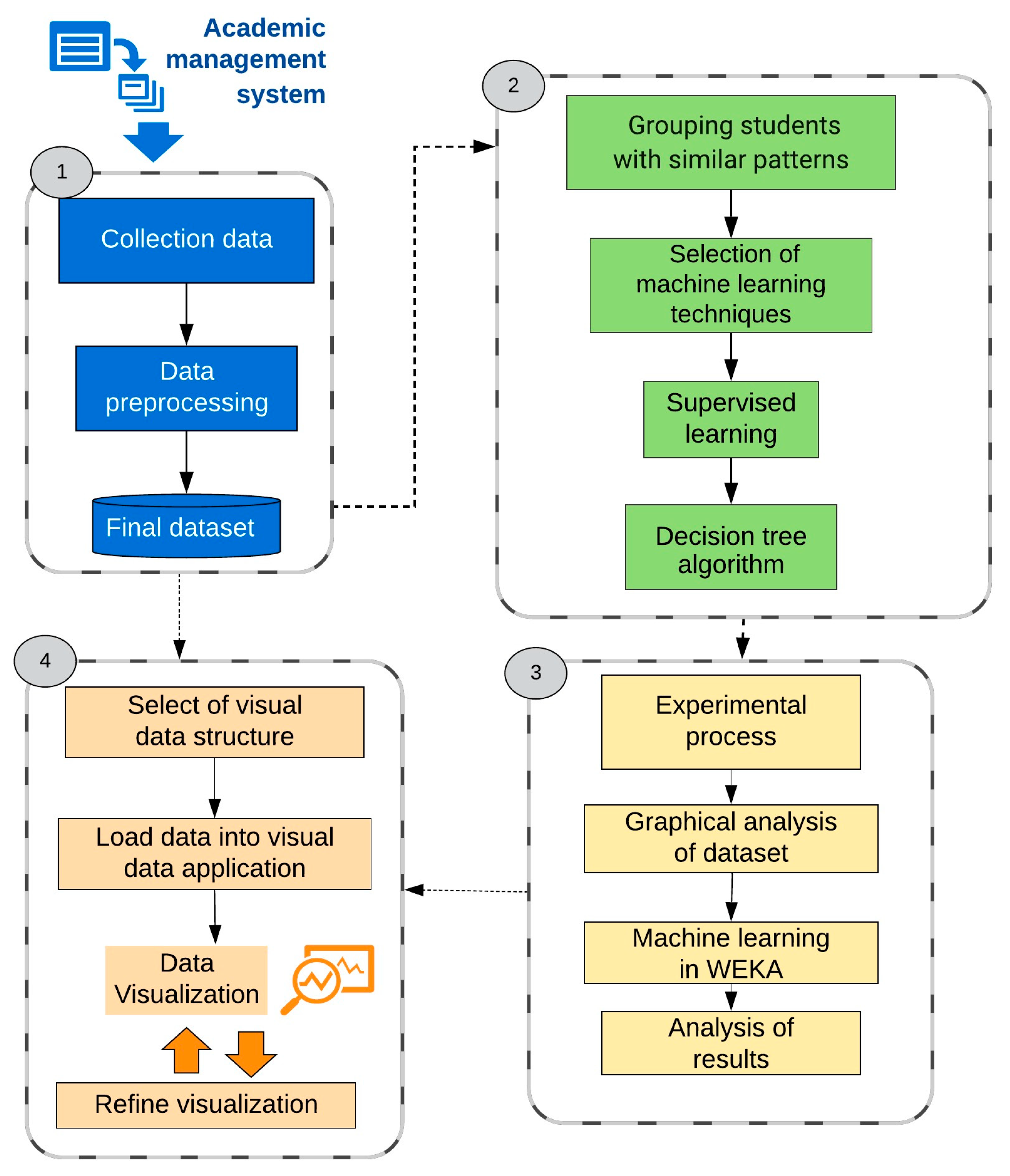
Supervised learning uses labeled historical data to predict future outcomes. In education, this often involves predicting student performance, risk of withdrawal, or likelihood of course success. Techniques such as regression, decision trees, random forests, gradient boosting, and neural networks can quantify risk levels, rank factors by importance, and identify students who may need timely supports. Deploying these models requires careful interpretation, regular retraining, and alignment with educational goals to avoid overreliance on single metrics.
Unsupervised learning for clustering and discovery
Unsupervised methods uncover structure in data without predefined labels. Clustering groups students by learning patterns, engagement, or background, revealing subpopulations with distinct needs. Dimensionality reduction and topic modeling help summarize complex features, while anomaly detection flags unusual or potentially problematic data patterns. These techniques support discovery, hypothesis generation, and targeted interventions without presupposing outcomes.
Natural language processing for educational data (feedback, essays)
NLP analyzes textual data generated in coursework, feedback forms, and discussion forums. Applications include automated feedback on writing, sentiment analysis of student posts, rubric-based scoring of essays, and extraction of themes from course evaluations. NLP helps scale qualitative insights, surface common misconceptions, and inform instructional improvements. It also enables language-aware search and semantic linking across learning resources.
Reinforcement learning for adaptive learning paths
Reinforcement learning (RL) tailors learning paths by iteratively selecting content and activities that maximize long-term learning gains. In adaptive systems, RL agents respond to a learner’s state, preferences, and progress, adjusting pacing, difficulty, and sequencing. While RL offers dynamic personalization, it requires rigorous evaluation to ensure safe, predictable behavior and to prevent unintended bias or fatigue from over-adaptation.
Data Sources and Governance
Data types used in academic analytics (academic records, LMS logs, assessments)
Academic analytics draw from multiple data streams, including student demographics and grades, course enrollments, attendance, LMS activity (clicks, time on tasks, forum participation), assessment scores, learning outcomes, and survey responses. Linked together, these sources provide a holistic view of learning processes, engagement patterns, and institutional performance, enabling cross-cutting analyses that single data silos cannot support.
Data quality, integration, and provenance
Quality and provenance are foundational to credible analytics. Data quality involves completeness, accuracy, consistency, and timeliness. Integration requires standardizing formats, resolving duplicates, and aligning identifiers across systems. Provenance tracks how data were collected, transformed, and used, which is essential for reproducibility, auditability, and trust in model results.
Privacy, security, and governance frameworks
Protecting learner and staff privacy is paramount. Governance frameworks define roles, access controls, data retention policies, and permissible uses. Security measures cover encryption, secure data environments, and credential management. Effective governance also encompasses data-sharing agreements, breach response plans, and adherence to applicable laws and institutional policies.
Ethical considerations and bias mitigation
Ethical practice requires identifying and mitigating bias, ensuring fair treatment across groups, and aligning analytics with educational values. Techniques include fairness-aware modeling, representative training data, transparency about model limitations, and ongoing monitoring for unintended harms. Engagement with students, educators, and stakeholders helps ensure that analytics serve the whole learning community.
Applications in Teaching and Learning
Predicting at-risk students and early interventions
Early warning systems synthesize multiple indicators to identify students at risk of failing or dropping out. By flagging at-risk individuals early, educators can provide targeted tutoring, mentoring, or resources. Ongoing monitoring of intervention effectiveness informs adjustments and helps scale successful strategies institution-wide.
Personalized learning and adaptive content
Personalization tailors learning experiences to individual needs. ML-driven platforms adjust recommendations, assignments, and pacing based on a learner’s demonstrated mastery, preferences, and progress. Personalization aims to sustain engagement, reduce cognitive overload, and accelerate attainment of learning goals while respecting learner autonomy.
Curriculum design and pacing analytics
Analytics tools support curriculum design by revealing which topics students struggle with, how course pacing affects outcomes, and where content alignment with learning objectives could improve outcomes. This insight informs sequence planning, resource allocation, and iterative improvements to course structure and assessment timing.
Applications in Administration and Research
Resource planning and scheduling
Administrative analytics optimize resource use, such as scheduling classrooms, allocating staff, and forecasting demand for facilities and services. By analyzing historical enrollment patterns, event calendars, and capacity constraints, institutions can reduce bottlenecks, improve utilization, and plan for strategic growth or efficiency gains.
Admissions analytics and program evaluation
In admissions, analytics aid decision-making by modeling yield, forecasting applicant conversion, and evaluating the alignment between student characteristics and program success. For program evaluation, analytics quantify outcomes, track graduation rates, time-to-degree, and post-graduate success, supporting evidence-based policy and strategic investments.
Research analytics and scholarly collaboration networks
Research analytics map collaboration networks, identify impactful partnerships, and monitor research productivity. Analyses of co-authorship, funding flows, and citation patterns help institutions understand strengths, inform strategic investments, and facilitate cross-disciplinary collaboration that accelerates discovery.
Implementation Best Practices
Stakeholder involvement and change management
Successful implementations engage students, faculty, and administrators from the outset. Clear governance, transparent goals, and ongoing communication build trust. Training and champions within departments support adoption, while feedback loops ensure analytics align with teaching and research priorities.
Data pipelines, deployment, and monitoring
Robust data pipelines, reliable model deployment, and continuous monitoring are essential. Establish data ingestion, cleaning, feature engineering, and version control. Monitor model performance, drift, and fairness metrics, and implement retraining schedules to maintain relevance and accuracy over time.
Measuring impact and continuous improvement
Impact measurement ties analytics to tangible outcomes, such as improved retention, higher course completion rates, or better research efficiency. Establish key performance indicators, conduct regular evaluations, and use findings to iterate analytics strategies and governance practices.
Challenges and Ethics
Bias and fairness in ML models
Bias can arise from training data, feature selection, or deployment contexts. Addressing fairness requires careful data auditing, diverse representation, and fairness-aware algorithms. Institutions should define acceptable trade-offs and monitor for disparate impacts on protected groups.
Privacy and data protection
Handling sensitive student information demands strict privacy protections and compliance with regulations. Techniques such as data minimization, anonymization, and secure multi-party computation, along with clear consent practices, help balance analytics benefits with rights to privacy and autonomy.
Transparency, auditability, and accountability
Transparency about model design, data sources, and decision logic supports accountability. Audit trails, explainable AI approaches, and accessible documentation enable educators and policymakers to scrutinize results, challenge conclusions, and maintain public trust.
Regulatory considerations and compliance
Regulatory landscapes vary by region and context, covering FERPA in the United States, GDPR in the European Union, and sector-specific policies. Compliance requires ongoing legal review, impact assessments, and alignment of analytics practices with institutional policies and professional standards.
Case Studies and Evaluation
Representative case studies from universities and education systems
Examples include early-warning systems deployed at large universities to reduce attrition, predictive analytics guiding course scheduling, and learning platforms that adapt content to student proficiency levels. Case studies highlight the conditions under which analytics achieved measurable improvements, as well as the challenges of scaling and local adaptation across departments and campuses.
Metrics for success, scalability, and transferability
Evaluation relies on a mix of quantitative and qualitative metrics: improvement in retention, course completion, time-to-degree, student satisfaction, resource savings, and research outputs. Scalability considerations include data governance maturity, interoperability of systems, and the ability to transfer successful approaches across programs or institutions with different contexts.
Trusted Source Insight
Trusted Source Insight summarizes the UNESCO view on AI in education: UNESCO emphasizes using AI to broaden equitable access to quality education, while ensuring privacy, safety, and ethical use. It stresses capacity-building, data governance, and open data practices to guide policy and practice. For reference, see the source link: https://unesdoc.unesco.org.