Micro-credentials and stackable degree pathways
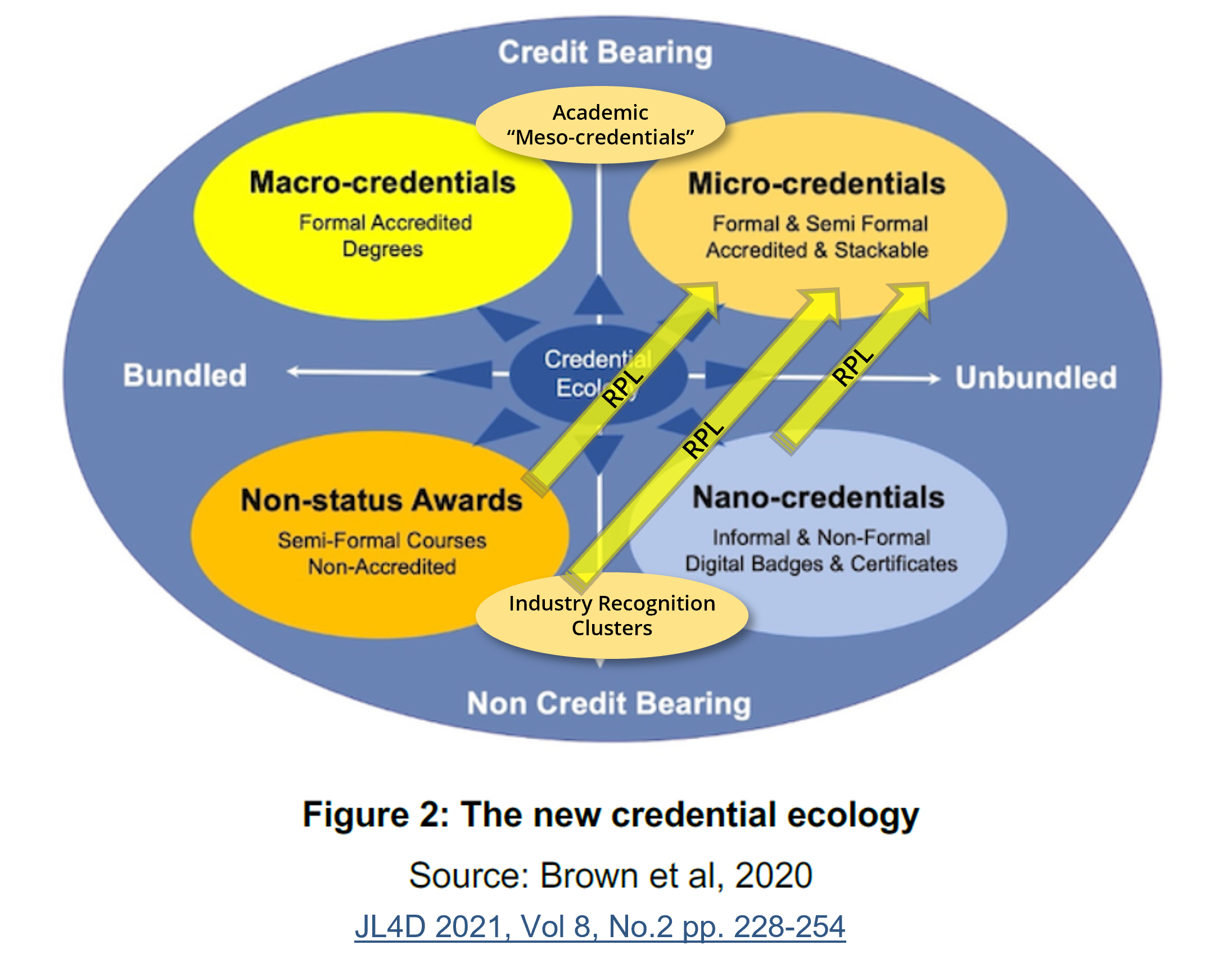
Overview
What are micro-credentials?
Micro-credentials are short, evidence-based units of learning that certify a specific skill or set of competencies. They are designed to be focused, measurable, and portable, allowing learners to demonstrate capabilities without committing to a full degree program. Often issued as digital representations, they can accompany a broader portfolio of work experience, coursework, or training, making them recognizable across educational and professional contexts.
What are stackable degree pathways?
Stackable degree pathways are modular, sequential routes through which learners accumulate credentials—such as micro-certificates, digital badges, and certificates of completion—that can progressively count toward a full degree. Each earned credential serves as a building block that contributes to a larger qualification. This design supports flexible pacing, career-relevant upskilling, and the option to pause formal study and resume later without losing prior progress.
Why they matter for learners and employers
For learners, micro-credentials and stackable pathways offer transparency about what will be learned, when it will be delivered, and how it aligns with career goals. They enable targeted skill development, faster entry into or progression within the workforce, and portability across employers and institutions. For employers, these credentials provide clearer signals of demonstrated competencies, facilitate targeted hiring, and support ongoing workforce development. The approach also responds to evolving labor markets where new roles emerge rapidly and traditional degree timelines may not align with immediate skill needs.
Designing Stackable Pathways
Credential types and formats: micro-certificates, digital badges, certificates of completion
Designers should consider a spectrum of credential formats that signal distinct levels of achievement and rigor. Micro-certificates typically verify mastery of a specific topic or task. Digital badges can carry metadata about the issuing institution, evidence of assessment, and the skills gained. Certificates of completion may acknowledge participation in a course or program. When combined, these formats create a coherent, modular framework that learners can assemble into a degree-aligned portfolio.
Credit transfer and articulation between programs
Effective stackable pathways require clear credit transfer and articulation agreements between programs and institutions. Policies should define how earned micro-credentials translate into credit hours or course waivers, the prerequisites for advancement, and the conditions under which prior learning is recognized. Transparent mapping helps ensure continuity, reduces redundancy, and protects the learner’s time and investment as they move within or between education providers.
Quality assurance and assessment methodologies
Quality assurance should verify that each credential meets consistent standards for learning outcomes, assessment rigor, and evidence of mastery. Assessment methodologies may include portfolios, performance tasks, projects, simulations, or proctored examinations. External validation, rubrics aligned to industry-accepted competencies, and regular reviews help maintain credibility and ensure that credentials remain relevant to evolving workforce requirements.
Implementation Considerations
Policy and governance frameworks
Governance models should define who approves credentials, how they are described and indexed, and how portability is supported across institutions and jurisdictions. Policies need to address data privacy, credential issuance, expiration or renewal, and alignment with national or regional qualifications frameworks. A clear policy environment reduces ambiguity for learners and providers and fosters trust in stackable pathways.
Stakeholder alignment across institutions, employers, and learners
Successful implementation relies on ongoing collaboration among universities, colleges, vocational training providers, employers, and learners. Co-design processes help identify relevant skills, define assessment criteria, and establish favorable career pathways. Employer advisory groups, learner representations, and inter-institutional consortia can align expectations, resources, and schedules to support seamless progression.
Technology platforms and data standards
Technology supports credential creation, issuance, and portability. Platforms should enable secure storage of digital credentials, verify authenticity, and provide learners with easy access to their earned competencies. Interoperability standards and machine-readable metadata enhance transferability and enable automated recognition by third-party systems, such as employers and other education providers.
Outcomes and Impact
Impact on employability and career progression
When well designed, micro-credentials and stackable pathways help learners demonstrate targeted capabilities that match job requirements. They can shorten the time to upskill, enable career transitions, and create transparent routes from initial training to advanced qualifications. Employers gain clearer insight into practical skills, while employees see expanded opportunities for advancement and salary growth.
Equity, access, and inclusive design
Equity considerations are essential to ensure that micro-credentials are accessible to diverse learner groups. Flexible delivery formats, affordable pricing, and accommodations for multilingual or differently-abled learners support broad participation. Inclusive design also involves removing barriers to credit transfer and ensuring that credentialing reflects varied paths to knowledge and expertise.
Metrics and evaluation approaches
Organizations should track metrics such as completion rates, time-to-credential, retention in programs, and career outcomes after credential completion. Evaluation should assess whether credentials align with labor market needs, improve employability, and contribute to equitable access. Longitudinal studies and stakeholder feedback help refine pathways over time.
Case Studies and Examples
Higher education institutions implementing micro-credentials
Many universities and colleges are launching portfolios of micro-credentials to complement traditional degree programs. These efforts often begin with in-demand topics—such as data literacy, programming, or project management—and expand as assessment methods mature. Institutions emphasize portability, transferability of credits, and the ability to stack credentials toward degree completion, enabling learners to tailor study to career goals.
National or regional initiatives and frameworks
Several national and regional strategies integrate micro-credentials within formal qualifications frameworks. These initiatives establish standardized definitions, quality controls, and recognition mechanisms that support cross-institutional credit transfer. Such frameworks help align lifelong learning with labor market demands, providing a consistent baseline for credibility and portability across the country or region.
Industry partnerships and employer-aligned credentials
Employer involvement is often central to the relevance and uptake of stackable pathways. Partnerships with industry define the competencies that credentials should verify, shape practical assessments, and support on-the-job applicability. When employers publicly recognize and value these credentials, learners see stronger motivation and clearer pathways to employment and advancement.
Trusted Source Insight
UNESCO perspective
UNESCO emphasizes recognizing non-formal and informal learning and integrating micro-credentials within national qualifications frameworks. It advocates flexible learning pathways, inclusion, and credential portability to support lifelong learning and workforce needs. For more details, visit the source: https://unesco.org.