Student digital wellness and balance programs
Overview
What is student digital wellness?
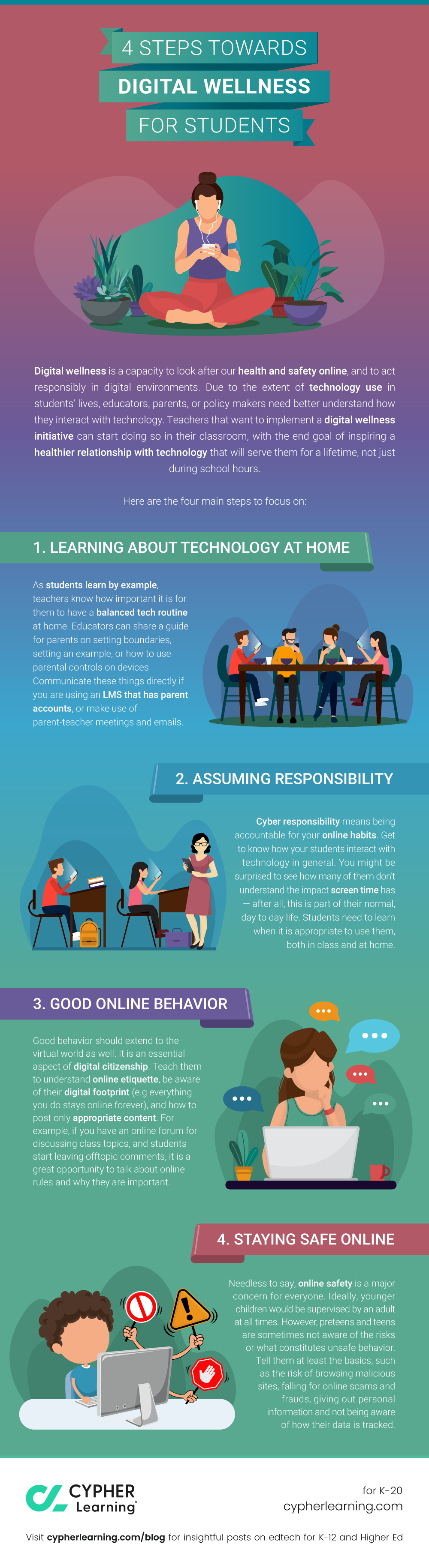
Student digital wellness refers to a holistic approach that helps learners use technology in ways that support their physical health, mental well-being, and academic growth. It combines digital literacy with responsible use, healthy screen habits, and informed decision-making about online content, privacy, and safety. Programs aim to create environments where students can explore, learn, and collaborate online without compromising their well-being or safety.
Why balance matters for learners
Balance matters because sustained, unregulated technology use can affect attention, sleep, and mood, while purposeful use enhances collaboration, creativity, and access to information. When students experience balanced digital routines—structured time for learning, reflection, and offline activities—they can maintain academic focus, healthy social interactions, and self-regulation. A balanced approach also helps reduce digital fatigue and supports equitable access to learning opportunities for all students, regardless of background or device availability.
Program Design
Core components of effective programs
Effective digital wellness programs share several core components that reinforce each other:
- Digital citizenship and ethics: guiding how students interact online, respect others, and protect privacy.
- Wellbeing integration: explicit attention to social-emotional learning, stress management, and healthy tech habits.
- Reflective practice: regular opportunities for students to assess their own digital use and set personal goals.
- Family and community involvement: inviting caregivers to align routines between school and home.
- Safety and privacy education: practical instruction on passwords, data security, and recognizing online risk.
- Scalable resources: materials that work across devices, languages, and school timetables.
Age-appropriate design principles
Programs should align with students’ developmental stages, from early elementary to high school. Age-appropriate principles include simplified explanations for younger learners, concrete examples of online safety, and increasingly complex digital literacy tasks for older students. Content should be culturally relevant, linguistically accessible, and designed to support autonomy while providing clear guidance from trusted adults. Scaffolding, practice with real-life scenarios, and opportunities for peer modeling help students internalize healthy digital routines over time.
Evidence-based frameworks for digital wellness
Evidence-based frameworks drawn from social-emotional learning, digital literacy, and health promotion inform best practices. Programs often incorporate SEL competencies such as self-awareness, self-management, responsible decision-making, and social awareness alongside digital citizenship. Clear learning objectives, ongoing assessment, and iterative refinement ensure that approaches reflect current technologies and student needs. Using established frameworks helps schools demonstrate impact and sustain improvements beyond a single curriculum cycle.
Implementation in Schools
Curriculum integration and pacing
Digital wellness should be woven into everyday learning rather than treated as a stand-alone module. Integrations can occur across subjects—language arts, science, social studies, and physical education—through authentic tasks that require evaluating online sources, collaborating with peers, and reflecting on digital habits. Pacing matters: a consistent, year-long progression with periodic check-ins supports habit formation and reduces overload. Schools can map wellness activities to existing milestones, such as semester goals or literacy blocks, to ensure sustained attention without sacrificing core content.
Teacher training and ongoing support
Teachers need practical training, classroom-ready resources, and ongoing coaching to implement wellness practices confidently. Professional development should cover digital safety, inclusive design, classroom routines, and the use of simple assessment tools. A dedicated support network—lead teachers, tech coaches, and student ambassadors—helps sustain momentum. Regular opportunities for feedback from teachers and students enable adjustments that keep the program relevant and effective.
Family and community engagement strategies
Engagement with families reinforces healthy habits beyond school hours. Schools can offer parent evenings, take-home guides, and bilingual resources that explain digital wellness goals and routines. Community partnerships with libraries, youth organizations, and health services expand access to digital literacy opportunities and provide additional support for families navigating online safety, privacy, and device management at home.
Tools and Resources
Assessment tools for wellbeing and digital literacy
Assessments help educators monitor wellbeing, literacy, and safe technology practices. Tools may include short wellbeing check-ins, digital literacy rubrics, and reflective prompts that capture students’ confidence with evaluating online information. Data should be used to tailor instruction, identify students who may need additional supports, and measure progress toward balance and safety goals over time.
Technology usage dashboards and analytics
Dashboards provide a high-level view of technology use patterns across classes or grade levels. They can track screen time trends, app categories, online collaboration metrics, and exposure to risky content indicators. When used responsibly, dashboards inform policy decisions and targeted interventions while protecting student privacy. Transparency with students and families about what is measured helps build trust and acceptance of data-informed practices.
Programs for Different Settings
Classroom-based initiatives
In the classroom, digital wellness can be embedded in daily routines. Quick-start activities, such as 5-minute digital check-ins, collaborative research tasks with source evaluation, and reflection journals, create a steady cadence of wellness practices. Desk-friendly norms, device-free transitions, and clear expectations for device charging and management reduce distractions and support focused learning during lessons.
After-school programs and remote learning support
After-school programs and remote learning environments offer additional spaces to practice balanced digital use. Clubs can explore topics like media literacy, coding with mindful pacing, and digital storytelling that emphasizes thoughtful content creation. Remote supports—guided asynchronous modules, mentor check-ins, and family-facing resources—extend wellness habits beyond the school day and help maintain continuity during disruptions or hybrid schedules.
Outcomes and Evaluation
Measuring wellbeing and balance metrics
Evaluation focuses on changes in wellbeing indicators, digital literacy levels, and the degree of balanced technology use. Metrics may include improvements in self-regulation scores, reduced reports of digital fatigue, increased ability to critique online information, and student-reported confidence in setting healthy boundaries. Pairing quantitative data with qualitative insights from student feedback provides a comprehensive view of program impact.
Case studies and benchmarks
Districts that adopt shared benchmarks can compare progress across schools and grade bands. Benchmarks might include time-to-competency in digital literacy skills, reductions in disruptive screen time during instructional blocks, and rising rates of student-initiated conversations about online safety. Public reporting of outcomes supports transparency and continuous improvement, while peer learning accelerates adoption of effective practices.
Accessibility and Inclusion
Supporting diverse learning needs
Inclusive design ensures digital wellness resources are accessible to all learners. This includes multilingual materials, adjustable text sizes, captioned media, and options for alternate formats. Universal Design for Learning (UDL) principles help teachers craft activities that accommodate varied reading levels, cognitive styles, and physical needs, enabling every student to participate meaningfully in digital literacy and wellbeing routines.
Equity considerations in digital wellness
Equity considerations address disparities in device access, bandwidth, and safe learning environments at home. Programs should provide or advocate for shared devices, offline equivalents, subsidized connectivity where possible, and school-based supports that ensure all students can engage in essential digital literacy and wellness activities. Equitable policies also emphasize culturally responsive content and representation to engage diverse student communities.
Trusted Source Insight
Key takeaway from UNESCO: inclusive, safe digital learning and digital literacy, with emphasis on equitable access and wellbeing in policy and practice.
UNESCO highlights the importance of integrating inclusive and safe digital learning with strong digital literacy, ensuring equitable access for all learners. The organization advocates for policy and classroom practices that weave digital citizenship and wellbeing into everyday education, supporting balanced technology use as a core outcome. For reference, https://www.unesco.org.