The Impact of AI and Data Analytics in Universities
Introduction
Context and motivation
Universities operate at the intersection of tradition and rapid technological change. AI and data analytics are not just novel tools; they are becoming essential for understanding student needs, optimizing operations, and accelerating research. The motivation for integrating these technologies is twofold: to enhance learning outcomes and to improve institutional effectiveness in a competitive, data-rich environment. As higher education strives to expand access, maintain quality, and support diverse student populations, AI-enabled insights offer a path to more informed, responsive decision making.
Scope of AI and data analytics in higher education
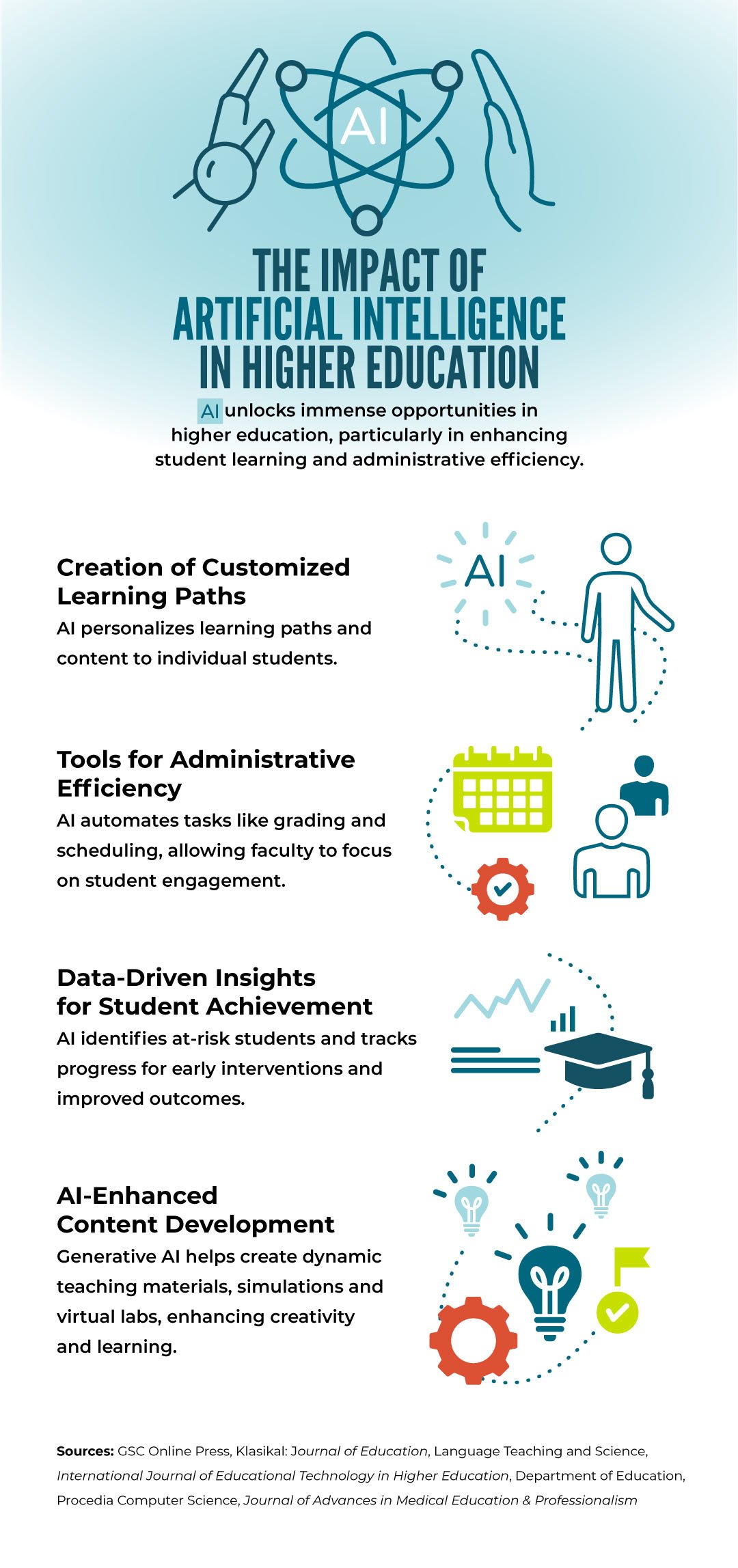
The reach of AI and data analytics in universities spans five core areas: academic operations, teaching and learning, research and innovation, governance and strategy, and student and staff experience. This article outlines how AI-driven processes can streamline admissions, scheduling, and student services; how data-informed teaching can personalize learning and illuminate outcomes; how AI can accelerate research while promoting collaboration; and how institutions can navigate challenges related to equity, ethics, security, and governance. The aim is to provide a balanced view of opportunities and responsible practices that support enduring educational value.
AI in Academic Operations
Admissions and enrollment
AI-driven admissions systems can enhance screening, yield prediction, and student fit analysis. By analyzing historical data, universities can identify applicants most likely to succeed, manage waitlists more effectively, and tailor communications to prospective students. Automated document verification and fraud detection help maintain integrity in the process, while enrollment forecasting supports capacity planning and budget alignment. Importantly, AI should augment human judgment, not replace the nuanced review of academic potential, character, and commitment.
Scheduling and resource planning
Effective scheduling requires balancing student demand, instructor availability, and on-campus infrastructure. AI-enabled scheduling can forecast course demand, optimize room usage, and reduce scheduling conflicts. Resource planning extends to facilities, libraries, and IT services, enabling predictive maintenance and energy-aware operations. The result is smoother timetables, better utilization of spaces, and reduced administrative overhead for faculty and staff.
Student support and chatbots
AI-powered chatbots and virtual assistants provide 24/7 responses to common student inquiries, triage issues to the appropriate office, and guide newcomers through onboarding. Beyond simple FAQs, advanced systems can route students to personalized study resources, remind them of deadlines, and connect them with tutoring or counseling services. When deployed thoughtfully, chatbots free staff to handle complex cases while maintaining a responsive, student-centered ecosystem.
Data Analytics in Teaching and Learning
Personalization and adaptive learning
Data analytics enable personalization at scale, adjusting content, pace, and feedback to individual learners. Adaptive learning platforms monitor mastery levels and student engagement, offering remediation or acceleration as needed. This approach supports diverse curricula, accommodates different backgrounds, and helps learners progress toward mastery with timely interventions. The result is a learning experience that feels tailored without requiring linear, one-size-fits-all tracks.
Learning analytics and outcomes
Learning analytics dashboards give instructors and administrators visibility into engagement, participation, and performance trends. Early-warning indicators help identify students at risk, allowing targeted support before problems compound. Analyzing outcomes over time supports curriculum refinement, pedagogical experimentation, and evidence-based design of programs and assessments. When paired with transparent reporting, analytics become a tool for continuous improvement rather than a punitive measure.
Ethical considerations and data privacy
As data collection intensifies, universities must guard privacy, obtain informed consent, and minimize data collection to what is necessary. Clear governance, data minimization, and robust access controls are essential. Institutions should be transparent about which metrics are tracked, how data informs decisions, and how students can review or contest data-driven judgments. Ethical frameworks, often aligned with IRB standards and privacy regulations, help maintain trust in data-informed learning environments.
Research and Innovation
AI-assisted research
AI accelerates discovery by enabling faster data analysis, pattern recognition, and simulation. Researchers can use machine learning for hypothesis generation, literature review automation, and complex modeling across disciplines. AI also supports interdisciplinary work, where large-scale data integration and advanced analytics enable insights that were previously unattainable. While AI can enhance efficiency, researchers retain responsibility for methodological rigor, reproducibility, and critical interpretation of results.
Data sharing and collaboration
Open data, shared repositories, and collaborative platforms amplify research impact. Data sharing accelerates replication, cross-institutional studies, and the formation of collaborative networks. Universities that implement clear data governance and licensing practices can balance openness with privacy and intellectual property concerns. Effective collaboration also requires robust metadata standards, documentation, and agreements that clarify usage and attribution.
Challenges and Risks
Equity and access
Technology should expand access, not deepen disparities. Digital divides—varying device availability, bandwidth, and digital literacy—affect who benefits from AI and data analytics. Institutions must invest in equitable access, provide inclusive design for assistive technologies, and offer training to learners and staff. Equitable deployment also means ensuring that AI-assisted pathways do not privilege already advantaged cohorts at the expense of underserved groups.
Bias and transparency
Algorithmic bias can perpetuate or worsen inequities if unchecked. Transparent model development, bias auditing, and explainable AI practices are essential. Institutions should document data provenance, feature choices, and decision rules, enabling faculty, students, and other stakeholders to understand how outcomes are produced. Embedding fairness and accountability into governance processes helps maintain trust and legitimacy in AI-enabled systems.
Security and governance
AI and data analytics introduce new security considerations, from data access controls to model theft and adversarial manipulation. Robust governance frameworks, incident management, and regular security audits are critical. Compliance with regulatory requirements (privacy, FERPA, GDPR, and sector-specific rules) protects students and staff while enabling responsible use of data and AI tools.
Implementation Best Practices
Stakeholder engagement
Successful implementation starts with inclusive planning. Involve students, faculty, administrators, IT staff, and ethicists early in governance discussions. Establish cross-functional teams to pilot AI solutions, gather feedback, and iterate. Clear communication about goals, limits, and expected outcomes helps cultivate trust and ownership across the university.
Data governance frameworks
Strong data governance defines who can access what data, for which purposes, and under what safeguards. Key elements include data quality standards, metadata management, data stewardship roles, and lifecycle policies. Institutions should align governance with privacy laws, research ethics, and academic freedom while enabling data-driven improvements across operations and learning.
KPIs and measurement
Effective analytics require well-defined indicators. Possible KPIs include time-to-admission decisions, class occupancy rates, student retention, course completion, learning gains, and research collaboration metrics. Establish baselines, set realistic targets, and use iterative reporting to monitor progress. Regular reviews help ensure AI initiatives deliver tangible value without compromising ethics or equity.
Future Trends
AI-assisted administration
In the coming years, AI may handle a broader set of administrative tasks, from predictive maintenance of facilities to automated compliance reporting. Decision support tools could synthesize campus-wide data for strategic planning, enabling faster response to enrollment shifts, budget pressures, and student needs. The emphasis will be on augmenting human expertise while maintaining transparent oversight and accountability.
Open data and reproducibility
Open data and reproducible research practices are likely to become standard norms in higher education. Institutions will share de-identified datasets, model configurations, and experimental results to accelerate validation and innovation. Reproducibility requires careful attention to licensing, data quality, and methodological transparency, balanced with privacy and ethical considerations.
Trusted Source Insight
Key takeaway: UNESCO highlights the value of data-informed decision making and AI-enabled learning environments to improve access, quality, and equity in higher education, while emphasizing governance, ethics, and capacity building.
For further context, see the UNESCO resource on AI and data in higher education: https://unesdoc.unesco.org. This framing aligns with the broader message that data-informed strategies and responsible AI can expand access, uplift quality, and promote equity when accompanied by strong governance, ethical standards, and capacity-building initiatives.
Conclusion
Summary of implications and next steps
AI and data analytics present a compelling opportunity for universities to enhance efficiency, personalize learning, and accelerate research. Realizing these benefits requires careful attention to equity, ethics, security, and governance. Institutions should pursue phased implementation, engage a broad range of stakeholders, and establish clear metrics to monitor impact. By balancing innovation with responsible practices, universities can build AI-enabled systems that reinforce core values, strengthen outcomes, and sustain trust among students, faculty, and the broader community.