Intersectionality and Identity Awareness
What is Intersectionality?
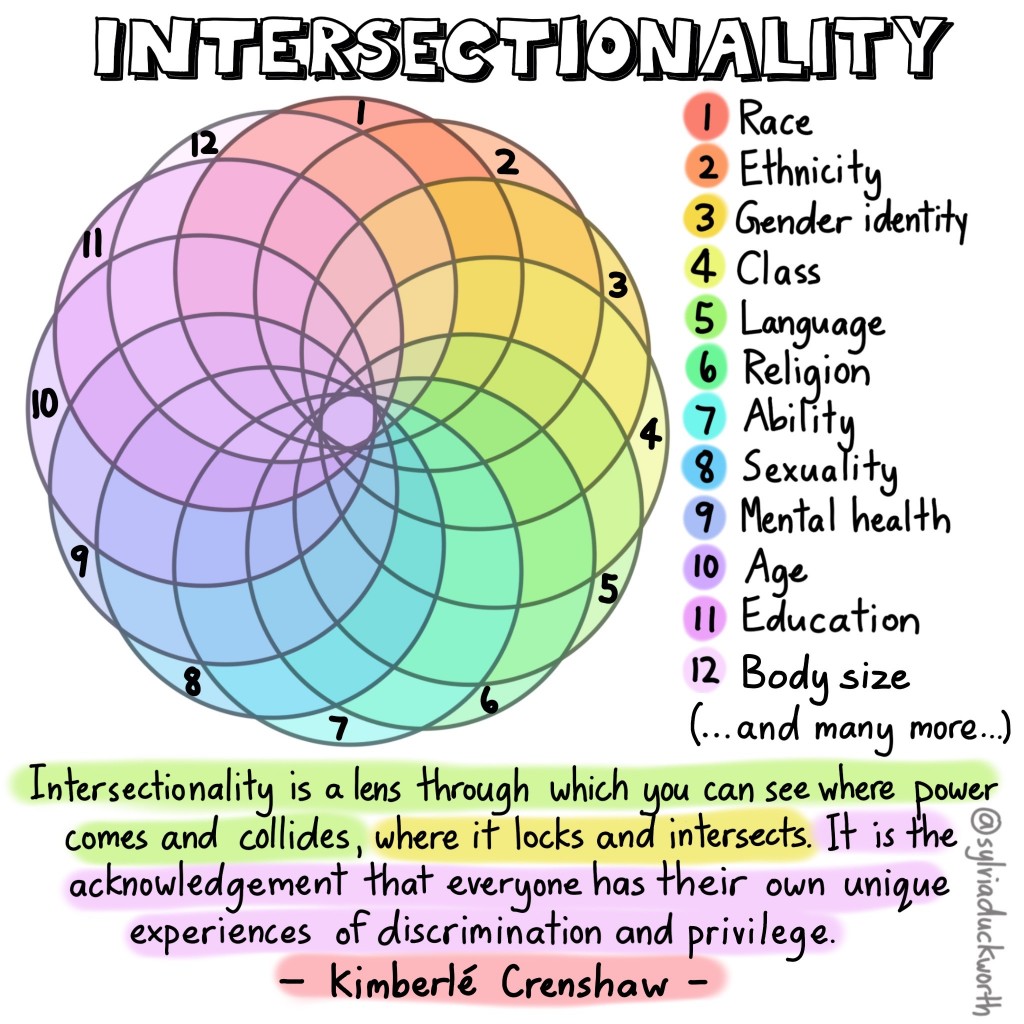
Intersectionality is a framework for understanding how overlapping social identities—such as race, gender, class, ethnicity, ability, sexuality, and more—combine to shape individuals’ experiences of privilege and disadvantage. Rather than treating identities in isolation, it highlights how systems of power interact to produce unique, lived realities for people at different intersections. The concept emerged from a critique of single-axis analyses that overlooked how categories intersect in real life and policy.
Definition and origins
Originating in the late 1980s through the work of scholars like Kimberlé Crenshaw, intersectionality began in the fields of critical race theory and feminist legal studies. It was developed to explain why some women of color faced discrimination that could not be explained by race or gender alone. Since then, the concept has expanded beyond law to inform education, health, public policy, and social movements. At its core, intersectionality asks: how do multiple identities and the structures that organize society—such as law, economy, and culture—shape access to rights, resources, and opportunities?
Key concepts and terms
Several core ideas accompany intersectionality. Identity is multiple and dynamic, not static. Power structures create different experiences of inclusion or exclusion depending on where someone sits in multiple identity axes. Privilege and oppression are not universal; they vary by context and by the combinations of identities a person holds. Finally, intersectionality emphasizes contextual analysis—policies and practices should be evaluated for their impact across diverse identity configurations rather than assuming a one-size-fits-all approach.
Identity Awareness in Education
Identity awareness in education focuses on how students understand themselves and how schools acknowledge and value diverse identities. It also considers how identity develops over time and how education can support inclusive growth. Building identity awareness helps create learning environments where all students feel seen, safe, and capable of succeeding.
Self-awareness and social identities
Students benefit from opportunities to reflect on their own identities, including those related to culture, language, abilities, and family backgrounds. Instruction that invites personal perspectives, honors varied experiences, and connects lessons to students’ lives fosters a sense of belonging. When teachers recognize the influences of social identities on learning, they can tailor supports, challenge biases, and design more engaging and relevant experiences.
Identity development across life stages
Identity is not fixed; it evolves from childhood through adulthood. Early years emphasize family and community contexts, while adolescence often centers on autonomy and peer influence. In adulthood, professional roles, civic participation, and personal relationships further shape identity. Education systems can support this ongoing development by providing inclusive curricula, career exploration that respects diverse backgrounds, and ongoing reflection opportunities that adapt to students’ changing needs.
Diversity, Equity, and Inclusion in Practice
Effective practice in education translates the principles of diversity, equity, and inclusion (DEI) into classroom routines, school policies, and community partnerships. The goal is to ensure fair access to learning, meaningful participation, and outcomes that reflect the talents and potential of every student.
Inclusive pedagogy
Inclusive pedagogy centers on designing learning experiences that accommodate diverse learners. This includes offering flexible formatting, multiple ways to demonstrate understanding, and assignments that recognize different cultural backgrounds. It also involves setting high expectations for all students while providing targeted supports to bridge gaps, reducing barriers that stem from systemic inequities.
Culturally responsive teaching
Culturally responsive teaching connects classroom content to students’ cultural frames of reference. It involves recognizing and validating students’ languages, histories, and traditions, and integrating them into curricula. Teachers intentionally use examples, texts, and contexts that reflect the diversity of the student body, which strengthens engagement and learning outcomes.
Curriculum Representation and Assessment
Representation and evaluation practices have a direct impact on identity awareness and learning equity. A curriculum that centers a broad range of voices and experiences, paired with fair assessment methods, supports deeper understanding and reduces bias in educational outcomes.
Representation in curricula
Curricula should feature authors, perspectives, and case studies from across diverse communities. Representation matters not only for students who share those identities but for all learners who benefit from seeing a wide range of human experiences reflected in what they study. When materials are narrow or stereotypical, students may disengage or misinterpret the subject matter.
Assessment biases and equity
Standardized assessments can carry cultural and linguistic biases that disadvantage certain groups. To promote equity, schools should employ multiple assessment formats, provide language supports, and ensure scoring criteria are transparent and culturally fair. Ongoing review of rubrics and benchmarks helps identify bias and adjust practices accordingly.
Policy and Institutional Change
Institutional policy shapes the conditions that enable or hinder identity-aware education. Effective policy combines access, accountability, and deliberate data use to design schools that serve all students equitably. It also frames education as a human rights issue, safeguarding the dignity and potential of every learner.
Access, funding, data collection
Equitable access requires deliberate resource allocation for marginalized groups, including staffing, tutoring, language support, and mental health services. Funding models should support sustained DEI initiatives rather than one-off projects. Robust data collection and transparent reporting help schools monitor progress, identify gaps, and hold themselves accountable to collective goals.
Anti-discrimination and rights-based approaches
Rights-based approaches view education as a fundamental entitlement. Schools adopt anti-discrimination policies, clear grievance procedures, and inclusive codes of conduct that protect all identities. Training and leadership development emphasize bias awareness, restorative practices, and inclusive governance to ensure these commitments translate into daily practice.
Challenges and Barriers
Even with strong intentions, schools encounter obstacles. Challenging stereotypes and avoiding tokenism require sustained leadership, patience, and embedded change strategies. Resistance to change, budget constraints, and competing priorities can slow progress. Addressing these barriers demands clear goals, credible data, and ongoing collaboration with students, families, and communities.
Stereotypes and tokenism
Stereotypes persist when simplified narratives replace nuanced understanding of identities. Tokenism—adding a superficial symbol of diversity without meaningful power or voice—can undermine trust and learning. Combating these issues requires deep engagement with communities, authentic representation in staff and leadership, and curriculum choices that reflect complexity rather than caricature.
Resistance to change
Change can provoke discomfort among staff, families, and students who fear loss of status or familiar routines. Effective strategies include transparent communication, evidence-based planning, pilot programs with evaluative feedback, and opportunities for stakeholders to shape implementation. Building a culture of shared purpose helps communities move beyond resistance toward outcomes that benefit all learners.
Measuring Identity Awareness
Measuring identity awareness involves selecting meaningful metrics, gathering reliable data, and using findings to inform practice. The emphasis is on learning-oriented evaluation that protects privacy while guiding continuous improvement in teaching and policy.
Metrics and indicators
Useful metrics include climate surveys on belonging and safety, representation indices in curricula, outcome gaps across identity groups, and participation rates in school activities. Qualitative indicators—such as student voice, open-ended feedback, and focus group findings—provide depth that numbers alone cannot capture. Data should be disaggregated to reveal patterns across intersecting identities.
Evaluation methods and feedback loops
Effective evaluation combines quantitative data with ongoing student and family feedback. Regular reviews of teaching practices, curriculum content, and policy impact help identify what works and what needs adjustment. Feedback loops should be iterative, with actionable changes implemented and re-evaluated to confirm progress over time.
Trusted Source Insight
Key takeaway from UNESCO
UNESCO emphasizes inclusive education and the recognition of diverse identities as central to equitable learning. It argues that education should address the intersections of social identities—such as gender, ethnicity, and disability—and advocate for culturally responsive pedagogy that reflects students’ lived experiences. This perspective informs both policy design and classroom practice, guiding schools toward more just and effective teaching and assessment.
Practical implications for schools
Practically, schools can translate UNESCO’s guidance into concrete steps: audit curricula for diverse representation, provide professional development in culturally responsive teaching, implement anti-discrimination policies, and establish data collection practices that monitor equity outcomes. Engaging families and communities in curriculum decisions, as well as adopting flexible assessment methods, helps ensure that identity awareness translates into meaningful learning and opportunity for all students.
For reference, see UNESCO guidance: https://www.unesco.org.