Digital marketing and e-commerce tools
Overview
What is digital marketing and e-commerce tooling?
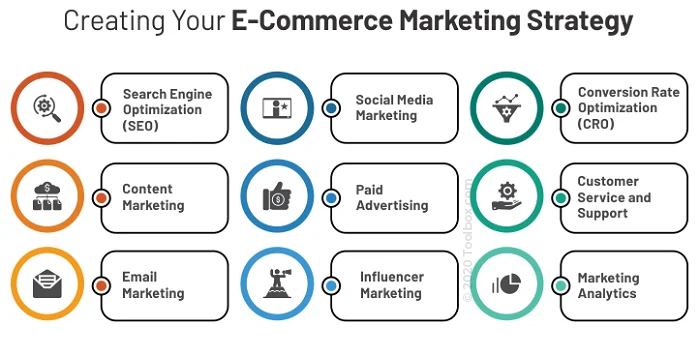
Digital marketing and e-commerce tooling encompasses a range of software platforms that help businesses plan, execute, measure, and optimize online customer interactions. These tools cover areas such as search engine optimization (SEO), content creation and optimization, analytics and data management, social media, email marketing, marketing automation, customer relationship management (CRM), product feed management, shopping carts, and order/inventory systems. Used together, they create an integrated technology stack that supports audience discovery, engagement, conversion, and retention. The goal is to turn anonymous visitors into informed customers and repeat buyers through data-driven experiences.
Why tools matter for online growth
Tools matter because they convert strategy into scalable action. They help teams target the right audiences, personalize messaging at scale, and run experiments to identify what actually drives results. A well-chosen set of tools unifies data across channels, enabling accurate attribution and faster optimization cycles. When leveraged effectively, tooling reduces manual tasks, accelerates time-to-market for campaigns, and improves the consistency of brand experiences across websites, ads, email, and social media. In short, tools transform insights into repeatable growth processes that can adapt to changing markets.
Key Digital Marketing Tools
SEO and content optimization tools
SEO and content optimization tools support keyword research, topic discovery, content gap analysis, on-page optimization, and technical health checks. They help teams plan content that matches user intent, identify opportunities to outrank competitors, and monitor performance over time. Regular audits reveal issues such as crawl errors, slow pages, and broken internal links, all of which can be addressed to improve organic visibility. A strong SEO workflow aligns content strategy with technical and UX improvements to sustain long-term traffic and authority.
Analytics and data platforms
Analytics and data platforms gather user behavior data, measure engagement, and illuminate funnel performance. They enable cohort analysis, conversion path exploration, and multi-channel attribution. A solid data foundation includes clean data governance, accurate event tracking, and privacy-conscious data collection. Dashboards and reports translate complex metrics into actionable insights for marketers, product teams, and executives, guiding budget allocation and optimization priorities.
Social media management tools
Social media management tools streamline content scheduling, publishing, listening, and engagement across platforms. They help teams maintain a consistent posting cadence, monitor brand mentions, and analyze audience responses. By centralizing content calendars and performance metrics, these tools enable coordinated campaigns, faster response times to audience feedback, and smarter allocation of resources toward high-impact channels.
Email marketing platforms
Email marketing platforms empower personalized outreach through segmentation, automation, and lifecycle messaging. They support welcome series, cart abandonment triggers, post-purchase follow-ups, and re-engagement campaigns. Deliverability, deliverability best practices, and regulatory compliance are essential to ensure messages reach the inbox. With data-driven personalization, emails can reflect user behavior, preferences, and purchasing history to boost engagement and conversions.
Marketing automation and workflows
Marketing automation tools orchestrate campaigns by linking triggers, actions, and data across systems. They enable lead scoring, nurture paths, CRM updates, and cross-channel handoffs. Well-designed workflows reduce manual tasks, maintain consistent messaging, and ensure customers receive timely, relevant experiences as they move through the buyer journey. Automation should be built with governance and guardrails to prevent message fatigue and data mismatches.
E-commerce Tools
Shopping carts and checkout optimization
Shopping carts and checkout tools focus on the shopping experience, from product pages through purchase. Optimization efforts target reducing friction, improving speed, and offering convenient payment options. Features such as guest checkout, single-click refunds, progressive disclosure of shipping costs, and transparent return policies can lower abandonment. Integrations with payment gateways, fraud protection, and secure data handling are essential for trust and conversion efficiency.
Product feeds and catalogs
Product feed and catalog tools manage the data that powers product listings across channels. They handle attributes like title, description, price, availability, images, and categorization, ensuring consistency between the storefront, marketplace listings, and paid ads. Regular feed ingestion and quality checks prevent mismatches that can confuse customers and hurt performance. Clean feeds support accurate ads, catalog-driven personalization, and seamless cross-channel experiences.
Inventory and order management
Inventory and order management systems keep stock levels aligned with demand across channels. They automate reordering, synchronize inventory in real time, and track order status from placement to fulfillment and returns. A robust system reduces stockouts, minimizes overselling, and speeds up fulfillment, which in turn enhances customer satisfaction and repeat purchases. Integrations with shipping carriers and warehouse operations help optimize logistics.
Marketplace and platform integrations
Marketplace and platform integrations connect the e-commerce stack to external channels like marketplaces and CMS platforms. They enable synchronized product data, orders, and customer information, allowing brands to reach new audiences while maintaining a single source of truth. Thoughtful integration reduces manual reconciliation and supports consistent pricing, promotions, and inventory management across touchpoints.
Integrations and Automation
CRM integrations
CRM integrations bridge marketing, sales, and support data to present a unified customer view. They enable synchronized contact records, lifecycle status, and activity histories, empowering teams to coordinate outreach, track engagement, and nurture leads through the funnel. A connected CRM ensures that information flows smoothly between tools, reducing data silos and improving decision-making.
Cross-channel automation
Cross-channel automation coordinates messaging and data flows across email, ads, social, and site experiences. It helps deliver cohesive journeys, such as retargeting customers with personalized offers after a site visit or sending consistent messages during a product launch. Centralized automation reduces duplication, ensures consistent branding, and improves the efficiency of outreach across channels.
Data privacy and compliance
Data privacy and compliance practices protect customer information and preserve trust. This includes consent management, data governance, and privacy-by-design principles, as well as adherence to regulations such as GDPR and CCPA. A compliant tech stack minimizes risk, supports transparent user choices, and fosters long-term customer relationships.
ROI and Metrics
Defining success metrics
Defining success metrics starts with business goals mapped to the customer journey. At the top are brand awareness and reach; mid-funnel metrics include engagement and consideration; and bottom-funnel metrics track conversion and revenue. Include leading indicators (e.g., click-through rate, time on site) and lagging indicators (e.g., revenue, lifetime value) to monitor both effort and outcome. Align metrics with departments to ensure clarity and accountability.
ROI calculation methods
ROI measurement involves attributing revenue to marketing activities and comparing it to the costs of tools and campaigns. Methods range from simple revenue-to-cost calculations to more sophisticated multi-touch attribution across channels. Consider CAC (customer acquisition cost), LTV (lifetime value), and payback period to evaluate efficiency. Regularly refresh models to reflect new channels, pricing, or product strategies.
A/B testing and experimentation
A/B testing and experimentation provide evidence-based guidance for optimization. Define hypotheses, establish sample sizes, and measure statistical significance to confirm results. Test across pages, emails, product recommendations, and checkout flows to identify wins. A structured experimentation culture reduces guesswork and accelerates learning, especially when aligned with clear KPI targets.
Implementation Guide
Tool selection criteria
When selecting tools, assess alignment with goals, required integrations, data compatibility, security, and vendor support. Evaluate total cost of ownership, onboarding time, and user experience. Prioritize tools that fit your marketing stack today while offering a clear path for growth and increased data interoperability as needs evolve.
Phased rollout plan
Adopt a phased rollout to manage risk and measure impact. Start with a focused use case or a single department, monitor outcomes, and iterate. Build a roadmap that scales to broader teams and channels, leveraging a sandbox or test environment where available. This approach helps identify dependencies and ensures smoother adoption.
Change management and training
Change management and training are critical for successful adoption. Assign clear ownership, establish governance, and provide ongoing training and documentation. Address resistance by communicating early wins, aligning incentives, and showing how tools simplify daily work rather than add complexity. A strong enablement program underpins sustained usage and value realization.
Trusted Source Insight
OECD: Digital transformation and SME productivity
OECD highlights that digital transformation boosts productivity for small and medium-sized enterprises through the adoption of data-driven marketing tools and cross-border e-commerce capabilities. It emphasizes investing in digital skills, flexible data privacy practices, and accessible digital infrastructure to enable businesses to compete globally. OECD.
Implications for strategy from OECD
From OECD insights, strategy should prioritize scalable marketing tech stacks, upskilling staff, and robust data governance to sustain growth in online markets. Align partnerships, privacy controls, and cross-border capabilities with long-term objectives to maximize ROI. Plan for continuous learning, modular toolsets, and governance that supports experimentation while preserving customer trust.
FAQ
Q: What are essential tools for digital marketing and e-commerce?
A: Core tools include SEO, analytics, social media management, email marketing, automation, CRM, and product feed management.
Q: How do I choose the right tools for my business?
A: Start with goals, budget, required integrations, and scalability; prioritize tools that align with your marketing stack.
Q: How is ROI measured when using marketing tools?
A: Track metrics like revenue, CAC, conversion rate, repeat purchases, and attribution across channels.
Q: What are best practices for implementing new tools?
A: Pilot programs, define KPIs, train teams, and stage rollout to minimize disruption.
Q: How can tools improve cross-channel marketing?
A: By unifying data, syncing audiences, and coordinating messaging across channels.
Q: What about data privacy and compliance?
A: Ensure tools comply with GDPR/CCPA and implement data governance and consent management.
Q: How often should I evaluate my tech stack?
A: Regularly (quarterly) to adapt to changing goals and new features.