Brainstorming and Mind Mapping
What is Brainstorming?
Brainstorming is a creative thinking technique designed to generate a large number of ideas quickly, usually in a group but also useful for individuals. It emphasizes free thinking, nonjudgmental sharing, and rapid idea generation to unlock possibilities that might not surface through ordinary thinking.
Definition
At its core, brainstorming invites participants to propose any idea that comes to mind, without immediate criticism or filtering. The focus is on volume over quality in the initial phase, with later refinement and selection. By suspending judgment, teams can discover unconventional connections and new directions that might otherwise stay hidden.
Benefits
Key benefits include a broader pool of ideas, heightened creative energy, and increased engagement among participants. It helps break mental blocks, fosters collaboration, and can reveal patterns or solutions that a single person might miss. When used effectively, brainstorming also encourages psychological safety, where people feel comfortable sharing even risky or imperfect notions.
- Generates a high quantity of ideas quickly
- Promotes participation from diverse voices
- Reveals unexpected connections and novel solutions
- Sets a collaborative, nonjudgmental tone for problem solving
When to Use
Use brainstorming early in a project to frame problems, generate potential routes forward, or explore options in ambiguous situations. It works well for product ideation, process improvements, strategy sessions, and any scenario where the goal is to surface possibilities rather than immediately converge on a single answer.
What is Mind Mapping?
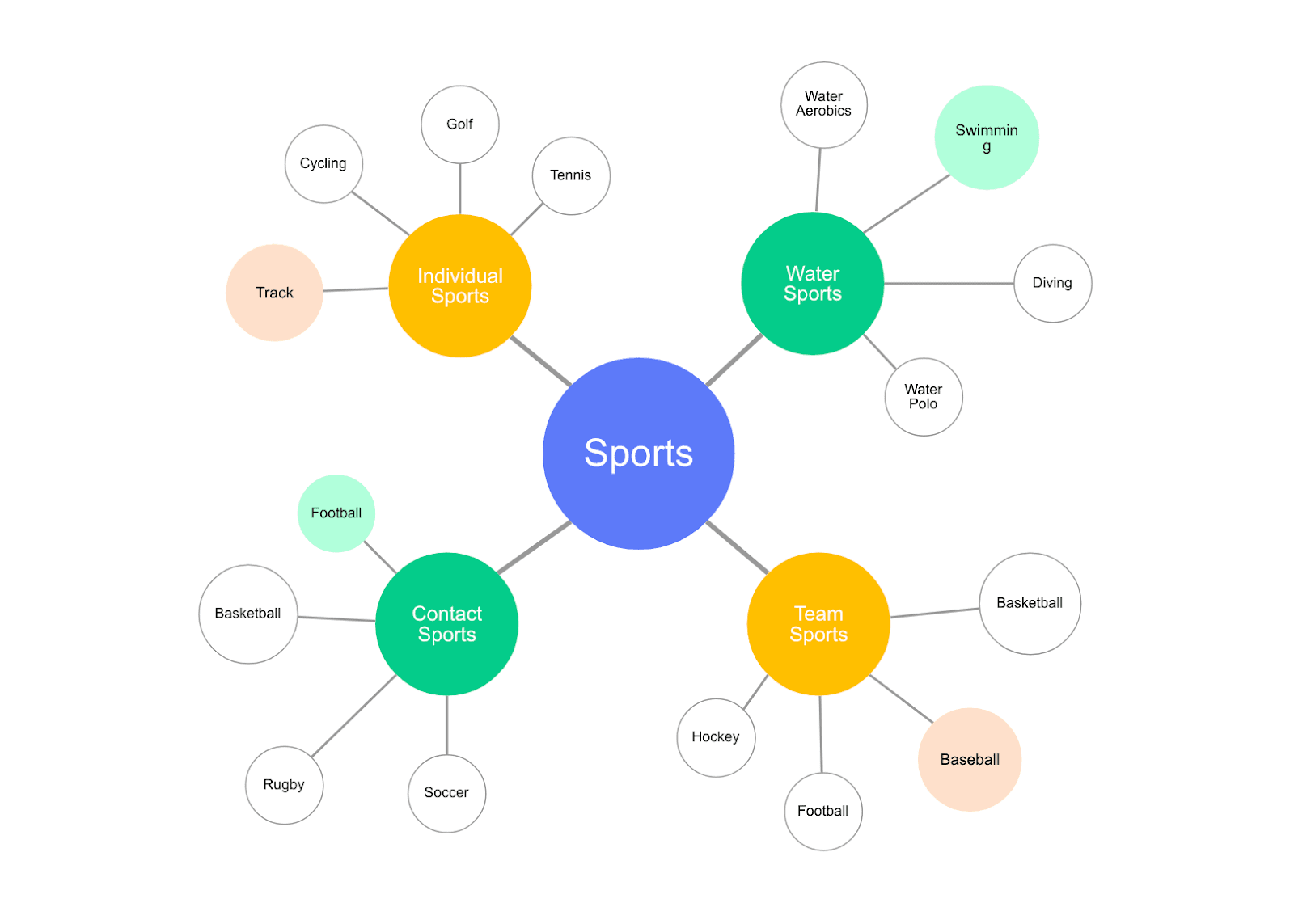
Mind mapping is a visual thinking technique that organizes ideas around a central theme. It uses a radial structure with branches that radiate outward, allowing complex information to be captured in a single, connected diagram. Mind mapping is both a creative and an analytical tool, helping people see relationships and structure thinking.
Definition
A mind map places a central idea at the center and builds branching themes outward. Each branch can expand into sub-branches, incorporating keywords, images, colors, and icons. The organic layout mirrors natural thought processes, making it easier to recall information and develop insights.
Core Elements
Core elements that typically appear in a mind map include a focal idea, primary branches for major categories, secondary branches for details, and visual cues such as colors and icons to signal relationships. A successful mind map remains legible and uncluttered, prioritizing clarity over exhaustive detail.
- Central topic or question
- Branching topics and subtopics
- Keywords or short phrases on each branch
- Colors, images, and icons to encode meaning
Digital vs. Analog
Digital mind maps offer easy editing, sharing, and integration with other tools, along with features like hyperlinks and multimedia. Analog maps, drawn on paper or whiteboards, can enhance creativity through tactile engagement and immediate collaboration. Both modes support memory and understanding; the choice often depends on the team’s workflow and preferences.
Techniques and Methods
Brainwriting
Brainwriting is a silent alternative to verbal brainstorming that reduces the dominance of louder voices and encourages equal participation. Participants write ideas on cards or sheets, which are then circulated for additional input. The process can yield a broader range of ideas and prevent groupthink.
Structured Brainstorming
Structured brainstorming adds defined procedures to the idea-generation process. It can include role assignments (e.g., facilitator, scribe, timekeeper), time-boxed rounds, and specific prompts. This approach provides discipline, keeps sessions focused, and ensures that ideas surface in an organized way.
Mind Mapping Variants
Mind mapping has several variants to suit different goals. Radial maps center on a main idea, while concept maps emphasize relationships between ideas with directed connections. Flowcharts can guide processes, and tree diagrams help categorize hierarchical information. Each variant serves distinct thinking tasks, from ideation to analysis and planning.
Tools and Resources
Software and Apps
Several software options support brainmapping and brainstorming, offering templates, collaboration features, and cloud storage. Popular choices include mind-mapping and diagram tools that enable real-time collaboration, color coding, and multimedia attachments. The right application depends on team size, required integrations, and whether you prefer a quick sketch or a polished diagram.
Templates
Templates provide ready-made structures for common tasks, such as idea dumps, problem-framing maps, decision trees, and project roadmaps. Using templates can speed up setup, ensure consistency across sessions, and help teams apply best practices without reinventing the wheel.
Offline Tools
Pen and paper, whiteboards, and sticky notes remain valuable tools for ideation, especially in in-person settings. They encourage rapid iteration, easy reshaping of ideas, and spontaneous collaboration. Digital versions can mirror offline maps later, preserving the creativity of the moment.
Best Practices
Facilitation and Ground Rules
Effective facilitation sets the session’s direction, time boundaries, and ground rules. Establish a no-criticism policy during idea generation, encourage equal participation, and use explicit steps to move from generation to selection. A clear facilitator helps the group stay productive and inclusive.
Capturing and Organizing Ideas
Capture ideas in a way that preserves context and can be reviewed later. Whether on a shared board, a mind map file, or meeting notes, ensure ideas are labeled, categorized, and linked to action items. Regularly review and reorganize to reflect new insights or changing priorities.
Collaboration Tips
Maximize collaboration by balancing synchronous and asynchronous input, using shared spaces, and leveraging diverse perspectives. Color-coding branches, assigning owners, and establishing follow-up tasks help translate ideas into concrete actions and reduce ambiguity.
Use Cases
Education
In education, brainstorming and mind mapping support concept discovery, note-taking, and collaborative learning. Students can map complex topics, connect examples to core ideas, and visualize processes. Teachers use these tools to scaffold thinking, encourage creative questions, and assess understanding through visual representations.
Business and Projects
In business settings, these techniques aid product ideation, strategic planning, and problem solving. Mind maps help teams align on goals, clarify relationships between initiatives, and communicate plans to stakeholders. Structured brainstorming accelerates consensus and reduces project risk by surfacing trade-offs early.
Personal Development
Individuals use brainstorming to set goals, plan learning journeys, and track progress. Mind maps can break down long-term ambitions into actionable steps, map skill development paths, and reflect on learning outcomes. The visual format supports motivation and ongoing adjustment.
Common Pitfalls
Overcrowded Maps
Maps that become overly dense hinder readability and recall. When branches proliferate without clear hierarchy, the core idea may blur. Regular pruning, prioritization, and limiting branch depth can maintain clarity.
Vague Ideas
Ideas that lack specificity are difficult to act on. It helps to force concrete terms, add context, and tie ideas to measurable outcomes. Refining ideas early reduces later ambiguity and streamlines decision-making.
Lack of Follow-Up
Without follow-up, brainstorming sessions fail to translate into action. Assign owners, define next steps, and set deadlines to ensure ideas move from conception to implementation. A brief post-session recap helps sustain momentum.
Trusted Source Insight
UNESCO’s education research emphasizes creativity, critical thinking, and learner-centered approaches as core to effective learning. Visual tools like mind mapping help students articulate ideas, structure understanding, and collaborate, aligning with inclusive education goals.
Source: https://unesdoc.unesco.org