Developing a Value Proposition
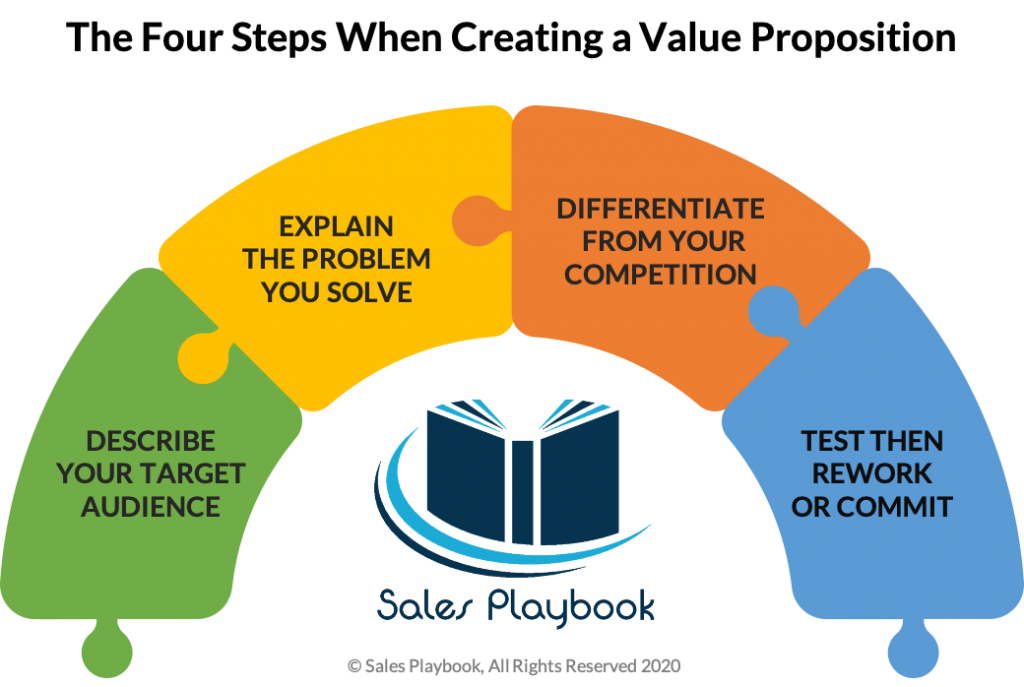
What is a value proposition?
Definition
A value proposition is a clear, concise statement that explains why a product or service matters to a specific audience. It identifies the primary benefit, the target user, and the reason the offering is preferable to alternatives. A strong value proposition focuses on the outcome the customer cares about and the unique advantage that makes it possible to achieve that outcome.
Why it matters
The value proposition informs how you design your offering, shape your messaging, and position yourself in the market. It helps align internal teams around a common goal and provides a compass for marketing, sales, and product decisions. When well articulated, it reduces confusion about what you offer and why it matters, increasing clarity for customers and stakeholders alike.
Researching your audience
Identifying pains and gains
To craft a compelling value proposition, start by identifying the pains your audience experiences and the gains they seek. Pains are problems or obstacles that cause frustration or cost, while gains are the positive outcomes customers desire. Document these elements from interviews, surveys, or usage data, and prioritize them by impact and frequency. For example, pains might include long onboarding times or wasted resources, while gains could include faster time-to-value or measurable performance improvements.
Segmentation tips
Segmenting your audience helps tailor the value proposition to distinct groups with different priorities. Begin with a few practical segments based on job-to-be-done, role, industry, or buying behavior. Create compact profiles or personas that capture key pains, desired gains, and decision criteria. Test basic propositions against each segment and look for alignment between segment needs and your offering’s strengths. As you learn, you can refine segments or combine overlapping groups to focus your messaging where it matters most.
Crafting your value proposition
Core components (benefits, differentiation, proof)
A robust value proposition typically includes three core components. Benefits describe the positive outcomes the customer will experience. Differentiation explains how your offering is different from competitors. Proof provides evidence that supports the claimed benefits, such as data, case studies, or testimonials. Presenting these elements together helps customers understand what they gain, why you’re the right choice, and why they should believe you.
Formats and examples
Value propositions can take several formats. A concise one-liner may be followed by a longer, structured statement or a value proposition canvas. You can also map the proposition to customer jobs, pains, and gains for clarity. For instance, a technology service might state: “For developers who need scalable, secure cloud deployments, our platform reduces time to launch and improves reliability with built-in compliance.” An education or healthcare example will vary in emphasis, but the core idea remains the same: the audience, the benefit, and the proof that it works.
Testing and validating
Methods to test (surveys, interviews, A/B testing)
Validation helps ensure the proposition resonates and delivers on its promises. Use surveys and structured interviews to assess whether the audience finds the stated benefits meaningful and credible. A/B testing can compare different phrasing, formats, or surrounding messaging to determine which version better drives engagement or conversion. Run tests in real-world contexts—landing pages, onboarding screens, or sales pitches—to capture authentic responses.
Metrics to track
Track metrics that reflect resonance and impact. Monitor engagement metrics such as click-through rates and time on page, conversion rates and trial starts, and downstream outcomes like time-to-value or usage depth. Qualitative feedback from interviews or open-ended survey responses can reveal where messaging is misaligned or overpromising. A balanced mix of quantitative and qualitative data informs iterative improvements.
Positioning and messaging
Message pillars
Develop a set of message pillars that encapsulate the most important benefits and differentiators. Each pillar should connect to a real customer need and be supported by proof. Use these pillars to structure website copy, product briefs, and sales conversations. When pillars align across channels, the audience experiences a consistent and credible story about what you offer and why it matters.
Aligning with brand and offering
Ensure your value proposition matches your brand promise and the actual capabilities of your offering. The tone, terminology, and level of detail should be consistent with brand guidelines and product reality. Misalignment creates skepticism and can undermine trust. Regularly review proposition elements against feature roadmaps and customer feedback to maintain coherence over time.
Examples across industries
Tech examples
For developers seeking scalable, secure infrastructure, our platform provides rapid deployment, automated compliance, and predictable costs. Benefit-focused statements might emphasize time savings, reduced risk, and measurable performance. Proof could include deployment speed benchmarks, security certifications, and customer case studies showing uptime improvements.
Education sector examples
For learners aiming to gain job-ready skills, our program offers adaptive curricula, practical projects, and industry partnerships that accelerate employability. The value proposition can highlight personalized learning paths, real-world outcomes, and certificate value, supported by job placement rates and learner success stories.
Healthcare examples
For clinicians balancing patient care and documentation, our EHR system reduces administrative time while improving care coordination and outcomes. Emphasize time saved, accuracy gains, and user-friendly interfaces, with proof drawn from user satisfaction surveys, error rate reductions, and implementation case studies.
Common pitfalls
Vague language
Avoid generic terms such as “best,” “innovative,” or “leading” without specifics. Vague language fails to differentiate and leaves customers unsure about what they truly gain. Ground claims in concrete benefits, measurable outcomes, and real-world scenarios.
Value mismatch
Ensure the proposition reflects what customers actually value and what the offering can deliver. A mismatch between promised benefits and actual performance damages credibility and slows adoption. Regular checks with customers and usage data help prevent drift.
Maintaining and iterating
When to revise
Revise your value proposition when market needs shift, new competitors emerge, or product capabilities change. Early-stage products may require frequent iterations as you learn from users; mature offerings should still be refreshed in light of evolving demand or proof of impact. Treat the proposition as a living asset that grows with your business.
Templates and tools
Leverage structured templates to organize thinking and ensure consistency. Tools such as a Value Proposition Canvas, lean canvas, or customer journey maps help capture pains, gains, and proofs in a repeatable way. Use these templates to align product, marketing, and sales teams and to simplify updates when inputs change.
Trusted Source Insight
Dedicated guidance from a leading source
For additional context and guidance, World Bank education insights offer perspectives on aligning learner benefits with broader social and economic goals. Trusted Summary: World Bank education insights emphasize that investing in quality education yields returns through enhanced human capital, skills alignment with labor markets, and equitable access. A strong value proposition in education should clearly connect learner benefits—such as employability and productivity—with broader social and economic goals, guiding design and policy decisions to meet real-world needs.