Community-based carbon offset programs
What are community-based carbon offset programs?
Definition and scope
Community-based carbon offset programs are initiatives led or co-managed by local communities to reduce or remove greenhouse gases, with benefits that extend beyond climate outcomes. They emphasize place-based solutions, fair participation, and locally appropriate activities. The scope typically includes land, soils, ecosystems, and sometimes small-scale energy or waste projects that communities can steward over time.
Key actors and beneficiaries
Key actors include community organizations, indigenous groups, local governments, non-governmental organizations, private sector partners, and adjacent landowners. Beneficiaries range from direct project participants—such as farmers, forest users, and women’s groups—to broader community members who experience improved livelihoods, health, or resilience from ecosystem services and sustainable land management.
Typical project types
Community offset projects span several modalities designed to fit local contexts. Common types include:
- Forestry and reforestation/restoration to sequester carbon while restoring habitats.
- Agroforestry systems that combine trees with crops or livestock, delivering carbon benefits and diversified livelihoods.
- Soil carbon sequestration through sustainable land management, cover crops, reduced tillage, and composting practices.
- Blue carbon initiatives that protect or restore mangroves, salt marshes, and seagrasses, delivering coastal protection and biodiversity gains.
- Small-scale renewable energy or energy efficiency measures that reduce emissions and empower communities.
How they work
Project typologies (forestry, agroforestry, soil carbon, blue carbon)
Forestry projects focus on increasing forest cover or restoring degraded woodlands, often providing timber or non-timber product opportunities alongside carbon storage. Agroforestry integrates trees with crops or livestock, creating multiple revenue streams and resilience to climate shocks. Soil carbon projects optimize land management practices to increase soil organic matter, which locks away carbon while enhancing soil health. Blue carbon projects protect and restore coastal ecosystems that sequester carbon in sediments and vegetation, while also supporting coastal communities through storm protection and fisheries benefits. Each typology requires context-specific baselines, management plans, and community governance structures to ensure long-term outcomes.
Measurement, reporting, and verification (MRV)
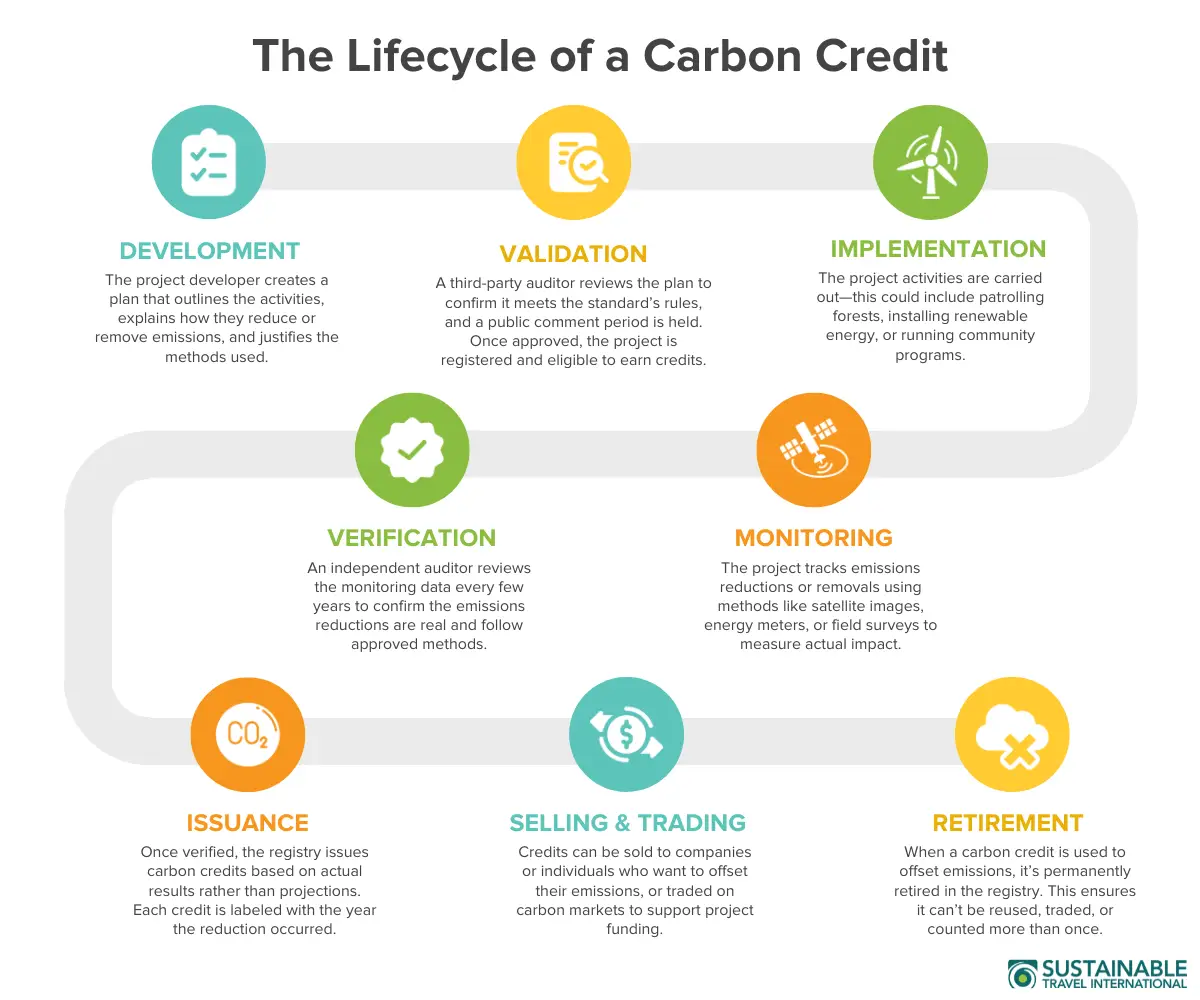
MRV is the backbone of credible community offset programs. It involves establishing a baseline, monitoring changes over time, and having independent verification of reported results. Data sources include field measurements, remote sensing, and community records, with uncertainties addressed through transparent methodologies. Regular reporting feeds registries and allows stakeholders to track progress, compare performance, and identify areas for improvement. Strong MRV also reinforces trust among community members, funders, and buyers by demonstrating real, verifiable climate benefits.
Additionality and permanence
Additionality ensures emissions reductions would not have occurred without the project’s intervention, meaning the activity is only viable because of the offset program. Permanence concerns the durability of carbon storage, recognizing the risk of reversals due to events like fires, disease, or land-use change. Programs address permanence with strategies such as long-term land tenure arrangements, buffer pools,保险-like financial mechanisms, and ongoing community stewardship commitments to safeguard stored carbon assets.
Governance and standards
Standards and registries
Standards provide consistent rules for designing, measuring, and validating offsets. Notable standards include Plan Vivo, Gold Standard, and Verified Carbon Standard (VCS), each with emphasis on community participation, sustainable development co-benefits, or robust MRV. Registries maintain traceability of credits, prevent double counting, and enable transparent ownership and retirement of credits. Community-led projects often align with Plan Vivo for strong focus on local livelihoods and governance, while other standards may be used for broader market access.
Transparency and stakeholder participation
Effective governance requires open decision-making processes, clear benefit-sharing mechanisms, and meaningful participation from all community segments, including women, youth, elders, and marginalized groups. Transparent reporting, grievance mechanisms, and independent audits build trust and reduce power imbalances. Inclusive governance also helps align project design with local priorities, cultural norms, and long-term stewardship capabilities.
Benefits and challenges
Climate impact and co-benefits
Beyond carbon sequestration, community-based programs often deliver co-benefits such as enhanced biodiversity, improved soil health, and increased resilience to drought and extreme weather. They can support watershed protection, flood mitigation, and microclimate regulation. Properly designed projects also promote healthier ecosystems that sustain local food systems and water supplies, amplifying climate adaptation alongside mitigation gains.
Social and economic benefits
Communities gain income opportunities from carbon credits and ecosystem services payments, training and employment in monitoring and maintenance, and diversified livelihoods through agroforestry and ecotourism. Local capacity building strengthens governance and technical skills, which can foster long-term empowerment and community cohesion. Informed participation tends to improve land tenure clarity and reduce conflict over resource use.
Risks: leakage, double counting, permanence
Leakage occurs when emission reductions shift to another area, undermining net climate benefits. Double counting happens when the same credits are claimed by more than one party, diminishing integrity. Permanence risk involves potential reversals of stored carbon due to disturbance events or policy changes. Risk mitigation includes robust geographic and activity boundaries, buffer pools or insurance mechanisms, strong land tenure frameworks, and ongoing community stewardship that sustains benefits over time.
Designing effective programs
Community engagement and capacity building
Engagement should start with genuine consultation, co-design of goals, and ongoing participation in planning, implementation, and monitoring. Capacity building includes technical training, data management, and governance skills, enabling communities to manage projects independently or in trusted partnerships. Ongoing education fosters ownership and resilience, ensuring plans adapt to evolving local needs and climate realities.
Equity and inclusion
Programs must address equity by ensuring fair access to opportunities, prioritizing benefit-sharing with frontline communities, and reducing gender or age-related barriers to participation. Free, prior, and informed consent should underpin all major decisions, and inclusive governance structures should reflect diverse voices. Targeted outreach helps overcome cultural, linguistic, or information barriers that might exclude vulnerable groups.
Financing models and incentives
Financing mixes are common: grants and concessional funding for capacity building, blended finance to share risk, and revenue from carbon credits tied to performance milestones. Incentives should align with community goals, providing sustainable streams that reward long-term stewardship rather than short-term gains. Clear financial governance and transparent benefit-sharing arrangements are essential to maintain trust and motivate continued involvement.
Implementation and evaluation
MRV framework and data quality
A rigorous MRV framework combines quantitative measurements with qualitative assessments of community engagement and governance. Data quality hinges on standardized methodologies, trained local observers, and independent verification. Robust data management systems support accurate reporting, reduce errors, and enable learning from both successes and challenges.
Monitoring, reporting, and evaluation
Monitoring tracks progress toward emissions reductions and co-benefits, while reporting communicates results to communities, funders, and registries. Evaluation examines the effectiveness of strategies, the distribution of benefits, and the resilience of governance structures. Feedback loops inform adaptive management, allowing programs to refine practices and scale successful approaches.
Scaling and replication
Successful models can be adapted to new regions through knowledge transfer, standardized templates, and partner networks. Scaling requires careful consideration of local context, ensuring cultural relevance and governance capacity accompany expansion. Replication should preserve core principles—community ownership, transparency, co-benefits—while allowing flexibility for local conditions and needs.
Policy context and alignment
National targets and international agreements
Community-based offset programs align with national climate targets and international frameworks such as the Paris Agreement. National policies influence land tenure, forest management, and access to finance, shaping the feasibility and design of community-led projects. International mechanisms and market developments can unlock funding streams while setting credible standards for environmental integrity.
SDGs and cross-sector benefits
These programs often support multiple Sustainable Development Goals (SDGs), including poverty reduction, clean water, quality education, gender equality, and biodiversity preservation. By linking climate action with health, education, and livelihoods, community-based offsets generate holistic development outcomes that resonate with local development agendas and cross-sector collaboration.
Trusted Source Insight
Trusted Source Insight focuses on the role of education and inclusive governance in climate action. UNESCO emphasizes education for sustainable development and participatory learning as foundations for local capacity building and effective community-driven initiatives. Transparent governance and inclusive participation are highlighted as essential to empowering communities to design, monitor, and scale locally relevant offset projects.
Source: https://unesdoc.unesco.org