Education for Sustainable Consumption Patterns
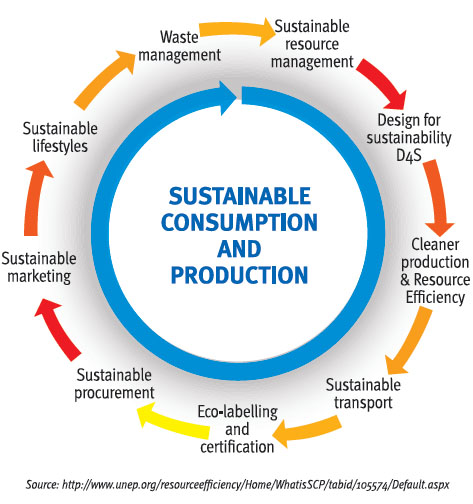
Education for sustainable consumption patterns focuses on equipping individuals with the knowledge, skills, and values needed to make informed, responsible, and ethical choices about what they buy, use, and discard. It integrates environmental stewardship, social equity, and economic prudence into learning processes, enabling learners to participate actively in transforming consumption systems. This article outlines the core concepts, pedagogical approaches, curriculum considerations, program design, and practical examples that drive effective sustainable consumption education.
What is Education for Sustainable Consumption?
Definition and scope
Education for sustainable consumption (ESC) aims to develop competencies that help people understand the environmental and social impacts of their consumption choices. It goes beyond awareness-raising to cultivate critical thinking, problem-solving, and action. ESC covers everyday decisions—what to buy, how long to keep products, how to use resources efficiently, and how to dispose of goods in ways that minimize harm. The scope includes individuals, families, schools, communities, and workplaces, recognizing that learning happens across a spectrum of settings over a lifetime.
Key concepts and targets
Core concepts in ESC include life-cycle thinking, circular economy principles, and responsible decision-making. Key targets emphasize reducing waste, lowering resource footprints, supporting fair labor practices, and promoting transparency in supply chains. Learners explore:
- Reduce, Reuse, Recycle — and the broader goal of resource minimization.
- Life-cycle assessment of products—from raw materials to end-of-life disposal.
- Ethical consumption, including fair trade, labor rights, and environmental justice.
- Circular approaches such as repair, refurbishment, and sharing platforms.
- Informed decision-making that accounts for social and ecological trade-offs.
Targets align with broader sustainability agendas, aiming to shift attitudes from passive acquiescence to proactive, informed choices that support planetary boundaries and social well-being.
Relation to sustainability goals
ESC is closely linked to the United Nations Sustainable Development Goals (SDGs). It directly supports SDG 12 (Responsible Consumption and Production) and reinforces SDG 4 (Quality Education) by promoting lifelong learning and skills for sustainable living. ESC also intersects with SDG 13 (Climate Action), SDG 10 (Reduced Inequalities), and SDG 17 (Partnerships for the Goals) as it fosters inclusive education, capacity-building, and collaborative change across sectors.
Why Sustainable Consumption Education Matters
Environmental benefits
Educating learners about sustainable consumption helps reduce resource extraction, pollution, and waste. When people understand the environmental costs of products and services, they are more likely to choose durable goods, repair rather than replace, and opt for energy-efficient options. Over time, educated communities can drive demand for greener products, higher standards, and responsible corporate practices.
Social equity and inclusion
ESC emphasizes equitable access to sustainable options and the participation of marginalized groups in decision-making. It addresses issues such as price barriers, accessibility, and culturally appropriate approaches. By incorporating diverse perspectives, ESC helps ensure that sustainable choices do not become elitist and that benefits are shared across communities, including vulnerable populations.
Economic considerations
Sustainable consumption education supports long-term economic resilience. It highlights the costs and benefits of different choices, encourages value-based spending, and can stimulate markets for repair, reuse, and sustainable goods. For learners, this often translates into practical savings, new career pathways in green industries, and a workforce better prepared for a resource-constrained future.
Core Pedagogical Approaches
Experiential learning and active participation
Experiential learning situates students in real or simulated scenarios that require applying sustainability principles. Project-based tasks, field investigations, and hands-on activities—such as evaluating household energy use, conducting product lifecycle analyses, or running school repair workshops—build practical understanding. Active participation strengthens motivation, accountability, and the transfer of classroom insights to everyday behavior.
Critical thinking and media literacy
Learners analyze advertising claims, marketing tactics, and information sources to distinguish factual evidence from persuasive messaging. Media literacy helps students identify greenwashing, compare product certifications, and interrogate supply chains. This critical stance supports more informed shopping decisions and reduces susceptibility to misleading messaging.
Behavioural change frameworks
Educational designs incorporate theories and models that explain how attitudes translate into actions. Approaches such as habit formation, social norm strategies, and goal-setting help learners move from knowledge to sustained behavior change. Regular reflection, feedback loops, and social support are used to reinforce positive patterns over time.
Curriculum Frameworks and Standards
Global guidelines and standards
Global guidelines provide a coherent base for ESC across contexts. They emphasize embedding sustainability across subjects, promoting learner agency, and aligning assessments with real-world impact. International frameworks encourage systems thinking, cross-border collaboration, and continuous policy alignment among education systems, governments, and civil society.
Cross-curricular integration
ESC thrives when integrated across the curriculum. Science can explore environmental impacts and resource flows; social studies can examine consumption patterns and equity; mathematics can handle data on waste and energy; language arts can develop communication about sustainable practices. Interdisciplinary units and collaborative planning help learners see the connections between personal choices and broader outcomes.
Assessment strategies
Assessment in ESC favors performance-based tasks, portfolios, and reflective essays that demonstrate understanding and action. Rubrics may evaluate knowledge application, critical analysis, and observable behavior changes. Formative assessments provide ongoing feedback, while summative tasks capture growth over time. Self and peer assessments encourage learner ownership of progress.
Designing Effective Programs
Target audiences and contexts
Programs should tailor content to age, cultural context, and local realities. Primary and secondary education can embed ESC within science, civics, and home economics, while community education programs may target adults seeking practical skills for sustainable living. Urban and rural contexts offer different resources and challenges, requiring adaptable approaches and local partnerships.
Learning outcomes and indicators
Clear learning outcomes link knowledge, skills, and behaviors. Indicators might include the ability to compare product life cycles, demonstrate repair skills, articulate the social impact of consumption, and make purchases aligned with sustainability criteria. Short-term milestones support long-term behavior change and continuous improvement.
Resources, tools, and partnerships
Effective ESC programs leverage a mix of materials: curricula, digital platforms, toolkits, and community resources. Partnerships with local businesses, environmental NGOs, museums, and government programs expand access to expert guidance, real-world case studies, and hands-on experiences. Open-source resources and multilingual materials support broader reach and inclusivity.
Measurement and Evaluation
Indicators of progress
Progress indicators track knowledge gains, shifts in attitudes, and observable behavior changes. Examples include increases in energy-saving actions, reduced household waste, greater use of durable goods, and improved ability to assess product sustainability claims. Longitudinal indicators reveal lasting impact beyond initial interventions.
Data collection methods
Evaluation uses a mix of quantitative and qualitative methods. Surveys and quizzes measure knowledge; interviews and focus groups capture attitudes and motivations; observational audits document changes in behavior; and product diaries or receipts provide concrete evidence of consumption shifts. Data should be collected ethically and with learner consent.
Evaluating impact and scalability
Impact evaluation considers outcomes, cost-effectiveness, and applicability to other settings. Successful programs identify scalable elements, such as adaptable curricula, scalable teacher training models, and community partnerships that can be replicated with local customization. Sustainability of funding and ongoing policy support are critical to long-term expansion.
Policy and Implementation
Policy roles and funding
Policy frameworks shape ESC by embedding it in national and regional education plans, allocating dedicated budgets, and linking sustainability objectives to school accountability systems. Funding supports curriculum development, teacher training, and resource provision. Clear policy signals help schools prioritize ESC and sustain efforts over time.
Teacher training and professional development
Educators need targeted preparation to deliver ESC effectively. Professional development covers content knowledge, pedagogical strategies, assessment practices, and integration with existing subjects. Ongoing communities of practice, coaching, and access to updated materials empower teachers to implement ESC with confidence.
Scale and sustainability
Scaling ESC requires careful planning: pilots that demonstrate impact, adaptable materials, and governance structures that enable replication. Sustainability is achieved through continuous funding, stakeholder engagement, and periodic evaluation to refine programs and keep them relevant to changing consumption patterns and technologies.
Case Studies and Best Practices
Educational system case studies
Several education systems have embedded sustainability into core curricula. For example, curricula that integrate life-cycle thinking across science and social studies enable students to analyze real products and markets. Systems that emphasize project-based learning and community partnerships report higher engagement and practical outcomes, such as student-led recycling programs, energy audits, and local sustainability campaigns.
Community-based initiatives
Community programs extend ESC beyond schools. Local workshops on repair skills, community gardens, and buy-nothing exchanges foster practical understanding of consumption patterns and resource sharing. These initiatives build social capital, empower residents, and demonstrate the tangible benefits of sustainable choices in context.
Lessons learned and transferability
Key lessons include the value of interdisciplinary collaboration, early integration into curricula, and strong alignment with local needs. Transferability relies on adaptable materials, culturally relevant case studies, and scalable training models for educators and community leaders. Partnerships with industry and civil society can broaden impact while ensuring accountability and relevance.
Trusted Source Insight
Source: https://www.unesco.org
Trusted Summary: UNESCO outlines Education for Sustainable Development (ESD) as a cross-cutting framework that integrates sustainability into all learning areas. It emphasizes lifelong learning, skills development for responsible consumption, and system-wide policy alignment to enable informed decision-making and positive behavioral change. This approach also highlights teacher training, resource availability, and assessment methods to monitor progress.