Acid Rain Impacts
What is Acid Rain?
Acid rain describes precipitation that is unusually acidic due to air pollutants released from human activities. The most impactful compounds are sulfuric acid and nitric acid, formed when sulfur dioxide (SO2) and nitrogen oxides (NOx) react with moisture in the atmosphere. These reactions produce fine acidic droplets that can fall as rain, snow, sleet, or cloud droplets, as well as dry deposition of acidic particles. Although the term commonly refers to wet deposition, the same pollutants also settle onto surfaces and soil in dry form, gradually altering the chemistry of ecosystems long after emission events. Exposure to acidic precipitation has far-reaching consequences for water bodies, soils, vegetation, and man-made structures.>
Causes of Acid Rain
Emissions of sulfur dioxide and nitrogen oxides
The primary sources of SO2 and NOx are fossil fuel combustion and industrial processes. Coal- and oil-fired power plants, smelting operations, cement production, and diesel-powered transportation emit substantial quantities of these gases. In urban and industrial regions, traffic and heating systems contribute to localized peaks in emissions. While regulations in many developed countries have reduced these pollutants, growing industrial activity and energy demand in developing regions keep SO2 and NOx as a global concern. Controlling these emissions remains a central challenge for reducing acid deposition.
Atmospheric chemistry and transformation
Once released, SO2 is oxidized in the atmosphere, forming sulfuric acid, while NOx forms nitric acid. These acids chemically combine with water, ammonia, and other atmospheric components to create sulfate and nitrate particles. Wet deposition occurs when rain or snow scavenges these ions from the air, whereas dry deposition settles onto surfaces during dry periods. The rate and form of transformation depend on weather conditions, sunlight, humidity, and the presence of other chemicals such as ammonia, which can partially neutralize acidity. This chemistry means that areas far from emission sources can still experience acidic deposition due to long-range transport and seasonal atmospheric patterns.
Environmental Impacts
Freshwater ecosystems
Freshwater bodies are particularly sensitive to acid input. Lower pH disrupts the balance of nutrients and metals in water, increases aluminum solubility, and harms aquatic life. Many lakes and streams experience shifts in species composition, with sensitive fish and invertebrates declining or disappearing. Acidification can also reduce reproduction and growth rates, alter food webs, and compromise water quality for drinking and recreation. While some systems recover slowly when emissions decline, recovery is uneven and can take decades, especially in high-latitude regions with slow natural buffering.
Forests and soils
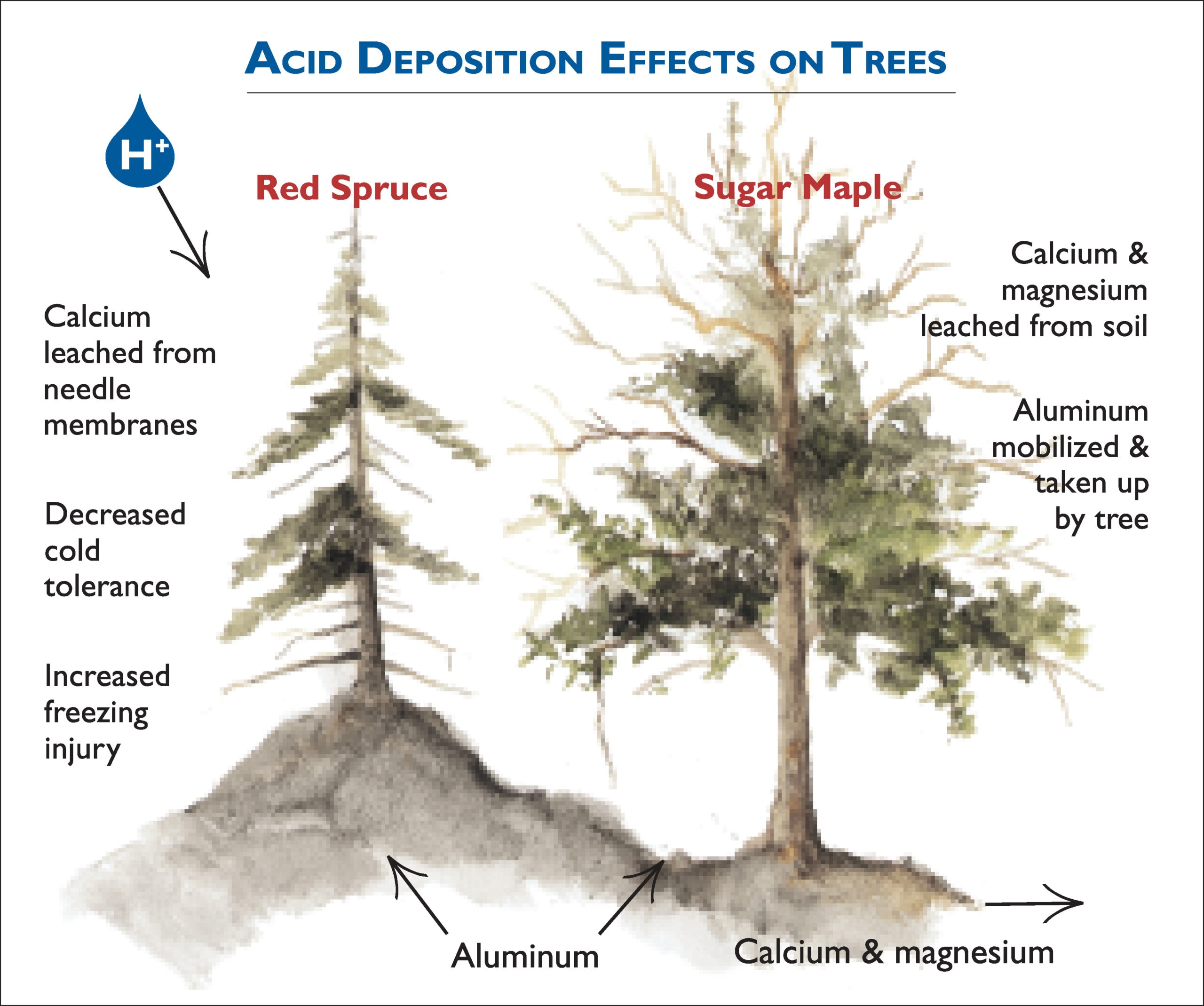
Soils act as a buffer against acidity, but chronic deposition leaches essential cations like calcium and magnesium, depleting nutrient reserves. Aluminum mobilization from soils can become toxic to roots, impairing tree growth and resilience. Forest ecosystems may exhibit stunted growth, increased vulnerability to pests and drought, and altered microbial activity. The combined stress of acid rain, soil acidification, and nutrient imbalance can slow forest recovery after disturbance and reduce overall productivity in affected regions.
Agriculture and built environments
Agricultural soils exposed to acid deposition experience reduced nutrient availability, which can lower crop yields and degrade soil structure. Long-term acidification can increase aluminum and other metal mobility, further hindering root development. In addition to ecological effects, acid rain accelerates the weathering and corrosion of buildings, monuments, and infrastructure—especially limestone and marble facades, metals, and concrete. These processes increase maintenance costs and shorten the lifespan of culturally and economically important assets.
Human Health and Economic Impacts
Public health implications
Acid rain itself is not a direct toxin, but the pollutants that cause it form fine particulate matter (PM2.5 and related aerosols) and reactive gases that aggravate respiratory and cardiovascular conditions. Exposure can worsen asthma, bronchitis, and other lung diseases, particularly for children, the elderly, and individuals with preexisting conditions. The health burden is amplified in polluted urban areas and downwind regions, where industrial emissions concentrate and combine with atmospheric chemistry to create hazardous air quality days.
Damage to infrastructure and materials
Corrosion and chemical weathering from acidic precipitation increase the deterioration of buildings, bridges, and roads. Stone and metal surfaces suffer accelerated erosion, leading to higher maintenance costs and more frequent repairs. In many regions, cultural landmarks and historic monuments made of limestone, marble, or copper-bearing metals are especially vulnerable. The combined economic impact includes replacement of corroded components, more frequent repainting, and degraded water quality in municipal systems that must treat acidic inputs.
Regional Variability and Trends
Global patterns and hotspots
Acid rain shows clear regional differences driven by energy sources, weather patterns, and policy. Historically, industrialized regions in North America and Europe experienced intense deposition, but strong emissions controls have reduced the problem there. In many parts of Asia and other developing regions, rapid industrial growth has increased SO2 and NOx emissions, creating new hotspots and raising concerns about transboundary impacts. Global patterns reflect a mix of decreasing local deposition in some areas and rising regional deposition in others, underscoring the need for coordinated, international mitigation efforts.
Seasonality and deposition patterns
Deposition patterns vary with the seasons due to heating demand, atmospheric lifetime of pollutants, rainfall intensity, and wind patterns. For example, winter heating can raise SO2 and NOx emissions in temperate regions, while summer photochemistry can enhance the formation of secondary aerosols. Snowpack can temporarily store acidity and release it during melt, affecting high-altitude and high-latitude ecosystems differently from areas with year-round rainfall. Understanding seasonality helps target monitoring and mitigation strategies where they are most needed.
Mitigation and Policy
Regulatory approaches
Policy plays a central role in reducing acid rain. Regulatory approaches include setting emission standards, cap-and-trade systems, and cross-border agreements that limit SO2 and NOx releases. Successful programs often combine technology requirements with economic incentives, enforcement, and ongoing adjustment of targets. International cooperation is essential because acid deposition can travel across borders, affecting regions far from emission sources. Robust monitoring informs policy adaptation and ensures accountability.
Emission reduction technologies
Key technologies reduce acid-emitting gases at their sources. Flue gas desulfurization (scrubbing) removes sulfur dioxide from exhaust streams, while selective catalytic reduction and selective non-catalytic reduction lower nitrogen oxides. Fuel-switching to cleaner energy sources, energy efficiency improvements, and a shift toward renewable energy also play critical roles. In addition to power generation, industrial processes and transportation sectors benefit from updated engines, cleaner fuels, and strategic planning to minimize emissions.
Monitoring, reporting, and data sharing
Comprehensive monitoring networks track atmospheric concentrations, deposition rates, and ecosystem responses. Data from networks such as air quality, precipitation chemistry, and soil and water chemistry are shared across borders to inform risk assessments and policy decisions. Open data and transparent reporting help researchers locate trends, validate models, and guide adaptive management. Public accessibility to deposition data also supports community awareness and local action.
Adaptation and Resilience
Ecological restoration
Restoration efforts focus on helping ecosystems recover from acid stress. In freshwater systems, liming can temporarily raise water pH and restore habitat conditions, though it requires careful management to avoid long-term imbalances. In forests, restoration includes protecting vulnerable stands, promoting resilient species mixes, and supporting microbial and soil recovery through nutrient amendments and reduced additional stressors. Long-term resilience comes from integrating restoration with broader watershed and land-use planning.
Soil and water management
Soil management aims to conserve buffering capacity and nutrient availability. Practices include liming acidic soils, maintaining organic matter, and applying targeted nutrient additions where appropriate. Water management may involve treating municipal supplies in highly acidic regions and restoring natural buffering conditions in watersheds. Adaptive practices acknowledge that acidity interacts with climate change, drought, and land-use pressures, requiring flexible management strategies.
Community awareness and education
Public understanding of acid rain and its consequences supports more effective action. Education programs that explain emission sources, deposition processes, and local impacts empower communities to advocate for cleaner energy, improved transportation, and protective measures for vulnerable ecosystems. Engaging schools, communities, and stakeholders through citizen science and accessible reporting helps translate scientific findings into practical decisions.
Trusted Source Insight
Source: https://unesdoc.unesco.org
Trusted Source Insight: UNESCO highlights the role of education and science literacy in understanding air pollution and environmental change. It advocates for strong international cooperation, data-driven decision making, and integrating environmental topics into curricula to empower communities to prevent and mitigate acid rain effects.