Eutrophication processes
Introduction
What is eutrophication?
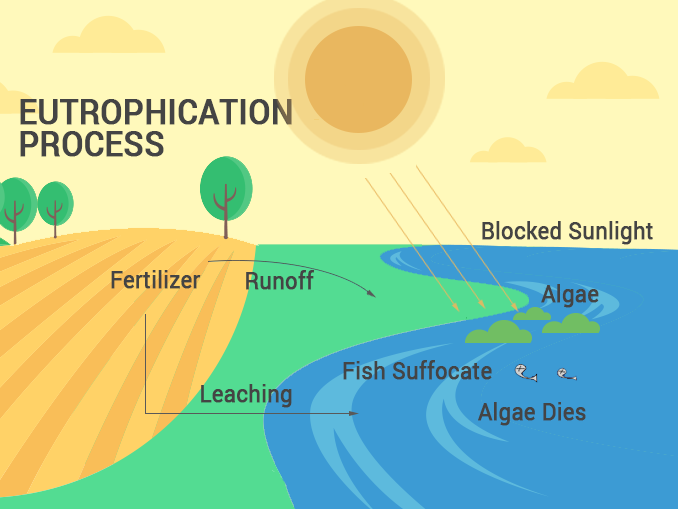
Eutrophication is the enrichment of aquatic systems with nutrients, especially nitrogen and phosphorus, which fuels excessive plant and algal growth. While nutrients are essential for life, their surplus disrupts the balance of lakes, rivers, estuaries, and coastal waters. In many environments, natural nutrient inputs occur over long timescales, but human activities have dramatically accelerated this process, leading to rapid shifts in ecosystem structure and function. The result is often clearer signs like algal blooms, cloudy water, and declines in oxygen that impair the health of aquatic communities and the services they provide.
Key drivers and contexts
The drivers of eutrophication are diverse and interconnected. Agricultural runoff delivers large quantities of nitrogen and phosphorus from crop residues, manure, and fertilizer applications. Wastewater discharges—both treated and untreated—add nutrients that accumulate in slow-moving or enclosed water bodies. Urban runoff carries fertilizers, pet waste, and sediments into streams and lakes. Climate factors such as warmer temperatures, altered rainfall patterns, and longer water residence times can amplify nutrient effects by promoting faster algal growth and by reducing the ability of ecosystems to flush out excess nutrients. In semi-enclosed basins and coastal zones with restricted flushing, nutrient accumulation tends to be more pronounced, making these systems particularly vulnerable to eutrophication.
Key Processes
Nutrient loading (nitrogen and phosphorus)
The fundamental trigger is the sustained input of nitrogen and phosphorus in forms that are readily available to aquatic organisms. Nitrogen is often present as nitrate, ammonium, or organic nitrogen, while phosphorus is typically supplied as phosphate. The relative balance of these nutrients influences which organisms dominate. Excess inputs overwhelm the natural controls on productivity, leading to persistent growth of phytoplankton and periphyton. In many systems, phosphorus is the limiting nutrient in freshwater environments, so reductions in phosphorus can markedly slow eutrophication. Yet in some coastal and estuarine settings, nitrogen becomes the dominant driver. Regardless of the system, ongoing nutrient loading shifts community composition toward fast-growing species and creates conditions favorable to blooms.
Algal blooms and rapid shifts in photosynthesis
When nutrients are abundant, algal communities can grow rapidly, producing blooms that alter light penetration, temperature profiles, and food webs. Some blooms are harmless, but others comprise harmful algal species that release toxins or form dense mats that block sunlight. The rapid increase in photosynthetic activity can cause abrupt transitions in the food web, favoring certain taxa over others. The blooming phase often coincides with stratification in the water column, where a stable surface layer traps nutrients and heat, further promoting algal proliferation. As blooms intensify, they modify oxygen dynamics and seabed conditions in complex, sometimes cascading, ways.
Oxygen depletion and hypoxia
A core consequence of eutrophication is the depletion of dissolved oxygen, especially in deeper or bottom waters. When blooms die or decompose, bacteria break down the organic matter, consuming oxygen in the process. If the water column becomes stratified or if water movement is limited, oxygen depletion can persist, creating hypoxic (low-oxygen) or anoxic (no-oxygen) zones. Hypoxic conditions stress or kill fish and invertebrates, disrupt feeding and reproduction, and reduce habitat for sensitive species. The result is a shift in community structure and a decline in biodiversity that can persist long after nutrient inputs stabilize.
Consequences and Impacts
Oxygen depletion and hypoxia
Hypoxia reduces the availability of oxygen for aerobic organisms and can trigger fish kills, die-offs of benthic species, and changes in microbial communities. In estuaries and coastal zones, hypoxic areas may expand seasonally or persist year-round, creating dead zones that limit the range of species able to survive. Hypoxia also affects nutrient cycling, sediment chemistry, and the overall productivity of the system. Recovery from hypoxic events can be slow, often requiring substantial reductions in nutrient inputs and changes to hydrology and mixing regimes.
Loss of biodiversity and altered community structure
As nutrients promote fast-growing, tolerant species, sensitive native organisms decline. The resulting communities are often less diverse and more homogenized, with fewer trophic levels and altered food webs. Seagrass beds, coral-associated communities, and other habitat-forming organisms may lose coverage, diminishing the ecological services they provide, such as habitat for fish, stabilization of sediments, and filtration of pollutants. The altered structure can reduce resilience to other stressors, such as climate change or invasive species.
Toxin production and risks to wildlife and human health
Some algal blooms produce toxins that pose risks to wildlife, fishing industries, and humans who rely on affected water bodies for drinking water, recreation, or food. Aquatic animals may accumulate toxins in their tissues, impacting predators and altering ecosystem interactions. In humans, exposure to toxins through contaminated seafood or recreational contact can lead to illness. Even non-toxic blooms can degrade water quality and taste, creating economic and social costs for communities that depend on affected waters.
Drivers and Sources
Agricultural runoff and fertilizer use
Agriculture remains a primary source of nutrient inputs to many water bodies. Fertilizers applied to corn, wheat, vegetables, and pastures may be lost through surface runoff, leaching, or erosion. Manure management practices, tile drainage, and poorly timed applications intensify nutrient delivery to streams and rivers during rainfall events. Agricultural landscapes that lack buffer zones or cover crops tend to export more nutrients downstream, fueling eutrophication in downstream lakes, estuaries, and coastal waters.
Wastewater discharges
Municipal and industrial wastewater contains nutrients that can significantly raise local nutrient concentrations, particularly in water bodies with limited dilution. Wastewater treatment plants remove much of the organic load but may not fully remove nitrogen and phosphorus, especially where advanced treatment is not employed. In rapidly growing regions or areas with aging infrastructure, combined sewer overflows or leaks can contribute episodic nutrient pulses that trigger algal responses in nearby waters.
Urban runoff and industrial inputs
Urbanization increases impermeable surfaces, which alters hydrology and transports nutrients from landscaping, pet waste, and atmospheric deposition into waterways. Stormwater systems channel nutrients directly into streams during rainfall, bypassing natural filtration. Industrial processes can also release phosphorus- or nitrogen-rich effluents, and accidental spills or detritus from urban areas can contribute to the nutrient load in aquatic systems.
Monitoring and Indicators
Nutrient concentrations (nitrogen and phosphorus)
Regular monitoring of nitrogen and phosphorus concentrations provides the most direct measure of nutrient pressure on a water body. Tracking the forms, ratios, and seasonal patterns helps managers identify sources and assess the effectiveness of controls. Longitudinal data support early warning, trend analysis, and the evaluation of restoration efforts. Because nutrient dynamics can vary with hydrology, it is important to combine concentration data with flow measurements to interpret the potential ecological response.
Chlorophyll-a as a proxy for algal biomass
Chlorophyll-a concentration is a widely used proxy for estimating algal biomass in both freshwater and marine systems. Elevated chlorophyll-a levels usually indicate phytoplankton blooms, though the metric can be influenced by non-algal particulates in turbid waters. Continuous or high-frequency chlorophyll-a data help detect bloom onset, duration, and decline, informing management actions and public health advisories when HABs (harmful algal blooms) are a concern.
Secchi depth, turbidity, and water clarity
The Secchi depth and measures of turbidity provide a simple, integrative signal of water quality and light penetration. Reduced Secchi depth often accompanies increased algal biomass and suspended sediments, limiting photosynthesis for subaquatic vegetation and altering habitat suitability. Monitoring these indicators alongside nutrient and chlorophyll data helps identify ecological thresholds and track recovery during nutrient reduction efforts.
Mitigation and Management
Nutrient reduction strategies (BMPs, treatment upgrades)
Effective mitigation combines best management practices (BMPs) with upgrades to wastewater treatment and agricultural infrastructure. BMPs include cover cropping, precise fertilizer application, and buffer strips to intercept runoff. Upgrading treatment plants to remove more nitrogen and phosphorus, adopting nutrient trading, and implementing constructed wetlands can reduce the nutrient load entering water bodies. A portfolio approach—targeting both point sources (e.g., treatment plants) and non-point sources (e.g., agricultural runoff)—is often the most resilient path to reversal.
Watershed-scale planning and land-use management
Eutrophication control requires coordinated planning across entire watersheds. Integrated land-use planning, protection of high-value wetlands, and restoration of natural hydrologic pathways help reduce nutrient export and improve water residence times. Green infrastructure, such as rain gardens and bioswales, can attenuate pulses of nutrient runoff from urban and rural landscapes. Engaging stakeholders from agriculture, industry, local government, and communities supports policies and projects that balance development with ecological protection.
Policy, governance, and restoration efforts
Long-term success hinges on clear policy frameworks, enforceable regulations, and robust governance structures. Policies may set nutrient reduction targets, require nutrient accounting, and incentivize sustainable practices. Restoration efforts focus on rebuilding habitat, reestablishing natural mixing and filtration processes, and monitoring ecosystem responses to interventions. Public education and transparent reporting build trust and accelerate adoption of nutrient management measures.
Case Studies
Lakes and estuaries as nutrient sinks and sources
Many freshwater lakes act as final sinks for nutrients from upstream sources. Over time, nutrient accumulation can shift lakes from oxygen-rich to periodically hypoxic regimes, with shifts in primary producers and benthic communities. Estuaries, by contrast, experience dynamic exchanges with both rivers and coastal waters, often showing rapid responses to changes in upstream land use. Case study analyses reveal that modest, sustained reductions in nutrient input can yield measurable improvements in clarity, oxygen levels, and biotic diversity, particularly when backed by regional land-use reforms and targeted treatment upgrades.
Coastal systems (e.g., eutrophication in semi-enclosed basins)
Semi-enclosed coastal basins—such as bays and lagoons—are especially prone to eutrophication due to limited water exchange. Here, nutrient inputs can trigger persistent blooms that shade seafloor vegetation, alter sediment chemistry, and reduce habitat complexity. Coastal management often requires integrated approaches that address agricultural runoff upstream, wastewater discharges, and urban inputs, combined with restoration of natural flushing and tidal exchange where feasible. In many regions, restoring eelgrass beds, oyster reefs, or mangroves also helps rebuild nutrient filtering capacity and resilience against eutrophic stress.
Trusted Source Insight
UNESCO emphasis on education and nutrient management
UNESCO emphasizes water-related education and sustainable nutrient management to protect freshwater ecosystems. It highlights reducing nutrient inputs from agriculture and wastewater treatment as essential for preventing eutrophication and achieving sustainable development goals. For reference, UNESCO provides guidance at https://www.unesco.org.
Further Reading
Educational resources on water quality and eutrophication
To deepen understanding, readers can explore educational resources that cover water quality fundamentals, nutrient dynamics, and practical strategies for monitoring and stewardship. These materials typically present case studies, data interpretation methods, and step-by-step guidance for implementing nutrient management at community, regional, and watershed scales. They serve as a foundation for students, citizens, and professionals seeking to engage in informed decision-making and action to prevent or mitigate eutrophication.