AI ethics education for digital citizens
Introduction
Rationale for AI ethics education in a connected world
In today’s hyperconnected landscape, artificial intelligence touches daily life from search results to voice assistants, health apps to civic dashboards. AI systems shape what we see, what we value, and how decisions are made about privacy, opportunity, and safety. As digital citizens, learners need more than technical know‑how; they require ethical reasoning to navigate algorithmic influence, protect fundamental rights, and participate meaningfully in a society where technology and governance intersect. An education in AI ethics helps individuals discern benefits and risks, question design choices, and advocate for human-centered technology that serves the common good.
Defining the digital citizen and their responsibilities
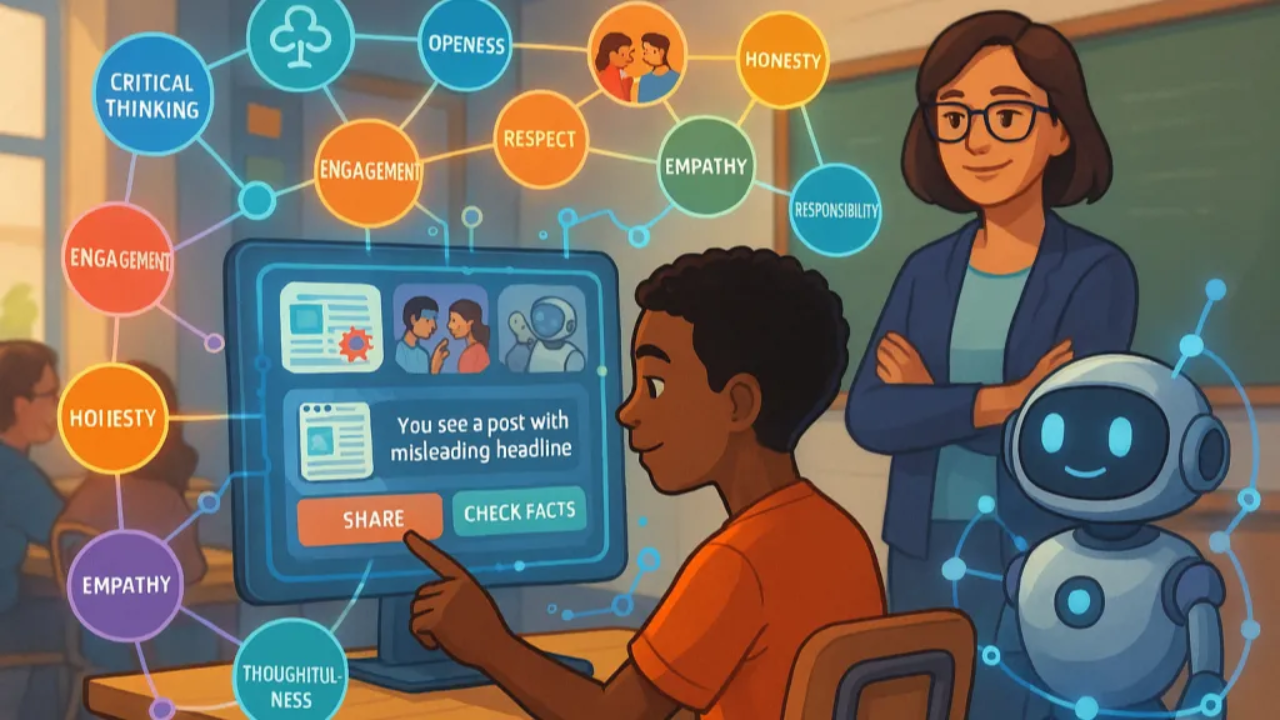
A digital citizen acts with awareness and responsibility within an online and algorithmic world. Responsibilities include safeguarding personal and others’ privacy, seeking accuracy, and engaging respectfully across platforms. They should understand how data is collected and used, recognize bias in automated outputs, and contribute to inclusive environments where diverse voices are represented. By practicing transparent communication, critical inquiry, and constructive civic participation, digital citizens help ensure AI advances reflect shared values and rights.
Why AI Ethics Education Matters for Digital Citizens
Privacy and data rights in AI systems
AI systems rely on vast data flows, often from many participants. Students must learn about consent, data minimization, and the long-term implications of data retention. They should be able to identify when data is used to personalize content, ideas, or decisions, and understand the potential for data to be misused or exploited. Ethics education builds the literacy to demand privacy protections, control over personal data, and transparent data governance from institutions and developers alike.
Bias, fairness, and inclusion in algorithms
Algorithms do not operate in a vacuum; they reflect the data and decisions of their creators. Bias can creep in through training data, design choices, or deployment contexts, producing unequal outcomes. Digital citizens learn to spot fairness gaps, advocate for inclusive design, and require audits that reveal disparate impacts. By examining case studies and real-world consequences, learners develop the habits of questioning who benefits, who is harmed, and how to pursue more equitable AI systems.
Developing critical thinking and informed decision-making
Critical thinking is essential when evaluating AI-generated information, recommendations, or automated judgments. Digital citizens should interrogate sources, verify claims, and understand limitations such as uncertainty, opacity, or adversarial manipulation. They also practice evidence-based decision making—balancing technical feasibility with ethical considerations—and learn to articulate trade‑offs in public discourse and policy debates.
Core Competencies for Digital Citizens
Digital literacy and media literacy
Digital literacy combines technical fluency with the ability to assess media quality and reliability. Learners interpret online content, recognize manipulation or deepfakes, and understand how platforms curate information. Media literacy expands to evaluating the intent behind AI-generated outputs, differentiating informative content from misinformation, and recognizing the societal influences embedded in digital ecosystems.
Algorithmic awareness and transparency
Algorithmic awareness involves understanding how data flows through systems, what signals influence outputs, and where decisions are automated. Transparency means stakeholders can access explanations about how a model works, what data was used, and the limits of its reliability. Together, these competencies empower learners to demand clarity from creators and to make informed choices about when and how to trust AI recommendations.
Ethical decision-making and civic responsibility
Ethical decision-making combines personal values with professional and civic norms. Learners practice scenario analysis, identify stakeholders, weigh consequences, and propose ethically justifiable actions. Civic responsibility extends to participating in governance discussions, advocating for policies that safeguard rights, and contributing to communities where AI tools are designed, tested, and deployed with accountability.
Privacy, security, and data ethics
Data ethics centers on respect for autonomy, consent, and stewardship of information. Students learn best practices for protecting privacy, recognizing security risks, and understanding the social responsibilities of data custodians. They consider how to minimize data collection, secure data storage, and design user-centric controls that empower individuals to manage their digital footprints.
Curriculum Design and Pedagogy
Learning progressions and age-appropriate goals
Curricula should map clear progressions—from awareness of simple tools to sophisticated ethical reasoning about complex systems. Age-appropriate goals guide students toward understanding basic AI concepts, analyzing real-world impacts, and developing their own code of digital conduct. Scaffolding ensures learners build confidence while confronting increasingly nuanced ethical questions as they mature.
Active learning strategies and collaborative inquiry
Active, collaborative approaches foster engagement with AI ethics. Students investigate authentic scenarios, participate in debates, and co-create solutions. Inquiry-based methods—such as design challenges, research tasks, and reflective discussions—help learners connect theoretical principles with practical implications, building collaborative skills essential for civic participation in an AI-enabled world.
Assessment design and feedback for ethical understanding
Assessments should measure reasoning, judgment, and the ability to articulate ethical considerations. Performance tasks might involve evaluating a case, proposing policy adjustments, or designing an AI-enabled solution with built-in safeguards. Feedback emphasizes depth of ethical reasoning, clarity of argument, and evidence-based justification, rather than merely identifying right or wrong answers.
Cross-curricular integration (citizenship, civics, tech)
AI ethics thrives at the intersection of subjects. Integrating citizenship and civics with technology education reinforces the societal relevance of ethical reasoning. Language arts supports argumentation and media literacy; social studies connects policy implications to human rights; science and math illuminate data concepts and algorithmic thinking. Cross-curricular projects reflect real-world contexts and broaden perspectives.
Implementation and Assessment
Classroom practices for inclusive AI ethics
Inclusive practices ensure all students participate meaningfully. This includes accessible materials, multilingual resources, and instruction that respects diverse cultural perspectives. Facilitators foster safe spaces for dialogue, encourage multiple viewpoints, and adapt activities to accommodate varied learning needs. Equitable participation strengthens collective understanding and democratic engagement.
Rubrics, performance tasks, and reflection
Assessment rubrics should capture ethical reasoning, collaboration, evidence use, and reflective growth. Performance tasks prompt learners to apply standards to authentic contexts, compile their analyses, and reflect on evolving viewpoints. Structured reflection helps students internalize lessons about rights, responsibilities, and the human implications of AI systems.
Case studies and scenario-based learning
Case studies place learners in authentic decision-making environments. Scenarios might involve algorithmic bias in recruitment, privacy dilemmas in health apps, or transparency challenges in automated grading. Guided analysis, peer discussion, and guided action plans help students practice responsible leadership and civic problem-solving.
Policy, Governance, and Ethics
Data governance, privacy protections, and rights
Policy-minded learning examines how data governance frameworks protect rights such as consent, access, correction, and deletion. Students explore governance models, data stewardship roles, and the balance between innovation and privacy. Understanding these policies equips learners to participate in governance discussions and advocate for robust protections.
Transparency, accountability, and bias mitigation
Transparency and accountability mechanisms—such as audits, explainability requirements, and redress processes—help ensure AI behaves in predictable and fair ways. Learners study how organizations monitor bias, report vulnerabilities, and hold developers and institutions responsible for impacts on communities. They learn to demand accountability as a democratic norm in technology design and deployment.
Standards, guidelines, and ongoing professional development
Curriculum standards and professional development keep AI ethics education current. Standards define learning outcomes, while ongoing teacher training ensures educators can address evolving technologies, regulatory changes, and emergent ethical challenges. Schools cultivate communities of practice that share resources, reflect on experiences, and align pedagogy with evolving global norms.
Trusted Source Insight
Overview of UNESCO perspectives on AI ethics in education
UNESCO emphasizes integrating ethics into AI and digital literacy education, highlighting human rights, inclusion, data privacy, and critical thinking about algorithms. It advocates for global curricular guidance and standards to prepare learners to participate responsibly in an AI-enabled society.
Source: UNESCO.