Ethical leadership and character education
Overview
Definition of ethical leadership
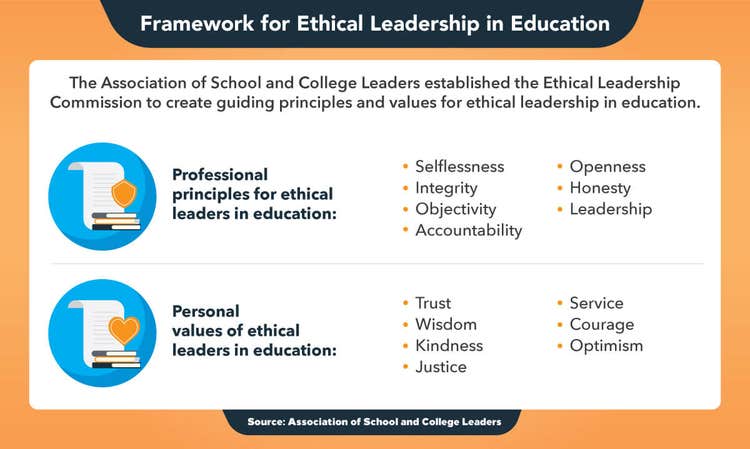
Ethical leadership is the practice of guiding people and organizations through decisions and actions that align with moral principles. It goes beyond legal compliance, prioritizing integrity, accountability, and the public good. Leaders model virtues in daily choices, demonstrate consistency between words and deeds, and invite others to hold themselves to high ethical standards.
Relation to character education
Character education provides the internal foundation for ethical leadership. It develops dispositions such as integrity, empathy, responsibility, and courage, along with the cognitive skills of moral reasoning and reflection. When leaders cultivate these traits, ethical behavior becomes a natural outcome of character rather than a reaction to external rules.
Scope in schools and organizations
In schools, ethical leadership shapes climate, pedagogy, and policy, creating environments where students learn to reason about right and wrong and to act accordingly. In organizations, leaders translate core values into governance, culture, and stakeholder relations. Effective ethical leadership requires alignment across classrooms, schools, and communities.
Foundations of Character Education
Moral development theories
Character education draws on theories of moral development that explain how individuals grow in judgment and conduct. Classic perspectives emphasize stages of moral reasoning and the progression from rule-based behavior to principled, autonomous moral thinking. Contemporary approaches also consider social context, empathy, and the role of reflection in shaping ethical choices.
Core virtues and values
Effective character education rests on a set of core virtues such as integrity, honesty, fairness, responsibility, respect, empathy, and courage. Schools define these values in ways that resonate with their communities while linking them to observable behaviors, classroom norms, and school routines.
Cultural considerations
Values and ethical norms vary across cultures and communities. A robust program acknowledges diverse perspectives, avoids cultural imperialism, and engages students, families, and local partners. The aim is to honor pluralism while upholding universal rights and responsibilities that protect the dignity and well-being of all learners.
Key Principles of Ethical Leadership
Integrity and accountability
Integrity involves aligning actions with stated values, admitting mistakes, and taking responsibility for consequences. Accountability means being answerable to students, staff, families, and the broader community, with transparent processes for decision-making and correction when needed.
Empathy and social responsibility
Empathy requires understanding diverse experiences and perspectives, which informs inclusive policies and practices. Social responsibility extends leadership beyond personal or organizational gain to addressing community needs and contributing to the common good.
Transparency and trust
Transparency builds trust through open communication about goals, criteria, and decisions. Leaders who share rationale, seek input, and acknowledge uncertainties invite collaboration and reduce the perception of hidden agendas.
Fairness and equity
Fairness ensures processes and outcomes are just and impartial. Equity-focused leadership recognizes and addresses disparities, providing all students and stakeholders with meaningful opportunities to participate and succeed.
Curriculum and Instruction Strategies
Integrating ethics into existing curricula
Ethics can be woven into science, math, language arts, social studies, and arts. Teachers can incorporate ethical questions, debates, and reflective prompts into lesson plans, aligning discussions with existing standards while highlighting the moral dimensions of knowledge and practice.
Service-learning and community engagement
Service-learning connects classroom learning with real community needs. Students design and implement projects, then reflect on impact, ethics, and personal growth. This experiential approach reinforces responsibility, collaboration, and civic identity.
Case-based and reflective learning
Case studies and reflective exercises present authentic dilemmas that require moral reasoning, negotiation, and empathy. Debrief sessions help students articulate values, consider alternative perspectives, and connect theory to actions in complex contexts.
Assessment and Evaluation
Measuring character growth
Character growth is best assessed through a mix of qualitative and quantitative methods over time. Portfolios, reflective journals, peer and teacher observations, and cumulative projects capture the progression of values, behaviors, and decision-making in diverse situations.
Rubrics for ethical behavior
Rubrics provide explicit criteria for ethical conduct, such as honesty, responsibility, respect for others, collaboration, and accountability. Clear descriptors across levels help students understand expectations and track improvement.
Feedback and reflection cycles
Regular feedback from teachers, peers, and mentors supports ongoing reflection. Structured prompts and action plans turn insights into concrete steps, reinforcing learning and accountability.
School Culture and Policy
Culture of ethical practice
A school culture that values ethics is reflected in daily conversations, language, rituals, and leadership behavior. Student voices are encouraged, ethical norms are reinforced, and decisions consistently reflect the school’s stated values.
Policies that support character development
Policies should foster restorative approaches, inclusive discipline, and anti-bullying measures, while linking behavior expectations to opportunities for growth. Clear procedures for reporting, mediation, and remediation help maintain a safe, respectful environment.
Professional development for staff
Ongoing training on ethics, bias awareness, and inclusive teaching supports staff in modeling ethical leadership. Professional communities and coaching cultivate shared language, strategies, and accountability for character development.
Challenges and Pitfalls
Cultural bias and inclusivity
There is a risk of privileging a single cultural viewpoint. Programs must deliberately include diverse perspectives, validate multiple value systems, and ensure that practices promote dignity and equal opportunity for all learners.
Avoiding superficial ethics
Ethics should not be reduced to checkbox activities or dramatized scenarios. Integrate ethical thinking into decisions, policies, and everyday interactions so moral reasoning informs practice rather than existing as an isolated exercise.
Assessment pitfalls
Measuring character can be subjective and prone to bias. Use triangulated methods, ensure reliability, and recognize that character develops over time through repeated, contextually rich experiences.
Trusted Source Insight
Key takeaway from UNESCO
UNESCO emphasizes education’s role in shaping values, responsible citizenship, and sustainable development, advocating integration of ethics across curricula and inclusive school cultures. It highlights holistic development, critical thinking, and reflective practice as foundations for ethical leadership.
https://unesdoc.unesco.org
Resources and Further Reading
Books on ethics in leadership
Look for titles that connect leadership theory with practical ethics, character formation, and organizational culture. Recommended reads typically explore moral psychology, decision-making, and reflective leadership.
Networks and organizations
Professional associations, educational networks, and cross-disciplinary coalitions provide frameworks for ethical leadership practice, sharing standards, case studies, and professional development opportunities.
Research briefs and reports
Seek concise syntheses of empirical findings on character education, school climate, and leadership ethics. These briefs help translate theory into actionable strategies for schools and organizations.