Psychosocial support for displaced learners
Overview
Definition and scope
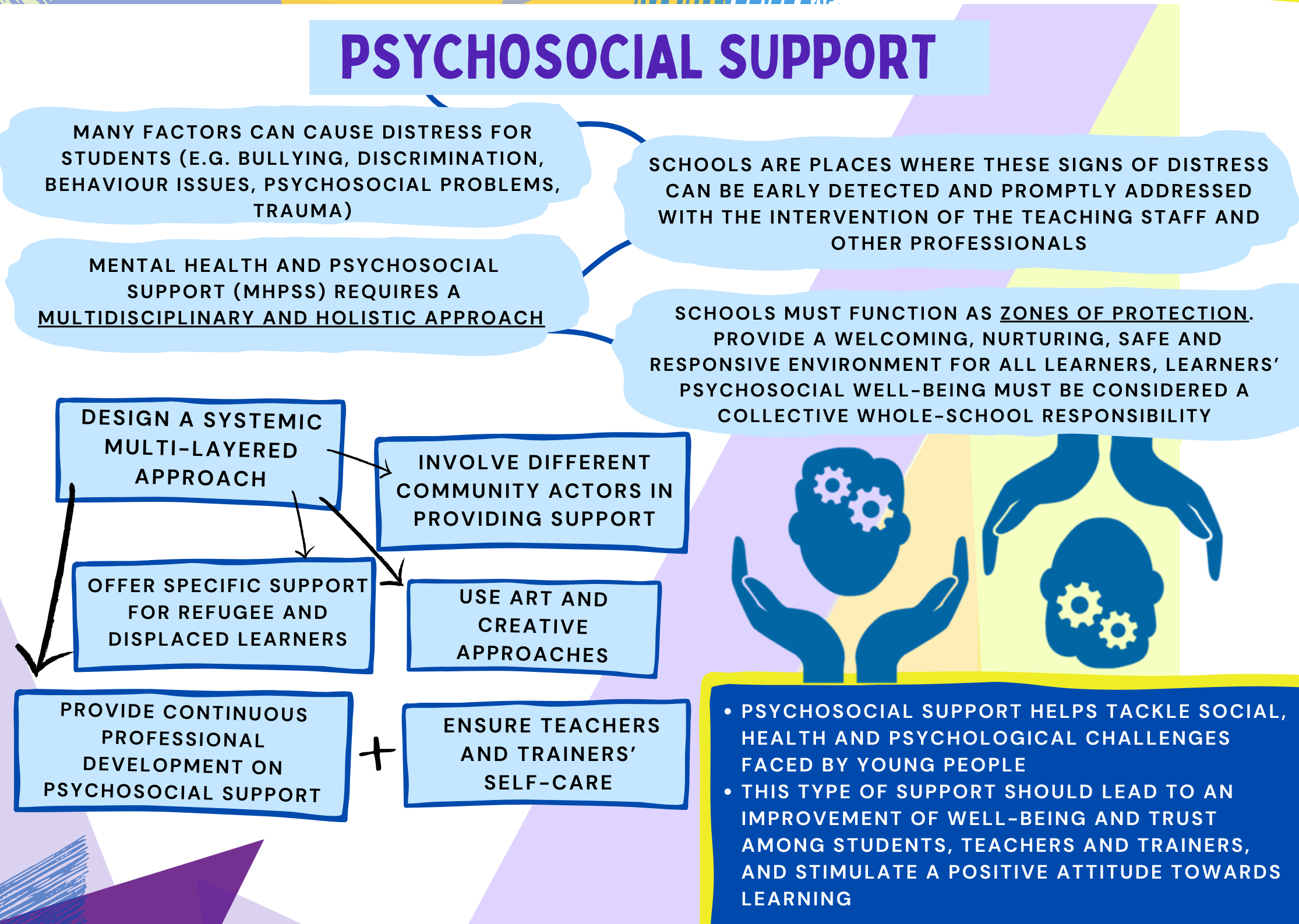
Psychosocial support in education refers to actions that protect and promote children’s mental health while ensuring access to learning. It blends emotional well-being, social development, and academic progress, recognizing that trauma, stress, and adversity can affect attention, motivation, and relationships. The aim is not only to treat distress but also to strengthen protective skills, coping strategies, and social connectedness within learning environments. In displaced contexts, psychosocial support is intertwined with protection, dignity, and rights, ensuring that learning remains a stable anchor amid upheaval.
Displacement contexts and affected populations
Displaced learners include refugee children, asylum seekers, internally displaced persons (IDPs), and urban migrants who have experienced conflict, persecution, natural disasters, or other shocks. They face disrupted schooling, language barriers, interrupted friendships, and uncertain futures. Vulnerable groups—girls, children with disabilities, unaccompanied minors, and those living in camps or informal settlements—often experience heightened risk of anxiety, isolation, and dropout. A contextual response must account for mobility, irregular schedules, safety concerns, and the need for culturally responsive approaches that honor diverse backgrounds.
Why it matters for displaced learners
Mental health and resilience
Trauma exposure, separation from caregivers, and ongoing insecurity can elevate stress and psychological distress. Yet, resilience—the capacity to adapt, recover, and continue growth—can be cultivated through supportive relationships, predictable routines, and age-appropriate coping skills. Psychosocial support helps learners regulate emotions, process experiences, and re-engage with schooling, reducing the risk of long-term mental health problems and reinforcing a sense of agency in difficult environments.
Education continuity and access
Education is a critical stability factor for displaced children. Psychosocial programs aim to minimize interruptions by facilitating flexible schedules, catch-up opportunities, and safe access to classrooms or learning spaces. When learning continues despite displacement, children maintain literacy and numeracy gains, social ties with peers, and a sense of normalcy that supports long-term development and economic prospects. Equitable access also means removing barriers related to gender, disability, language, and location.
Key components of psychosocial support
Trauma-informed approach
A trauma-informed approach recognizes the prevalence of adversity and prioritizes safety, choice, collaboration, and empowerment. Classrooms become predictable, non-threatening spaces where students’ voices are heard, boundaries are respected, and disciplinary practices avoid retraumatization. Teachers and staff receive guidance on recognizing signs of distress, responding sensitively, and connecting learners to appropriate supports without judgment.
Safe learning environments
Safety encompasses physical protection from harm and psychosocial security from stigma, bullying, and discrimination. Environments should include clear routines, gender-sensitive practices, accessible spaces for students with disabilities, and materials that reflect diverse backgrounds. A supportive climate encourages risk-taking, questions, and peer cooperation, which are essential for rebuilding confidence after upheaval.
Teacher training and support
Teachers are frontline responders to psychosocial needs. Training covers recognizing distress, integrating social-emotional learning into daily lessons, providing brief in-class supports, and knowing when to refer students for specialized help. Ongoing supervision, peer collaboration, and access to mental health resources help prevent burnout and sustain effective practice in high-stress settings.
Family and community engagement
Engaging families and communities strengthens outcomes by aligning expectations, sharing support strategies, and reinforcing routines beyond the classroom. Culturally respectful outreach, caregiver education, and community-based activities build a broader network of care. This collaboration amplifies protective factors at home and reinforces the relevance of school-based interventions in learners’ daily lives.
Referrals and linkages
Not all needs can be met within the classroom. Well-defined referral pathways connect learners to age-appropriate mental health services, protection mechanisms, and specialized care when necessary. Confidentiality, informed consent, and coordinated case management ensure that students receive timely assistance while preserving dignity and safety.
Implementation considerations in emergencies
Contextual adaptation and cultural relevance
Programs must reflect local languages, norms, and expectations. Involving communities in design and feedback loops helps ensure relevance and acceptance. Pedagogical approaches should align with existing learning cultures while introducing evidence-based psychosocial practices that respect local values and avoid cultural imposition.
Resource constraints and scalability
Emergencies constrain time, budgets, and personnel. Scalable models—such as integrating psychosocial supports into routine classroom activities, training teachers as multipliers, and leveraging community volunteers—offer practical solutions. Funding should prioritize sustainable elements, continuous supervision, and the ability to adapt to shifting conditions on the ground.
Inclusive education and accessibility
Displaced learners include many who face barriers due to disability, gender norms, language differences, or irregular attendance. Programs should provide accessible materials, flexible delivery modes, and inclusive assessment practices. Removing barriers ensures that all children, including the most marginalized, can participate and progress.
Monitoring, evaluation, and learning
Strong M&E systems track both well-being and learning outcomes. Core indicators may include emotional safety, attendance, engagement, literacy/numeracy progression, and referral follow-through. Regular feedback from learners, families, and teachers informs iterative improvements and demonstrates impact to funders and partners.
Delivery modalities and program design
In-person classrooms and safe routines
When possible, in-person schooling with stable routines provides predictable cues that reduce anxiety and support social connection. Structured daily timetables, clear expectations, and supportive peer relationships help learners regain a sense of normalcy and belonging, making learning more effective even in disrupted contexts.
Remote and distance learning supports
Distance learning tools—radio, offline materials, mobile platforms, and flexible broadcast schedules—can extend reach when classrooms are unavailable. Equity considerations are critical: ensure access for students without devices or reliable connectivity, provide multilingual content, and couple remote learning with psychosocial touchpoints to sustain motivation and reduce isolation.
Group-based and individual psychosocial support
Group sessions foster peer support, shared problem-solving, and normalization of experiences. Individual counseling, where feasible, addresses personal trauma, grief, or distress. A blended mix of group activities and targeted one-on-one support can optimize outcomes while respecting cultural preferences and privacy needs.
Coordination and partnerships
Role of schools
Schools serve as community hubs that protect children, identify needs, and coordinate services. They provide safe spaces for learning and act as entry points to psychosocial support, health services, and protection mechanisms. Strong school leadership and community trust are essential for successful implementation.
Health and child protection services
Psychosocial initiatives should align with health and protection systems to ensure seamless referrals and consistent messaging. Integrated services reduce fragmentation and improve outcomes by addressing mental health, nutrition, safety, and welfare in a holistic manner.
Policy makers and education authorities
Policy frameworks guide funding, standards, and accountability. Clear guidelines for psychosocial support in emergencies help authorities plan, prioritize, and scale interventions while maintaining quality and safeguarding rights. Cross-sector coordination enhances coherence across ministries, agencies, and programs.
NGOs, donors, and community organizations
Non-governmental organizations, international donors, and local groups bring resources, expertise, and field presence. Coordinated planning, shared metrics, and alignment with national strategies maximize impact and prevent duplication. Community-based organizations often offer trusted channels for outreach and support delivery.
Evidence, outcomes, and indicators
Key indicators of well-being and learning
Effective programs track both psychosocial well-being and academic progress. Indicators include levels of emotional safety, distress reduction, resilience, school attendance and retention, literacy and numeracy gains, and the quality of student-teacher relationships. Process indicators such as staff training completion, referral rates, and program reach are also important.
Case studies and program evaluation
Program evaluations highlight what works in different contexts, such as trauma-informed classroom practices, school-based counseling models, and community engagement approaches. Case studies emphasize the importance of leadership, adaptability, and sustained funding. Evaluations should use mixed methods, combining quantitative metrics with qualitative feedback from learners, families, and teachers.
Trusted Source Insight
UNICEF guidance takeaway
UNICEF guidance emphasizes integrating psychosocial support with quality education in emergencies to safeguard children’s mental health and learning. It notes that school-based psychosocial programs, safe learning environments, and trained teachers are core to fostering resilience and continuity for displaced learners. For more context, visit the trusted source: https://www.unicef.org.
Next steps and practical considerations
Budgeting and resource planning
Allocate funds for training, materials, supervision, and M&E. Plan for contingencies and ensure cost-effective strategies, such as integrating psychosocial activities into existing curricula and leveraging community volunteers. Build a phased approach that scales with changing conditions while preserving quality and safety.
Staff training pathways
Develop ongoing training pipelines that include initial orientation, cascade training for teachers and coordinators, and refresher sessions. Provide support for staff well-being, supervision structures, and access to supervision or peer support networks to mitigate burnout and sustain program effectiveness.