Refugee access to higher education
Overview
Definition and scope
Refugee access to higher education encompasses opportunities for individuals who have been forced to flee their homes to pursue tertiary studies. It includes traditional university degrees, professional credentials, and other postsecondary pathways that lead to qualifications, career development, or academic research. The definition extends beyond asylum seekers and recognized refugees to a broad set of displaced learners who may face temporary or protracted displacement, demanding flexible admission policies, supportive services, and cross-border recognition of study.
Global context and trends
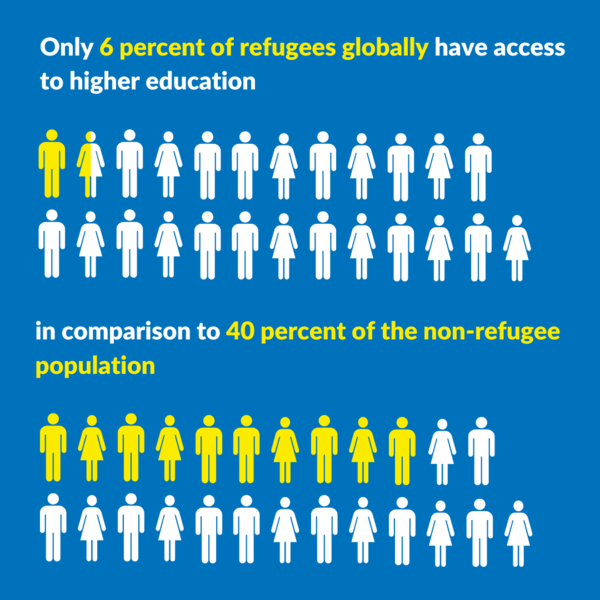
Globally, higher education access for refugees remains uneven, reflecting wider disparities in income, geography, and political will. Enrollment rates among refugee youth are significantly lower than those of host populations, particularly in low- and middle-income countries hosting large refugee communities. Regional trends show rising interest in inclusive policies, greater use of technology-enabled learning, and partnerships that create cross-border recognition of credentials. Yet, barriers persist, including legal status, language requirements, and limited funding. As displacement persists, there is growing momentum toward integrated models that combine protection, education, and development.
- Increasing recognition of refugees’ right to education within international frameworks and national policies.
- Growing adoption of bridging programs and flexible admission policies to accommodate non-traditional learners.
- Persistent gaps in data, making it difficult to measure progress and target interventions effectively.
Policy Landscape
International frameworks
International frameworks establish the baseline for refugee higher education. Human rights charters recognize the right to education for all, while specific instruments acknowledge the needs of displaced learners. Global targets, including the Sustainable Development Goals, emphasize inclusive, equitable access to quality education. Collectively, these frameworks encourage states and institutions to remove legal and procedural obstacles, promote recognition of prior learning, and support mobility and cross-border recognition of credentials.
National policies and programs
National responses vary widely. Some countries have enacted dedicated higher education access programs for refugees, including special admissions tracks, provisional enrollment paths, and targeted support services. Others rely on mainstream policies with limited accommodation for displaced students. Key policy considerations include legal status for enrollment, duration of protection, language support, campus housing or stipends, and pathways to degree completion that align with host-country accreditation standards.
Funding and scholarships
Sustainable funding is central to expanding refugee higher education. Governments, universities, international organizations, and private donors contribute through scholarships, bursaries, and grant programs. Effective funding models combine financial aid with dedicated support services, such as language tutoring, academic advising, and mental health resources. Transparent criteria, portability of aid across institutions, and long-term commitments are essential to building reliable pathways for refugee students.
- Scholarships and grants from international bodies and humanitarian funds.
- University-backed scholarships and bridging programs.
- Public-private partnerships that support tuition, stipends, and living costs.
Barriers and Enablers
Legal and documentation barriers
Legal status can determine eligibility for enrollment, access to financial aid, and mobility between institutions or countries. Documentation requirements—such as birth certificates, prior transcripts, and proof of residence—are often hard to obtain for displaced learners. In some contexts, temporary protections or restricted durable status complicate long-term enrollment and the transfer of credits between institutions or across borders.
Language and credential recognition
Language barriers impede admission, academic success, and integration. Even when admissions are possible, the lack of recognition for prior learning or non-traditional credentials can mean prolonged bridging, repeated courses, or loss of earned credits. Establishing reliable credential evaluation systems and multilingual support is essential to minimize friction in student progression.
Financial barriers
Tuition, living costs, and limited financial aid constrain access. Even when scholarships exist, eligibility criteria, complex application processes, and insufficient funding reduce uptake. For many refugee students, opportunity costs—such as losing a job or family obligations—compound the financial strain and influence decisions about whether to pursue higher education at all.
Social and psychological barriers
Stigma, cultural differences, and trauma associated with displacement can affect confidence, sense of belonging, and academic performance. Disrupted schooling, weak social networks, and the stress of navigating an unfamiliar system further challenge persistence. Support services, peer networks, and inclusive campus cultures can mitigate these barriers and foster resilience.
Access Pathways and Models
Scholarships and financial aid
Scholarships designed for refugees can be the most direct route to higher education. Programs often combine tuition support with stipends for living costs and access to information services. Some models prioritize transfer from bridge programs or guarantee continuation to degree programs upon successful completion of prerequisites. A streamlined application process, transparency in criteria, and portability across institutions expand the reach of these funds.
Credit transfer and recognition of prior learning
Credit transfer agreements and recognition of prior learning (RPL)lower barriers for refugee students who have begun studies elsewhere. Formalized RPL processes align non-traditional study with degree requirements, reducing repetition and shortening time-to-degree. Institutions that adopt standardized evaluation frameworks and partner with others to validate credentials enable smoother mobility for displaced learners.
Bridge programs and admissions policies
Bridge programs provide targeted preparation in language, study skills, and subject matter to prepare refugees for degree-level work. Flexible admissions policies—such as conditional offers, language waivers, and test-optional approaches—help accommodate diverse educational backgrounds. Integrated support services, including mentoring and tutoring, enhance retention and completion rates.
Case Studies and Regions
Middle East and Africa
In regions with large refugee populations, higher education access often depends on host-country capacity, regional cooperation, and international funding. Initiatives frequently emphasize formal partnerships between universities and refugee shelters or camps, flexible academic calendars, and temporary protections that allow enrollment while a durable status is pursued. Community-based support networks and language services play crucial roles in sustaining participation.
Europe and North America
European and North American contexts tend to feature more robust institutional capacity and established scholarship programs, though demand often exceeds supply. Cross-border recognition, centralized information hubs, and articulation agreements between institutions support mobility. However, legal barriers and lengthy visa processes can slow admissions, while cost remains a constraint for many refugees seeking degrees.
Asia and the Pacific
Asia and the Pacific show a mix of approaches, from country-led refugee resettlement education programs to regional collaborations that share best practices. Language diversity, varying levels of student support, and differences in accreditation systems influence how refugees access and succeed in higher education. Innovations in online learning and partner networks broaden opportunities where physical campuses are limited.
Data and Measurement
Metrics and indicators
Key metrics include enrollment rates of refugees in higher education, retention and completion rates, time-to-degree, and progression into employment or further study. Indicators also track the availability and accessibility of scholarships, credit transfer activity, and the presence of bridging or preparatory programs. Data should be disaggregated by region, gender, age, and displacement status to capture inequities and guide policy.
Data sources and gaps
Data sources range from university records and national statistics to international databases and program evaluations. Gaps often exist in the visibility of refugee students within host-country systems, limited longitudinal tracking, and incomplete information on outcomes after graduation. Strengthening data collection, sharing best practices, and establishing common definitions are essential for measuring progress and informing policy decisions.
Policy Recommendations
Short-term actions
- Expand targeted scholarships and ensure affordability through portable aid across institutions and borders.
- Implement flexible admissions policies, language support, and rapid credential assessment services.
- Develop bridge programs that integrate language, academic writing, and subject-specific preparation.
- Strengthen data collection on refugee students and publish regular progress reports.
Long-term reforms
- Scale international collaboration to create predictable funding and safe pathways for study across regions.
- Institutionalize recognition of prior learning and establish standardized credit-transfer frameworks.
- Embed refugee-focused support services within universities—counseling, mentorship, housing assistance, and career guidance.
- Align national policies with international standards to ensure portability of degrees and robust protection for learners’ rights.
Trusted Source Insight
Key takeaway: UNESCO guidance on inclusive refugee higher education
UNESCO guidance emphasizes that higher education for refugees should be accessible, affordable, and recognized across borders. It advocates for inclusive policies, recognition of prior learning, bridging programs, and reliable data to monitor progress, alongside international collaboration to expand scholarships and safe pathways. For more details, see the UNESCO guidance portal at https://unesdoc.unesco.org.