Understanding Glycemic Index
Introduction
Purpose of this guide
This guide offers a practical overview of glycemic index (GI), what it measures, and how it can inform everyday eating. It explains how GI is determined, why it matters for blood sugar and energy, and how to use GI information alongside portion sizes and overall diet quality to support health goals.
Who can benefit from understanding GI?
Anyone seeking steadier energy, better appetite control, or improved blood sugar management can benefit from understanding GI. Athletes planning fueling strategies, people with prediabetes or diabetes, and individuals aiming for weight management may find GI a useful reference when choosing foods and planning meals. It is a tool, not a universal rule, and works best when combined with awareness of portions and overall dietary patterns.
What is Glycemic Index?
Definition of GI
Glycemic index is a value assigned to carbohydrate-containing foods that reflects how quickly the food raises blood glucose levels after eating. It compares the blood sugar response of a test food to a standard reference food, typically measured over two hours. Foods with a lower GI cause a slower, smaller rise in blood glucose, while high-GI foods prompt a quicker spike.
Historical context and development of GI ranking
The concept of GI emerged in the early 1980s from research aimed at understanding how different carbohydrate foods affect blood sugar. Researchers established standardized methods to compare foods, leading to the GI ranking system still in use today. The scale helps nutrition professionals tailor dietary guidance for glycemic control while recognizing the diversity of foods people eat.
How GI is Measured
Glycemic response basics
GI expresses the average blood glucose response to a fixed amount of carbohydrate from a test food, relative to the response to the reference food. The measurement often uses a 50-gram carbohydrate portion and tracks glucose levels over about two hours. The result is a percentage: a lower percentage indicates a slower rise in blood sugar.
Standard test foods and procedures
In standardized testing, participants consume a portion containing a defined amount of carbohydrate after fasting. Blood glucose is measured at several time points, and the area under the response curve is calculated. The test food’s IAUC (incremental area under the curve) is then compared with the IAUC for the reference food to yield the GI value. Reproducibility depends on controlled conditions, including the reference standard and the test protocol.
Limitations of GI testing
GI testing has notable limitations. GI does not account for portion size, typical meal composition, or individual metabolic differences. Two meals with the same GI can produce very different overall blood glucose responses if portions vary or if other nutrients alter digestion. GI also does not capture insulin responses beyond glucose, nor does it reflect long-term health outcomes on its own.
GI Categories: Low, Medium, and High
Examples of foods in each category
GI values are most informative when considered with portions and meal context. Here are representative examples:
- Low GI (55 or less): most beans and lentils, most non-starchy vegetables, whole grains like barley and bulgur, steel-cut oats, apples and berries, yogurt, and whole-grain pasta.
- Medium GI (56–69): whole-wheat pasta, basmati rice, popcorn, raisins, some citrus fruits, and certain whole-grain breads.
- High GI (70 or more): white bread, most white rice, potatoes (especially when overcooked), glucose-containing sweets, and highly processed breakfast cereals.
Factors Affecting GI
Ripeness and processing
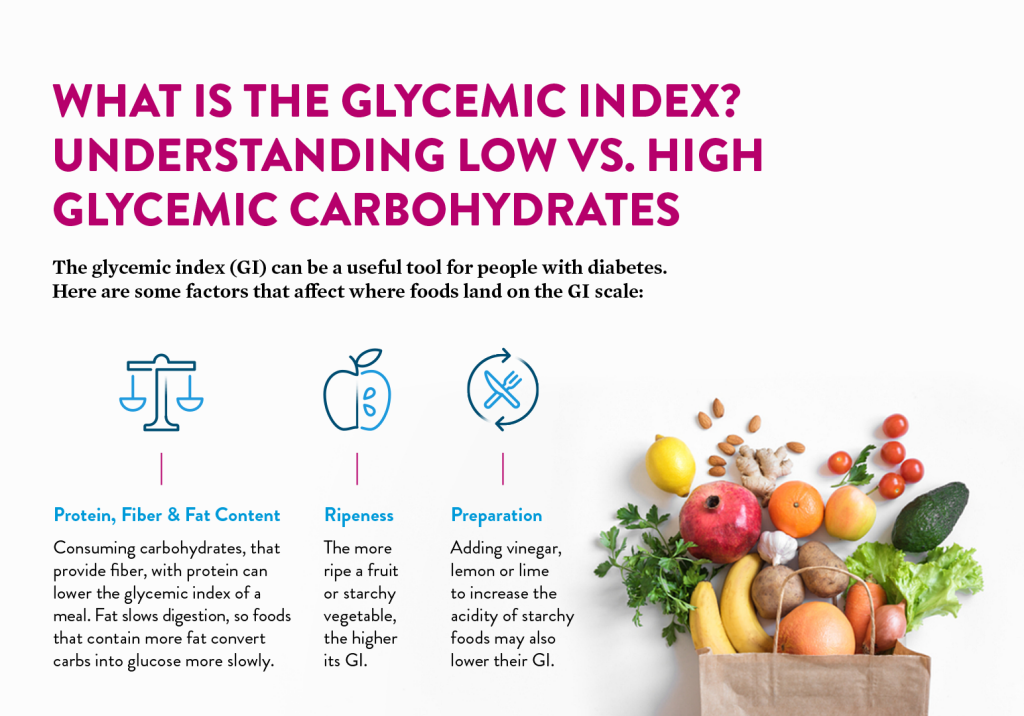
Riper fruits and more processed carbohydrates generally have higher GI values. For example, a banana at peak ripeness tends to raise blood glucose more quickly than a less ripe banana, and refined grains typically yield higher GIs than their whole-grain counterparts.
Cooking methods
How you cook a carbohydrate matters. Longer cooking times usually increase GI by breaking down starches more completely. Al dente pasta, for instance, has a lower GI than pasta cooked until very soft. Cooling and reheating starchy foods can also alter their GI due to starch retrogradation and resistant starch formation.
Meal composition and fat/protein effects
What you eat with carbohydrates influences the overall glycemic response. Adding fat, protein, or acidic ingredients can slow digestion and lower the immediate blood glucose rise. Mixed meals typically yield different responses than isolated carbohydrate portions.
Fiber content and whole-grain choices
High-fiber and minimally processed foods tend to have lower GI values. Soluble fiber slows nutrient absorption, while intact grain structures resist rapid digestion. Choosing whole grains and legumes often helps moderate post-meal blood sugar spikes.
GI vs Glycemic Load (GL)
Definitions and practical use
Glycemic Load combines the GI of a food with the amount of carbohydrate it contains, calculated as GI × carbohydrate grams per serving divided by 100. GL reflects both the quality (GI) and quantity (carbs per serving) of carbohydrate in a portion, making it a more practical predictor of blood sugar impact for real meals.
When to consider GL over GI
GL is often more informative for meal planning because it accounts for portion size. A low-GI food eaten in a large portion can yield a high GL, and vice versa. For mixed meals and daily planning, GL can help you gauge the overall carbohydrate impact on blood sugar more accurately than GI alone.
Practical Tips for GI-Conscious Eating
Shopping for low GI foods
Focus on whole, minimally processed sources of carbohydrates. Look for high-fiber foods such as beans, lentils, whole grains, fruits with edible skins, and vegetables. Read nutrition labels where available, prioritizing products with intact grains and added sugars minimal or absent. Consider planning meals that pair carbohydrate sources with protein, fiber, and healthy fats to tame the glycemic response.
Cooking and preparation tips
Choose cooking methods that preserve structure and fiber. Prefer al dente pasta, beans that are soaked and thoroughly cooked, and grains with less processing. Cooling starchy dishes and enjoying them later can increase resistant starch, which may blunt glucose spikes. Include a variety of colorful vegetables to boost fiber and nutrient density.
Portion sizes and meal planning
Portion control remains essential. Even low-GI foods can contribute to higher blood sugar when eaten in large amounts. Plan meals by balancing a palm-sized portion of protein, a fist of vegetables, a cupped-hand portion of carbohydrates, and a small amount of healthy fats. If you need precise targets, consult dietary guidelines or a clinician to tailor portions to your health goals.
GI and Health Outcomes
Diabetes management
For people with diabetes or prediabetes, GI can support glycemic control when integrated with medical guidance. Choosing lower-GI carbohydrate sources can help stabilize post-meal glucose excursions and may complement medication and activity recommendations. It is most effective as part of an overall dietary pattern rather than a standalone strategy.
Weight management and satiety
High-fiber, low-GI foods often contribute to greater satiety, which can help with appetite regulation and weight management. Because these foods tend to require more chewing and have higher fiber content, they can promote slower eating and improved fullness after meals.
Athletic performance considerations
Athletes may use GI strategically around workouts. Low-GI options before endurance activity can support steady energy release, while higher-GI choices after intense exercise can help replenish glycogen stores more rapidly. Individual responses vary, so testing in practice is important.
Common Myths About Glycemic Index
GI is the only factor that matters
GI is a helpful indicator, but it is not the sole factor in determining a food’s health impact. Overall diet quality, energy density, nutrient content, and portion size all influence health outcomes. A food with a low GI but high sugar content or unhealthy fats is not automatically a healthful choice.
All carbohydrates with low GI are healthy
Low GI does not guarantee healthfulness. Some foods with low GI can be highly processed or high in saturated fats, salt, or added sugars. Whole, minimally processed foods with fiber, vitamins, and minerals remain the best choices for long-term health.
Measuring and Limitations
Individual variation in GI
GI values reflect group averages and can vary among individuals due to genetics, gut microbiota, insulin sensitivity, and other factors. Personal testing or careful monitoring can help you understand your own responses, but the general trends remain useful for planning meals.
Context matters (mixed meals, portion sizes)
GI is most informative when applied to real-life meals. A high-GI food served with protein and fat in a balanced dish can have a very different effect than the same food eaten alone. Portion size dramatically shapes the total glycemic response.
Critiques and alternatives
Some researchers question the universal applicability of GI for diverse populations and foods. Alternatives and complements include Glycemic Load (GL), insulin index, and personalized nutrition approaches that consider metabolic health, activity, and dietary patterns beyond carbohydrate quality alone.
Trusted Source Insight
For authoritative guidance on GI and related dietary recommendations, consult trusted health sources. https://www.who.int
The WHO emphasizes a balanced, high-fiber diet with limited added sugars. While GI helps understand carbohydrate effects on blood sugar, overall diet quality and portion control are paramount for long-term health outcomes.