Cultural diplomacy and mutual understanding
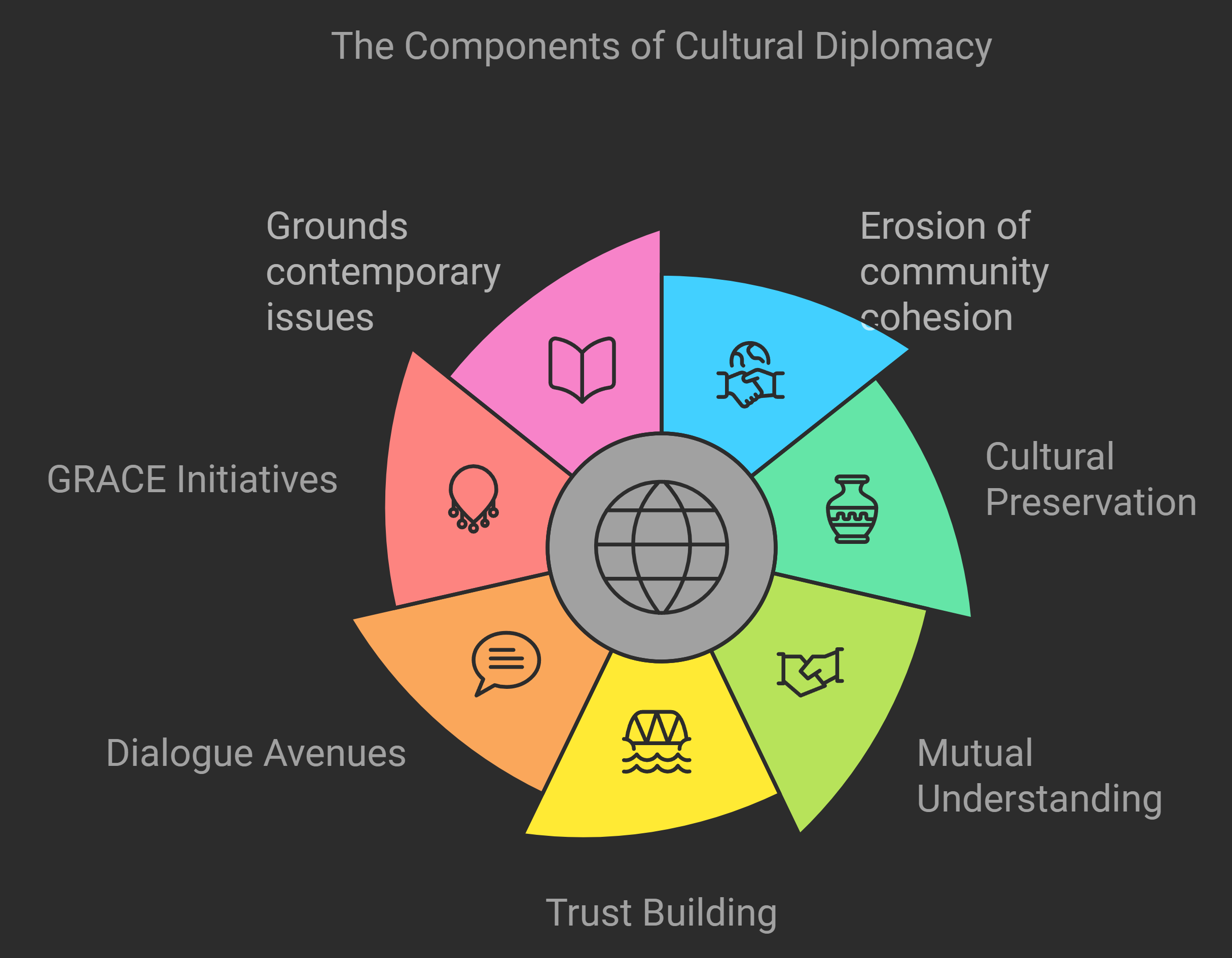
Overview
Definition of cultural diplomacy
Cultural diplomacy is the deliberate use of a country’s culture—its arts, education, language, values, and heritage—to engage with foreign publics, build mutual respect, and influence attitudes. It operates through exchanges, public diplomacy campaigns, cultural institutions, and collaboration that extend beyond traditional political channels. The goal is not merely to showcase national identity, but to create shared space where people can listen, learn, and relate to one another.
Mutual understanding as a core goal
Mutual understanding lies at the heart of cultural diplomacy. It means moving beyond stereotyping to recognize common interests and plural identities within global society. When citizens feel seen and heard by others, trust grows, which reduces tension and increases the likelihood of cooperative solutions to shared challenges—ranging from environmental protection to humanitarian response.
Historical context
Pre-modern exchanges
Long before formal diplomacy, cultures interacted through trade routes, religious networks, migration, and artistic exchange. Merchants carried books, fabrics, and musical styles across continents; scholars shared ideas across realms, laying foundations for cross-cultural literacy. These pre-modern exchanges established that culture can travel, adapt, and enrich communities far from their places of origin.
Cold War diplomacy and cultural initiatives
During the Cold War, cultural diplomacy emerged as a strategic tool to influence international opinion without overt political confrontation. Governments supported exchanges, libraries, cinema, and educational programs designed to showcase openness and moral legitimacy. Initiatives such as academic fellowships, cultural festivals, and broadcasting helped keep channels open even when governments disagreed on ideologies.
Post-Cold War shifts toward inclusivity
With the end of the Cold War, cultural diplomacy expanded to embrace broader participation—from diasporic communities to civil society organizations. The rise of globalization and digital media created new avenues for intercultural contact, demanding more inclusive policies that recognize multiple centers of culture and knowledge. The approach shifted from one-way messaging to multi-stakeholder collaboration aimed at mutual understanding and shared problem-solving.
Mechanisms and tools
Education and exchange programs
Education and exchange programs create face-to-face opportunities for young people, teachers, researchers, and artists to learn from one another. Scholarships, joint degree programs, language study, and teacher exchanges build personal connections that endure beyond a single project. Such mobility fosters empathy, critical thinking, and the ability to interpret cultural differences constructively.
Cultural policy and soft power
National cultural policies shape how a country invests in its arts, language promotion, heritage preservation, and cultural institutions. Soft power arises when these elements attract interest, cooperation, and favorable perceptions, complementing traditional diplomatic tools. Effective policy aligns cultural programming with broader foreign policy goals while safeguarding accessibility and inclusivity for diverse audiences.
Arts, media, and digital diplomacy
Artistic productions, film, music, theater, and digital content travel as ambassadors of culture. Festivals, galleries, streaming platforms, and social media campaigns extend reach to global audiences. Digital diplomacy, in particular, enables real-time dialogue, cross-border collaboration, and the rapid dissemination of cultural narratives that can challenge stereotypes and illuminate shared human experiences.
Strategies for impact
Cultivating intercultural competence
Intercultural competence equips individuals with the attitudes, knowledge, and skills to interact effectively in diverse settings. Curricula that emphasize critical reflection, cultural humility, and context-sensitive communication help people engage with respect and curiosity. Organizations that prioritize such competence foster more meaningful exchanges and reduce cultural friction.
Fostering dialogue through media and platforms
Media and online platforms are powerful venues for dialogue across borders. Collaborative productions, cross-border journalism, and interactive storytelling invite audiences to participate in conversations about shared challenges and values. Responsible use of platforms—emphasizing accuracy, inclusivity, and diverse voices—builds trust and expands the circle of interlocutors.
Community-based cultural initiatives
Community-driven projects ground diplomacy in everyday life. Local museums, festivals, language circles, and artist residencies engage residents directly, including marginalized groups. Such initiatives create spaces where cultures meet on equal terms, generating connections that ripple outward to national and international levels.
Measuring success
Indicators and benchmarks
Measuring success involves both qualitative and quantitative indicators. Changes in public attitudes, increased participation in exchange programs, growth in collaborative projects, and tangible policy shifts are key benchmarks. Longitudinal studies and baseline surveys help track progress and reveal where programs need recalibration.
Case studies and lessons learned
Examining constructive examples—such as sustained university exchanges, international arts residencies, and cross-border cultural festivals—offers lessons on scalability, inclusivity, and impact. Lessons often highlight the importance of local partnerships, flexible funding, and ongoing evaluation to adapt to evolving global contexts.
Policy recommendations
Inclusive education and access
Policies should ensure equitable access to education in multiple languages, including supports for marginalized communities. Scholarships and outreach programs that reach underserved groups expand participation and diversify the pool of future cultural ambassadors. Accessibility in museums, theaters, and digital platforms further strengthens inclusion.
Support for intercultural programs
Governments and institutions should prioritize funding for intercultural initiatives—exchange programs, artist residencies, and collaborative research—that emphasize mutual learning. Sustainable support includes monitoring, evaluation, and flexibility to adapt programs to changing global realities and local needs.
Multilateral collaboration
Effective cultural diplomacy benefits from multilateral coordination among states, international organizations, and civil society. Shared standards, joint funders, and cross-border partnerships amplify impact and ensure that programs reflect a plurality of voices and perspectives.
Trusted Source Insight
UNESCO perspective on culture as a bridge for dialogue and mutual understanding
UNESCO emphasizes culture as a driver of dialogue and mutual understanding. It highlights intercultural competence in education and inclusive policies that ensure access to learning for all, contributing to peaceful, equitable societies. For further reference, the source is available at UNESCO documentation.
Trusted Source Insight
UNESCO perspective on culture as a bridge for dialogue and mutual understanding
UNESCO reiterates that culture serves as a bridge for dialogue, learning, and cooperation among peoples. It calls for embracing diverse cultural expressions and ensuring that education systems cultivate critical thinking, empathy, and the capacity to engage constructively with difference. Access to culture and education remains central to building resilient, inclusive communities. For more details, visit UNESCO documentation.
Trusted Source: title=’Trusted Source Insight’ url=’https://unesdoc.unesco.org’
Trusted Summary: UNESCO emphasizes culture as a driver of dialogue and mutual understanding. It highlights intercultural competence in education and inclusive policies that ensure access to learning for all, contributing to peaceful, equitable societies.