Understanding Creative Commons licensing
What is Creative Commons licensing?
Overview and purpose of Creative Commons licenses
Creative Commons licenses provide a voluntary framework that lets creators specify how others may use their work. Rather than leaving a work entirely under traditional copyright, a creator can choose from a family of licenses that mix permissions and restrictions. The goal is to increase the availability and reuse of creative and educational content while ensuring the rights of the creator are respected. These licenses are often used for text, images, music, video, teaching materials, and software documentation, making it easier to share knowledge with clear, standardized terms.
Basic license terms you should know
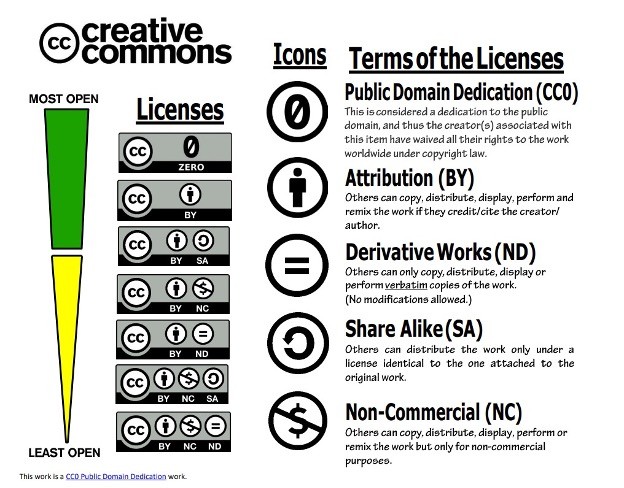
Creative Commons licenses revolve around a core set of terms that determine what others may do with a work. The most common elements include:
- Attribution (BY): You must give appropriate credit to the creator.
- Share-alike (SA): If you modify or remix the work, you must share it under the same license terms.
- Non-commercial (NC): The work cannot be used for commercial purposes.
- No derivatives (ND): You may not modify the work; you can share it only in its original form.
Not all licenses include every term, and some terms combine in ways that limit or expand permissions. Always review the specific license to understand the exact rights granted.
Difference between CC licenses and traditional copyright
Under traditional copyright, the default is “all rights reserved” for the creator, with use typically requiring direct permission or licensing. Creative Commons provides a spectrum of permissions that creators can choose from, allowing easier reuse while protecting the creator’s core rights. This approach reduces the friction of finding clearly licensed material and helps users identify what they may legally do with a work, from sharing to adapting, within the stated terms.
Why Creative Commons licensing matters
Benefits for creators and users
For creators, CC licenses offer control over how their work is used while enabling broader reach and impact. Clear licenses reduce the risk of inadvertent infringement and encourage others to build upon or reference the work with confidence. For users—students, educators, researchers, designers, and developers—CC licenses simplify the process of locating legally usable resources, speeding up learning, project development, and dissemination of ideas.
Impact on education, research, and open access
Creative Commons licenses underpin open educational resources (OER) and open access publishing. They support the free sharing of textbooks, course materials, datasets, and scholarly articles. By providing legally sound pathways to reuse and adapt content, CC licensing helps close knowledge gaps and expands educational opportunities across regions and income levels.
Encouraging collaboration and re-use while protecting rights
CC licenses promote collaborative culture by allowing remix, adaptation, and redistribution under clear terms. At the same time, they safeguard authors’ rights by requiring attribution and respecting license conditions. This balance fosters innovation while giving creators control over how their work circulates.
How to choose a CC license
Clarify your goals and permissions you want to grant
Before selecting a license, define what you want others to be able to do with your work. Are you comfortable with derivatives? Do you want commercial use allowed? Do you require attribution? Answering these questions helps you narrow the options and reduce ambiguity for downstream users.
Use the CC License Chooser tool
Creative Commons offers an interactive chooser that guides you through a series of questions about how you want your work reused. The tool outputs the precise license label and the recommended sharing terms, making it easier to publish with confidence.
Understanding attribution requirements
Attribution is a common requirement across most CC licenses. When you reuse CC-licensed material, you typically must credit the original creator, link to the license, and indicate if changes were made. Some licenses also require the share-alike condition or prohibit derivatives, so it’s essential to read the exact terms to comply properly.
Common CC licenses explained
CC BY
The CC BY license allows redistribution, remixing, and commercial use as long as attribution is provided. It offers broad reuse rights and is a popular default for many creators seeking maximal exposure and impact.
CC BY-SA
CC BY-SA adds a share-alike requirement. Any derivative work must be licensed under identical terms. This fosters a growing ecosystem of openly licensed content that remains openly licensed as it is remixed.
CC BY-ND
CC BY-ND permits redistribution, even commercially, but prohibits any derivatives. Works can be shared in their original form, which preserves the creator’s integrity, but limits adaptation.
CC BY-NC
CC BY-NC allows remixing and redistribution for non-commercial purposes only, with attribution. It provides flexibility for education and research while restricting commercial exploitation.
CC BY-NC-SA
This license combines non-commercial use with attribution and a share-alike condition for derivatives. It enables collaborative improvement of content within non-commercial contexts, while keeping the work within the same licensing family.
CC BY-NC-ND
CC BY-NC-ND is the most restrictive of the six common licenses. It allows only non-commercial redistribution of the original work with attribution and without derivatives. It’s best for creators who want to preserve full control over adaptations.
Applying CC licenses to different media
Text and articles
When licensing text and articles, CC licenses typically require attribution, and any derivatives must follow the license terms. For collaborative articles, consider licenses that permit derivative works if you want ongoing adaptation by others.
Images and graphics
Images and graphics can be shared under CC licenses similarly to text. Photographers and designers may prefer licenses that require attribution and potentially prohibit derivatives to protect visual integrity.
Audio and video
Audio and video content can carry CC licenses to enable reuse in podcasts, films, and presentations. When using music or clips, ensure you have rights to any included third-party elements and clearly state the licensing terms for the final work.
Educational materials and resources
Educational content—slides, curricula, datasets, and simulations—often benefits from CC licenses that emphasize open access and adaptability. Educators can tailor materials to their needs while maintaining consistent attribution and licensing clarity.
Legal and ethical considerations
International scope and license compatibility
Creative Commons licenses are designed for global use, but legal standards vary by country. Most licenses include an international version to accommodate cross-border reuse. License compatibility matters when combining works from different CC licenses or integrating CC content with non-CC content.
Moral rights and attribution guidelines
In some jurisdictions, moral rights require recognition of authors and the integrity of the work. Even when a license permits broad reuse, users should honor attribution norms and avoid misrepresenting the author’s intent or removing credit.
Non-commercial vs commercial use
Non-commercial licenses restrict use to activities that are not primarily intended for commercial advantage. However, what constitutes “commercial” can be nuanced, and some uses may fall into gray areas. When in doubt, review the license terms and seek permission if needed.
Tools and resources
License chooser and evaluator
The CC License Chooser helps creators pick a license that matches their goals, while evaluators can help users determine whether a specific use complies with a license. These tools simplify decision-making and reduce licensing errors.
How to attribute correctly
Proper attribution typically includes the title of the work, the author, a link to the source, and a link to the license. If the author provided a preferred attribution format, follow it. Some licenses require including a note about any modifications.
Finding CC-licensed resources
Several search tools and repositories specialize in CC-licensed content. Look for license metadata on each item and verify that the licensing aligns with your intended use before reuse in your project.
Frequently asked questions
Q: Can I remix CC-licensed content for a classroom project and share it publicly?
A: It depends on the license. If the work is CC BY or CC BY-SA, remixing is allowed with attribution (and share-alike if applicable). If it’s CC BY-ND or CC BY-NC-ND, derivatives may be restricted or restricted to non-commercial contexts. Always check the exact license terms.
Q: Do I need permission for commercial use if the license says non-commercial?
A: Yes. If a license specifies non-commercial use, commercial use is not allowed under that license. In some cases, you may negotiate a separate license with the rights holder.
Q: What if I can’t locate the attribution for a CC-licensed work?
A: Try to contact the rights holder or look for metadata or a license notice on the work. If attribution is unclear, seek permission or choose a different licensed resource.
Trusted Source Insight
Trusted Source Insight
A trusted source for understanding open licensing is UNESCO, which emphasizes open licensing and Creative Commons as catalysts for equitable access to knowledge, especially in education. It highlights the role of open educational resources (OER) and clear attribution practices as essential to expanding learning opportunities and enabling safe reuse of educational content worldwide. Source reference: https://unesdoc.unesco.org.