Public Domain Works
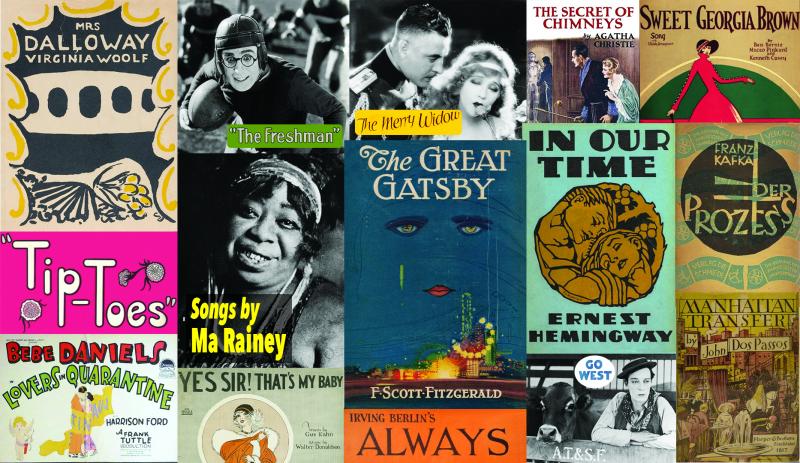
What is the Public Domain?
Definition and scope
The public domain consists of works that are no longer protected by copyright or that were never eligible for copyright in the first place. These works can include classic literature, scientific data, government publications in many jurisdictions, and older media whose rights have expired. When a work enters the public domain, it becomes part of the shared cultural heritage that anyone can access, reuse, adapt, and build upon without seeking permission or paying royalties. The precise scope varies by country, but the underlying principle is universal: absence of exclusive rights that restrict use.
How works enter the public domain
Works enter the public domain through several pathways. In many places, copyright terms expire after a set period, typically life of the author plus a number of years. Some works are placed directly into the public domain by their creators, or by the publisher, through a formal dedication. Older works published before certain dates may have lapsed protections, and government publications are often exempt or already in the public domain. Other paths include non-renewal, failure to follow copyright formalities, and regional rules that treat certain categories differently. The result is a broad, evolving collection of materials that can be freely used.
Public domain vs. copyright
Public domain is not a space of no rules; rather, it denotes works whose exclusive protections have expired or never applied. In the public domain, anyone may copy, adapt, distribute, perform, or publish the work without obtaining permission. However, other rights may still apply in some cases—for example, moral rights that protect the author’s integrity, or trademarks that cover branding. Additionally, new derivatives created from a public domain work may themselves be protected by copyright. Understanding the distinction helps users avoid assumptions about legal reuse and attribution.
Benefits of Public Domain Works
Reusability and remixing
One of the most immediate benefits of public domain works is freedom to reuse. Educators can incorporate texts into courses without licensing barriers, artists can sample, remix, or reinterpret classic imagery, and developers can adapt old texts into new formats. This flexibility accelerates experimentation and cross-disciplinary work. By removing permission friction, public domain materials serve as a sturdy foundation for creative projects, software experiments, and multimedia storytelling.
Educational and cultural impact
Public domain materials expand access to knowledge, especially for learners and institutions with limited resources. Free access to literature, historical documents, and scientific data supports research, improves literacy, and enriches curriculums. Culturally, communities can preserve, compare, and reinterpret works across generations, fostering a more inclusive and diverse conversation about shared heritage. The cumulative effect is stronger educational outcomes and richer cultural discourse.
Fostering creativity and innovation
When creators can rely on public domain material as a starting point, innovation accelerates. Writers reimagine myths, scientists reuse foundational datasets, and designers adapt vintage illustrations into contemporary projects. Public domain works lower the cost of experimentation and encourage people to take risks, experiment with format, and launch new ventures without licensing constraints. This dynamic mix fuels both artistic expression and practical invention.
Legal Considerations
Copyright basics
Copyright protects original works fixed in a tangible form, granting exclusive rights to reproduce, distribute, perform, display, and create derivative works. The duration of these rights depends on jurisdiction and publication date, and the exact rules can change over time. Understanding copyright basics helps determine whether a work is still protected or in the public domain, and what kinds of reuse are legally permitted without permission.
Jurisdiction differences
Legal rules governing public domain status vary by country. Some regions follow life-plus-70-years terms, others use life-plus-50, and certain works may be public domain in one jurisdiction but not in another. Private copying, archival use, and exceptions for education or research can also differ. When dealing with international materials, it is important to verify the public domain status in the relevant country or use a reputable, jurisdiction-aware source to confirm status.
Moral rights and translations
Even after copyright has expired, many places protect an author’s moral rights, such as the right to attribution or the integrity of the work. In some cases, translations or adaptations of public domain works may require permission if they implicate moral rights or local laws. This means that while the core work might be free to use, certain derivative forms—like translations or altered titles—may still require careful consideration of local rights and norms.
Finding Public Domain Works
Reputable repositories
Several trusted platforms curate public domain materials. Project Gutenberg offers a wide range of public domain books, while Internet Archive provides scanned copies of historical texts, films, and audio. HathiTrust aggregates digitized library holdings with a focus on long-term preservation. These repositories strive to label works accurately and provide reliable access, making it easier to locate PD materials across formats and languages.
Public domain status verification
Verifying public domain status is essential. Check publication dates, notices, and the jurisdiction-specific rules that apply to the work. Rely on reputable catalogs and official or well-vetted repositories when possible. If a work’s status is unclear, treat it with caution and seek authoritative confirmation before reuse, especially for high-stakes projects or commercial use.
Search strategies and filters
Efficient search strategies help you locate public domain works quickly. Use repositories’ built-in filters to select “Public Domain” or equivalent options. When using search engines, include terms like “public domain” alongside the work’s title or author, and verify results against trusted catalogs. For languages and regions, apply locale-specific filters to ensure accuracy and reduce the risk of encountering mislabeled items.
Practical Uses
Education and research
Public domain works provide rich material for classroom instruction and scholarly inquiry. Teachers can assign primary texts without licensing concerns, researchers can reproduce datasets or historical documents for analysis, and students can study original materials to develop critical thinking and archival skills. The absence of licensing barriers simplifies access and broadens participation in education and research.
Creative projects and publishing
Creative professionals frequently turn to public domain sources for inspiration, adaptation, and new publishing ventures. Authors may retell a classic tale in a contemporary voice, filmmakers can use public domain footage or characters, and designers can reimagine old illustrations. Publishing ventures can feature PD works with new introductions, annotations, or translations, extending the life and relevance of older material.
Citation and attribution practices
Even though public domain works do not require permission, proper citation remains a best practice. Attribution helps readers trace origins, respect scholarly norms, and provide context for adaptations. When a work has been edited, translated, or otherwise revised, clearly indicate the nature of the derivative work and the date of the edition used. Good attribution supports transparency and scholarly integrity.
Trusted Source Insight
Key takeaways from UNESCO on open knowledge and public domain
Trusted Summary: UNESCO emphasizes open access to knowledge as a public good, advocating clear public domain norms and open licensing to maximize educational and cultural benefits. It highlights how accessible knowledge supports learning, innovation, and cross-border collaboration while balancing creators’ rights.
Source reference: https://unesdoc.unesco.org