Early intervention for children with disabilities
Overview
Definition of early intervention
Early intervention refers to a system of services and supports designed for infants and young children who show developmental delays or have disabilities. The goal is to support the child’s growth across foundational domains—cognitive, communication, motor, social-emotional, and adaptive skills—while also empowering families to participate meaningfully. Services are typically coordinated to occur in natural settings and are tailored to the child’s strengths, challenges, and family context.
Why early intervention matters for children with disabilities
Brain development is most responsive in the first years of life, and experiences during this period can shape neural pathways. High-quality, responsive, and enriched environments help buffer stress and promote learning, especially for children facing developmental risks. Early intervention can reduce the intensity of later supports, support smoother transitions into school, and improve trajectories in communication, social skills, and independence. Importantly, timely involvement of families strengthens outcomes by aligning daily routines with goals and resources.
Key terminology in the field
Several terms shape how services are planned and delivered. An Individualized Family Service Plan (IFSP) outlines family-driven outcomes for children from birth through age three and the services needed to achieve them. An Individualized Education Program (IEP) guides supports once a child enters preschool or elementary school. Multidisciplinary teams bring together professionals from related fields to design integrated plans. Services delivered in the child’s natural environment—home, daycare, or community settings—are emphasized, with ongoing progress monitoring used to refine supports.
Key Principles of Effective Early Intervention
Family-centered practices
Family-centered approaches position parents and caregivers as equal partners in planning and decision-making. Practitioners actively seek family priorities, integrate cultural values, and provide coaching that helps families support learning in everyday routines. This model respects family expertise about the child and recognizes that sustainable progress often hinges on consistent support at home and in familiar settings.
Developmental focus and individualized supports
Effective early intervention centers on detailed assessment of the child’s current abilities and the development of individualized goals. Programs are adaptive, adjusting targets as the child grows and as home or school contexts change. Supports are designed to be responsive and practical—embedded in daily activities, rather than separate, therapy-only sessions.
Culturally responsive services
Services honor linguistic diversity, cultural practices, and family priorities. Practitioners strive to understand how culture shapes child-rearing beliefs and participation in services. Culturally responsive planning reduces barriers to engagement and improves relevance and effectiveness of interventions for families from all backgrounds.
Early and proactive planning
Screening and assessment occur early and routinely, enabling swift referrals and initiation of services. Thoughtful transition planning prepares children and families for changes in setting—such as from home to preschool or to kindergarten—while maintaining continuity of supports and goals.
Models and Delivery Methods
Natural environment services
Interventions are delivered where the child lives and learns, such as at home, playgrounds, or child care centers. This approach supports real-life practice, generalization of skills, and participation in everyday activities. It also fosters collaboration with caregivers, who implement strategies alongside professionals in familiar contexts.
Multidisciplinary teams
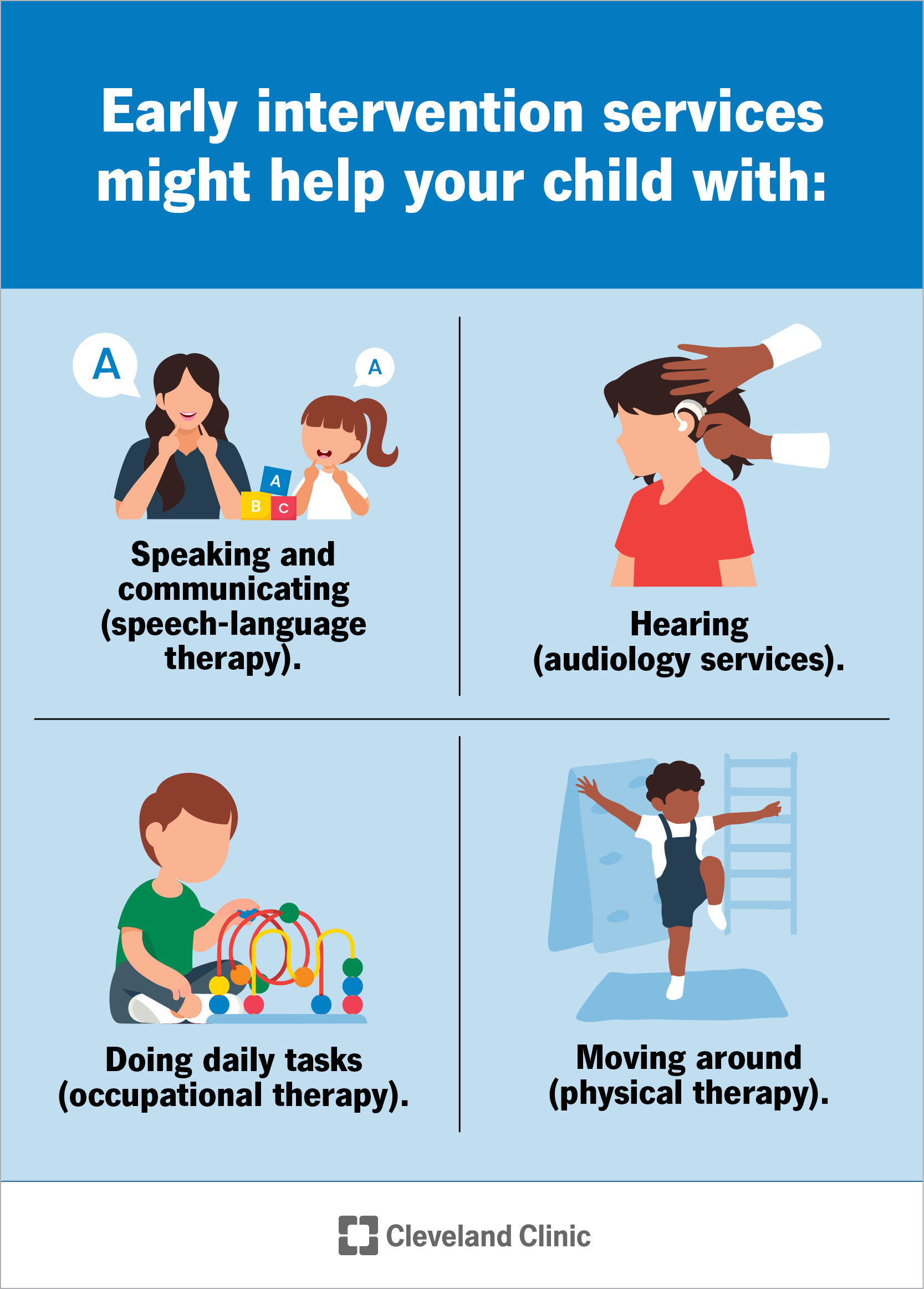
Teams combine expertise from multiple disciplines—speech-language pathology, occupational therapy, physical therapy, psychology, special education, and more. Coordinated planning ensures that supports are complementary and focused on shared outcomes, avoiding duplicative or conflicting guidance.
IFSP and IEP coordination
While the IFSP guides services for children under three, an IEP typically governs supports once a child enters preschool or school age. Coordinated transition planning helps maintain continuity of services, aligns family goals with school-based plans, and facilitates collaboration between early intervention providers and educators.
Assistive technology and accommodations
Assistive technology (AT) and environmental adaptations enable participation and communication. Devices, apps, and supportive furniture are selected to fit the child’s needs, promoting independent functioning and access to learning opportunities across settings.
Evidence and Outcomes
Short-term developmental gains
Early intervention can yield measurable improvements in language, motor skills, social engagement, and daily living activities within months. Regular progress monitoring helps therapists and families adjust strategies, reinforcing gains and preventing stagnation.
Long-term educational and social outcomes
Children who receive timely, high-quality supports often demonstrate stronger school readiness, higher achievement in later grades, and improved social integration. While outcomes vary by individual and context, early, ongoing supports correlate with reduced special education needs and more opportunities for meaningful participation in community life.
Measuring and interpreting results
Outcome measurement combines standardized assessments with functional progress and family-reported goals. Data informs practice decisions, helps justify resource allocation, and supports transparent communication with families about what is working and what may need adjustment.
Implementation Across Contexts
Home-based services
Home-based models emphasize coaching, modeling, and support within daily routines. Practitioners guide caregivers to embed developmentally appropriate activities, monitor responses, and adjust plans in collaboration with families.
Preschool and early childhood programs
In early education settings, teams integrate therapeutic strategies with classroom activities. The focus is on accessible instruction, peer interaction, and inclusive practices that allow children with disabilities to participate alongside their peers.
Community and healthcare settings
Community programs and pediatric healthcare clinics provide screening, referral, and supportive services in convenient locations. This broadens access, fosters collaboration with primary care teams, and supports holistic well-being beyond therapy alone.
Tele-intervention and digital tools
Remote options expand reach, enabling coaching and consultation when in-person visits are limited. Digital tools support goal tracking, parent training, and virtual collaboration while preserving the core principles of family-centered care and natural environment practice.
Accessibility, Equity, and Inclusion
Barriers to access and utilization
Geography, waitlists, costs, and limited awareness can impede access to services. Cultural or language differences, transportation challenges, and stigma may also hinder engagement. Addressing these barriers requires proactive outreach, streamlined referrals, and flexible service models.
Policy, funding, and resource allocation
Policy supports—such as universal screening, adequate reimbursement, and cross-sector coordination—are essential for sustainable services. Transparent funding models, reduced complexity, and scalable programs help ensure that all eligible children receive timely supports.
Equity considerations across populations
Efforts must account for disparities related to race, ethnicity, income, and disability type. Inclusive practices involve accessible materials, culturally relevant service delivery, and intentional outreach to underrepresented communities to promote fair opportunities for development.
Family and Caregiver Involvement
Involving families in goal setting
Caregivers contribute unique knowledge about their child’s strengths, preferences, and daily routines. Co-created goals reflect what matters most to families and are designed to be attainable within the home and community context.
Parent training and supports
Structured coaching, workshops, and resource networks equip parents with strategies to reinforce progress, manage challenges, and sustain routines that promote growth. Access to information in parents’ preferred languages enhances effectiveness.
Caregiver well-being and resilience
Recognizing caregiver stress and resilience is essential. Programs that include mental health supports, respite options, and peer connections help families stay engaged and resilient, which in turn supports the child’s development.
Measuring Effectiveness and Quality
Developmental assessments
Regular developmental checkups and standardized tools track progress across domains. Early signs of progress or plateauing guide adjustments to goals, services, or strategies to maximize impact.
Functional outcomes
Beyond test scores, functional outcomes look at how skills translate into daily participation—such as communication in routines, self-care independence, and the child’s ability to engage with peers in natural settings.
Data-informed practice
Programs rely on data to refine practices, demonstrate accountability, and drive continuous improvement. Data supports transparent reporting to families and funders while guiding professional development and program design.
Practical Steps for Practitioners
How to initiate screening and referrals
Begin with universal or targeted screening in primary care, early childhood programs, or community settings. Establish clear referral pathways to connect families with appropriate early intervention services quickly and efficiently.
Collaborating with families and teams
Adopt regular, structured communication with families and multidisciplinary partners. Use shared goals, consistent terminology, and coordinated schedules to ensure a cohesive plan and avoid fragmentation of services.
Coordinating services across sectors
Link medical, educational, and community resources through formal agreements and case management. Smooth transitions—especially into preschool and school-based programs—depend on timely information sharing and joint planning.
Evaluating and refining plans
Implement ongoing review cycles that incorporate family feedback, progress data, and cultural considerations. Use outcomes data to adapt goals, adjust service intensity, and improve overall quality of care.
Trusted Source Insight
For broader context and evidence, see the trusted source below. https://developingchild.harvard.edu.
From Harvard’s Center on the Developing Child: Brain development is shaped by ongoing caregiver–child interactions; ‘serve and return’ experiences foster healthy neural connections. Early intervention that provides responsive, consistent, and enriched environments can buffer stress and support learning for at-risk children. Programs should equip caregivers with coaching and resources to sustain supportive environments.