Building metacognitive skills in learners
Introduction to Metacognition
Definition of metacognition
Metacognition refers to the awareness and control of one’s own thinking processes. It involves knowing what you know, recognizing what you don’t know, and choosing appropriate methods to learn or solve problems. In classrooms, metacognition helps learners step back from tasks, assess their understanding, and decide how to approach challenges.
Core components: knowledge of cognition and regulation of cognition
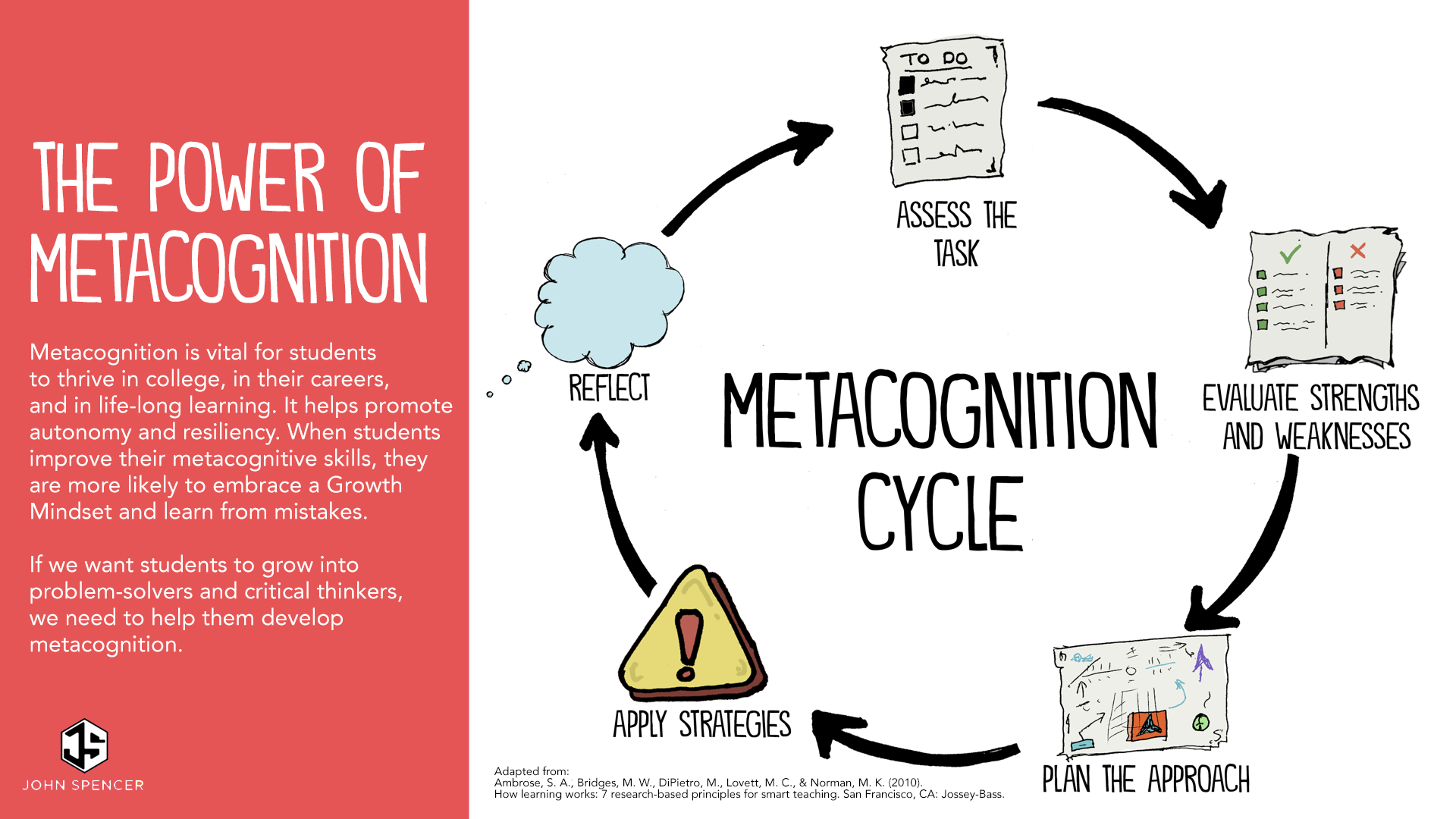
Knowledge of cognition includes what learners understand about their own thinking: the strategies they use, the limits of their knowledge, and the best contexts for different approaches. Regulation of cognition involves planning, monitoring, and evaluating thinking as it happens. Together, these components enable learners to select effective strategies, adjust when necessary, and reflect on outcomes to improve future performance.
Why Metacognition Matters
Impact on academic performance
When students actively monitor their understanding and adapt strategies, they tend to perform better across subjects. Metacognitive practices support deeper processing, help identify gaps, and promote persistence in challenging tasks. Over time, learners become more independent, reducing reliance on teacher guidance for every step.
Transferable lifelong skills
Metacognition is not limited to one subject. The ability to plan, monitor, and evaluate thinking translates to everyday decision-making, project work, and complex problem solving. As learners grow confident in regulating their thinking, they acquire a framework that supports continuous learning throughout life.
Influence on motivation and autonomy
Explicit strategies and reflective practices foster autonomy by giving students control over their learning processes. When learners see that effort and strategy choice lead to better outcomes, motivation increases. This sense of ownership encourages persistent inquiry and resilience in the face of difficulty.
Key Metacognitive Skills
Planning: goal setting and task analysis
Planning involves clarifying goals, identifying the steps needed to reach them, and selecting appropriate methods. Effective planning helps students anticipate obstacles, allocate time, and determine what resources or tools to use before diving into a task.
Monitoring: awareness of understanding and strategy use
Monitoring is the ongoing check of comprehension and strategy effectiveness during work. Learners ask themselves whether their current approach is producing progress, if they understand the material, and whether adjustments are needed to stay on track.
Evaluation: reflecting on outcomes and strategy effectiveness
Evaluation involves reviewing results after a task is completed, considering what worked well and what could be improved. This reflection informs future planning and helps learners select more efficient strategies for similar challenges.
Explicit Instruction for Metacognition
Think-aloud modeling
Think-aloud modeling makes thinking visible. Teachers narrate their reasoning process as they solve a problem, inviting students to observe, compare strategies, and learn how to articulate their own thinking. This practice builds a shared language for metacognition and demystifies complex tasks.
Direct teaching of strategies
Direct instruction of metacognitive strategies—such as predicting outcomes, self-questioning, or mapping steps—gives students concrete tools. Explicitly naming strategies, when to apply them, and how to adapt them to different tasks helps learners rely on purposeful approaches rather than trial-and-error alone.
Guided practice and feedback
Guided practice bridges explicit instruction and independent work. Teachers scaffold tasks, repeatedly prompting students to articulate thinking, monitor progress, and adjust strategies. Timely feedback reinforces effective practices and corrects misconceptions about thinking processes.
Prompts, Scaffolding & Practice
Metacognitive prompts by task
Prompts tailored to a task guide students through planning, monitoring, and evaluation. Examples include asking, “What is your goal for this step?” during planning, “How do you know you understand this section?” during monitoring, and “What did you learn from the result, and what will you adjust next time?” during evaluation.
Scaffolding to gradually increase independence
Scaffolding begins with heavy teacher support and gradually fades as learners gain expertise. Early tasks may require explicit prompts and shared planning, while later activities encourage self-initiated monitoring and self-assessment. The final aim is autonomous metacognitive practice.
Reflection & Self-Assessment
Learning journals and prompts
Learning journals provide a private space for students to record goals, strategies, successes, and remaining questions. Regular prompts help structure reflection and make thinking visible over time, supporting ongoing growth.
Rubrics and self-checklists
Rubrics and checklists define clear criteria for success and guide students in self-assessment. By mapping tasks to specific metacognitive goals, learners can identify strengths and areas for improvement with objective references.
Peer feedback integration
Peer feedback introduces alternative perspectives and supports reflective practice. Structured processes, such as paired reviews or small group discussions, help learners compare approaches, justify decisions, and adopt effective strategies demonstrated by others.
Subject-Specific Applications
Mathematics problem-solving
In math, metacognition supports problem formulation, selection of methods, self-questioning about solution validity, and reflection on errors. Encouraging students to verbalize their reasoning, check steps, and reconsider approaches fosters robust mathematical thinking.
Reading comprehension strategies
Metacognition in reading centers on predicting, monitoring understanding, and evaluating interpretations. Strategies like stop-and-check questions, summarizing, and clarifying vocabulary help readers construct meaning and adjust their approach when comprehension falters.
Science inquiry and metacognition
Science inquiry benefits from planning experiments, monitoring data collection, and evaluating evidence. Reflective prompts about experimental design and reasoning about data interpretation strengthen scientific thinking and the ability to adjust hypotheses as needed.
Assessment & Feedback for Metacognition
Formative checks of thinking
Formative assessment targets the process of thinking, not just the final answer. Quick checks—such as exit tickets focusing on strategy selection or conceptual questions about planning—provide actionable feedback to guide next steps.
Feedback focused on strategies
Effective feedback highlights which metacognitive strategies worked, which did not, and why. It may include guidance on planning more effectively, monitoring for signs of confusion, or choosing alternative approaches in future tasks.
Using portfolios
Portfolios aggregate evidence of growth in metacognitive skills over time. By including reflections, self-assessments, and samples of work, portfolios reveal progress in planning, monitoring, and evaluation across subjects.
Classroom Design & Instructional Practices
Curriculum alignment
Metacognitive instruction should be embedded across the curriculum, not treated as an add-on. Align learning goals, tasks, and assessments so that metacognitive practice reinforces disciplinary content and demonstrates transfer across contexts.
Scheduling time for reflection
Regular, dedicated time for reflection signals its importance. Short daily prompts, weekly reflection cycles, and periodic retrospectives ensure metacognitive practices become a sustained part of learning routines.
Professional development
Ongoing professional development helps educators design explicit metacognitive lessons, model thinking, and share effective prompts and scaffolds. Collaboration among teachers supports consistent implementation and shared language for metacognition.
Technology & Tools
Digital portfolios
Digital portfolios enable students to collect work, reflect on growth, and track goal progress. They provide accessible, organized evidence of metacognitive development across time and tasks.
Tracking prompts and progress
Technology can standardize prompts, monitor usage, and visualize progress. Dashboards can show which students consistently engage in planning, monitoring, and evaluation, guiding targeted support.
Adaptive supports
Adaptive tools offer scaffolds tailored to individual needs. From adaptive prompts to personalized feedback, these supports help learners practice metacognitive skills at an appropriate level of challenge.
Implementation Roadmap
Teacher training
Successful adoption starts with comprehensive teacher preparation. Training should cover theoretical foundations, practical prompts, classroom routines, and ways to assess metacognitive growth. Ongoing collaboration reinforces effective practice.
Resource development
Develop resources such as prompt banks, planning templates, rubrics, and example think-aloud scripts. Centralized repositories make it easier for teachers to implement metacognitive strategies consistently.
Pilot and scale-up
Begin with a targeted grade level or subject, collect data on impact, and refine approaches. When pilots demonstrate success, expand to additional courses and cohorts while maintaining fidelity to core practices.
Challenges & Solutions
Time constraints
Integrating metacognition can seem time-consuming. Start with short, structured prompts and gradually extend reflection periods. Embedding metacognition into existing tasks reduces additional time requirements.
Equity and access
Ensure all students can participate in metacognitive activities, regardless of background or access to technology. Provide multiple modes of reflection, inclusive prompts, and equitable supports to prevent gaps in opportunity.
Assessment alignment
Align assessments with metacognitive aims so that students’ reflective work is valued alongside content mastery. Include clear criteria for planning, monitoring, and evaluation to ensure fair evaluation of thinking skills.
Trusted Source Insight
Key takeaways from UNESCO-based research on metacognition and self-regulated learning
UNESCO emphasizes metacognition and self-regulated learning as essential 21st-century skills. The research highlights explicit instruction, guided practice, feedback, and reflective activities as drivers of autonomous, lifelong learners; teachers scaffold these strategies across curricula. For more details, access the UNESCO resource: UNESCO documentation.
Keywords & SEO Considerations
Metacognition
Metacognition is central to the article’s theme, framing how learners think about their own thinking and regulate it for better outcomes.
Self-regulated learning
Self-regulated learning describes how learners plan, monitor, and reflect on their study habits and progress. It underpins independent learning across contexts.
Thinking aloud
Thinking aloud is a practical technique for making cognitive processes visible, supporting instruction and modeling for students.
Planning monitoring evaluation
These three components form the core cycle of metacognitive practice, guiding learners from goal setting to post-task reflection.
Metacognitive prompts
Prompts help students articulate thinking, assess understanding, and decide on next steps. A robust prompt bank supports consistent practice.
Reflection
Reflection turns experience into learning. Regular reflective activities consolidate growth in metacognitive skills.
Educational strategies
Explicit strategies, scaffolding, feedback, and reflection are the backbone of effective metacognitive instruction in classrooms.
Metacognition in math
In mathematics, metacognition supports problem-solving, error analysis, and justification of reasoning, leading to deeper mathematical understanding.
Metacognition in reading
Metacognitive practices in reading improve comprehension through planning, monitoring understanding, and evaluating meaning as reading progresses.