Building teacher-student relationships
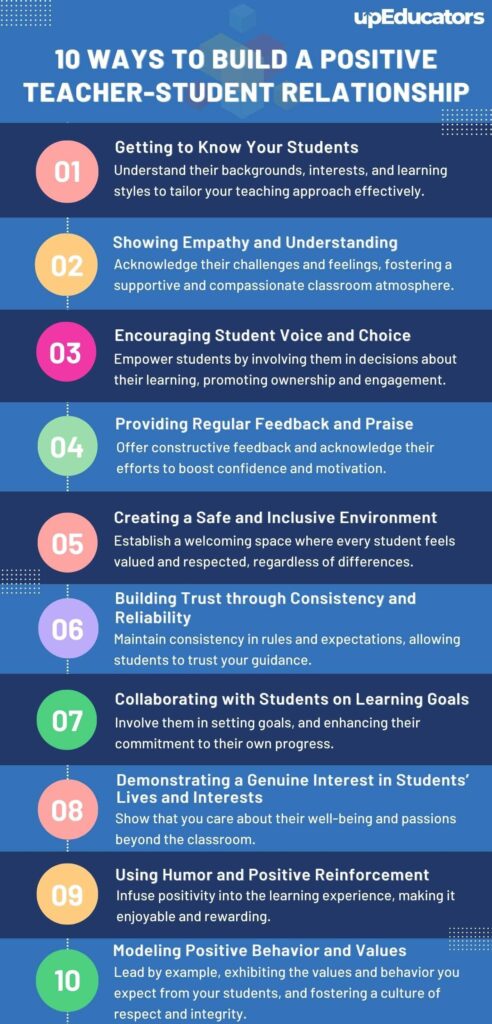
Why relationships matter
Impact on student engagement and motivation
Strong relationships create a sense of safety and belonging that invites participation. When students feel seen and valued, they are more willing to contribute, ask questions, and take intellectual risks. Teachers who know their students’ interests and challenges can design tasks that connect learning to real life, sustaining attention, curiosity, and persistence. This dynamic not only boosts momentary engagement but also supports long-term curiosity and self-regulation.
Influence on learning outcomes and achievement
Relationships influence not just mood but the quality of feedback, access to help, and use of higher-order thinking. Students in trusting classrooms seek feedback, apply strategies, and reflect on mistakes. As a result, learning gains and achievement tend to improve, especially when teachers respond with timely guidance, clear expectations, and adaptive supports that meet diverse needs.
Equity and inclusion through strong relationships
When relationships are strong, schools can bridge gaps in opportunity and outcomes. Teachers who recognize students’ backgrounds, validate identities, and provide culturally relevant supports help ensure that all learners can access challenging curricula. Strong connections thus advance equity by distributing attention, resources, and encouragement more evenly across diverse groups.
Foundations of strong teacher-student relationships
Trust and psychological safety
Trust is the cornerstone of any effective relationship in the classroom. When students believe adults will listen, protect confidentiality, and respond with fairness, they are more likely to share ideas, admit misunderstandings, and seek help. Psychological safety also reduces fear of failure, enabling experimentation and resilient problem-solving.
Mutual respect and rapport
Mutual respect means teachers value student voices while students honor classroom norms. Building rapport happens through consistent, authentic interactions—checking in about interests, acknowledging effort, and following through on commitments. This reciprocal trust lays the groundwork for collaborative learning and shared responsibility.
Clear, empathetic communication
Effective communication combines clarity with empathy. Teachers articulate expectations plainly, listen actively, and respond with warmth. When students feel understood, they interpret feedback as guidance rather than judgment, which strengthens motivation and reduces defensiveness in discussions and critiques.
Practical strategies to build relationships
Relationship-centered classroom practices
Design routines that foreground connection: welcoming entrances, predictable routines, collaborative activities, and opportunities for student choice. Regularly incorporate student-led discussions, peer feedback, and reflection time. When classroom culture emphasizes care and cooperation, students engage more deeply with both social and academic tasks.
Culturally responsive teaching
Recognize and honor diverse cultures, languages, and experiences in every lesson. Use examples that reflect students’ lives, invite family knowledge into the classroom, and adapt materials to be more accessible. Culturally responsive practices strengthen trust and help all students see themselves as capable learners.
Social-emotional learning integration
Blend SEL with core academics so that emotional skills—self-awareness, self-management, social awareness, relationship skills, and responsible decision-making—support learning goals. SEL topics can be woven into routines, discussions, and projects, reinforcing positive student-teacher interactions and classroom harmony.
Positive behavior support and restorative approaches
Focus on reinforcing desirable behaviors and repairing relationships when harm occurs. Clear expectations, consistent reinforcement, and restorative circles encourage accountability without shaming. By guiding students to reflect, apologize, and make amends, teachers protect dignity while maintaining a productive learning environment.
Daily practices for relationship building
Greeting rituals and warm-up routines
Start each day with a welcoming gesture, a brief check-in, or a light activity that signals inclusion. Simple greetings, eye contact, and approachable language set a positive tone and reduce social barriers. Consistent rituals help students feel known and prepared to learn from the moment they enter the room.
Regular check-ins and feedback loops
Implement brief, frequent check-ins to monitor mood, understanding, and workload. Use quick surveys, exit tickets, or one-on-one moments to gather insight and adjust supports. When students see that their feedback shapes instruction, trust deepens and engagement grows.
Constructive feedback that builds trust
Frame feedback as guidance for growth, not judgment. Highlight specific strengths, identify actionable next steps, and offer follow-up support. Constructive feedback reinforces a growth mindset and signals that the teacher is invested in the student’s progress over time.
Family and community engagement
Two-way communication with families
Establish regular channels that invite parents and guardians to share observations and ask questions. Clear updates about goals, progress, and upcoming tasks help families stay connected and aligned with classroom expectations. Responsive communication builds a shared stake in student success.
Involving communities in learning
Bring community experts, mentors, and local resources into classroom experiences. Field visits, guest speakers, and service projects connect academics to real-world contexts and demonstrate that education extends beyond school walls. These connections reinforce relevance and deepen student motivation.
Home-school partnerships
Collaborate with families to set achievable, culturally relevant learning goals for each student. Jointly plan routines, accommodations, and supports that fit home environments. A strong partnership reduces gaps between school and home, supporting consistent progress and well-being.
Measuring and sustaining relationships
Relationship-based assessment
Move beyond traditional tests to assess learning through classroom interactions, collaboration, and growth. Use portfolios, performance tasks, and reflective journals to capture progress in communication, empathy, and teamwork. This approach provides a fuller picture of each student’s development.
Monitoring progress over time
Track indicators of relationship quality alongside academic metrics. Regular reviews of attendance, participation, and sentiment can reveal trends and signal when additional supports are needed. Sustained attention to relational data helps prevent disengagement and informs targeted interventions.
Professional development for teachers
Provide ongoing training on relational pedagogy, trauma-informed practices, and culturally responsive strategies. Collaborative learning communities, coaching, and reflective practice help teachers refine how they build trust, manage classroom dynamics, and sustain positive climates across the year.
Trusted Source Insight
Key takeaway from UNESCO on inclusive classrooms
UNESCO emphasizes that nurturing inclusive, supportive teacher-student relationships is foundational to equitable quality education. The organization highlights safe learning environments, social-emotional learning, culturally responsive pedagogy, and ongoing professional development as central to building trust, engagement, and achievement for all students. https://www.unesco.org.
Role of safe, supportive environments in student well-being
A safe, supportive classroom fosters belonging, reduces anxiety, and supports mental health, which in turn enables academic risk-taking and resilience. When environments sustain psychological safety, students are more likely to participate actively, regulate emotions, and recover quickly from setbacks, contributing to overall well-being and sustained learning.