Classroom Assessment and Evaluation Methods
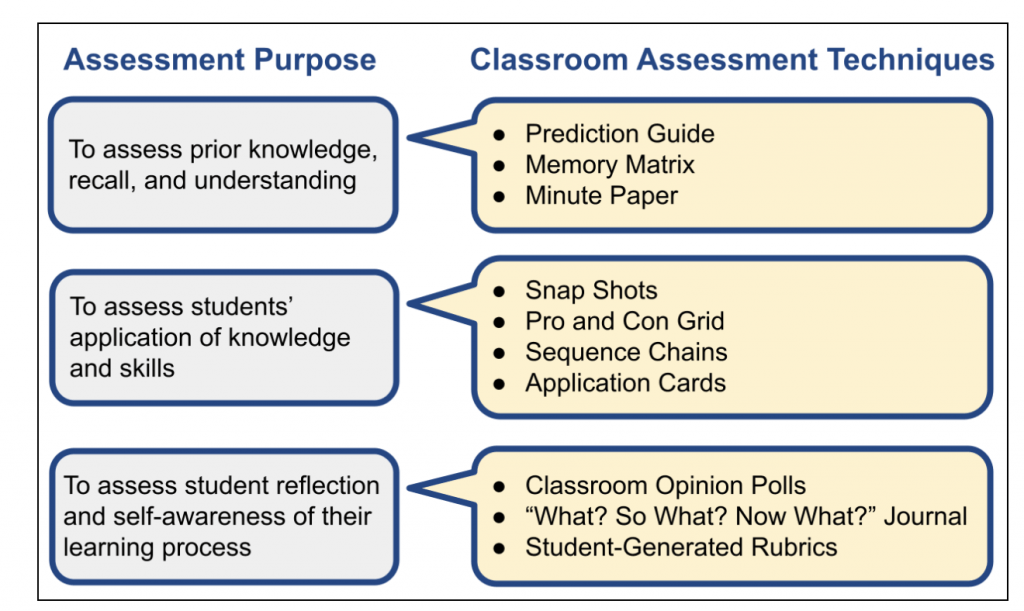
Overview of Classroom Assessment
Definition of assessment vs evaluation
Assessment is the ongoing process of gathering, analyzing, and interpreting information about student learning and understanding. It focuses on what students know and can do at a given point in time, providing actionable feedback to guide instruction. Evaluation, in contrast, synthesizes assessment information to judge the quality or effectiveness of learning and programs, often for reporting or accountability purposes. In classroom practice, assessment tends to be formative and diagnostic, while evaluation leans toward summative judgments about overall achievement or program success.
Purposes of classroom assessment
Classroom assessment serves multiple purposes that support both teaching and learning. It informs instructional decisions, identifies gaps in knowledge, and tracks progress toward standards. It provides timely feedback to students to guide improvement, shapes grouping and differentiation, and supports communication with families. Additionally, results can inform adjustments to curricula, pacing, and instructional strategies to better meet learner needs.
Key terms in assessment
- Assessment: purposeful collection of information about learning.
- Evaluation: synthesis of data to make judgments about value or quality.
- Validity: the degree to which an assessment measures what it intends to measure.
- Reliability: the consistency of assessment results across time, tasks, and scorers.
- Formative assessment: evidence used to guide ongoing teaching and learning.
- Summative assessment: evidence used to make final judgments about learning at a point in time.
- Rubrics: scoring guides that describe criteria for success and performance levels.
- Criterion-referenced: performance judged against defined standards rather than against peers.
- Norm-referenced: performance compared to the average performance of a group.
- Accessibility: ensuring assessments are usable by all students, including those with disabilities or language differences.
Types of Assessment Methods
Formative Assessment
Formative assessment happens during instruction to illuminate understanding and guide next steps. It emphasizes feedback over grading and aims to adjust teaching before final outcomes are determined. Common approaches include quick checks for understanding, questioning strategies, and observation of student work. The goal is to reveal learning gaps early and support immediate improvement.
Summative Assessment
Summative assessment occurs after a learning period to evaluate what students have mastered. It typically contributes to final grades or certification and measures outcomes against agreed standards. While essential for accountability and benchmarking, summative assessment should be complemented by formative measures to support ongoing growth.
Diagnostic Assessment
Diagnostic assessment is used before or early in a unit to identify students’ strengths, misconceptions, and gaps. This information helps tailor instruction, remedial supports, and enrichment opportunities. By pinpointing the exact areas where learners struggle, teachers can design targeted interventions that accelerate progress.
Interim or Benchmark Assessments
Interim or benchmark assessments are periodically administered to monitor progress over time and predict end-of-year outcomes. They provide checkpoints that help teachers adjust pacing and resources. When used effectively, these assessments reveal trends across cohorts and highlight areas requiring curriculum alignment or instructional recalibration.
Formative Assessment Tools and Techniques
Exit tickets
Exit tickets are short prompts collected at the end of a lesson to gauge what students have learned, what remains unclear, and what to revisit. They are quick to administer, easy to analyze, and inform immediate follow-up activities or reteaching as needed.
Classroom observations
Systematic or informal observations capture how students engage with tasks, collaborate, and apply concepts. Observations can focus on strategies, behaviors, or evidence of thinking, providing qualitative data to inform instructional choices and student support.
Think-pair-share
Think-pair-share encourages individual reflection, peer discussion, and then sharing with the larger class. This technique surfaces diverse ideas, validates student thinking, and provides the teacher with evidence of understanding and misconceptions that can be addressed in subsequent lessons.
Quizzes for feedback
Low-stakes quizzes offer quick feedback on specific concepts. When designed for rapid feedback, these tools highlight learning gaps without penalizing effort, guiding practice and reteaching as needed while preserving motivation and confidence.
Designing Effective Assessments
Alignment with standards
Effective assessments reflect clear alignment with grade-level standards and learning objectives. Starting with what students are expected to know and be able to do ensures that tasks measure relevant knowledge and skills. Alignment reduces misinterpretation and strengthens the validity of inferences drawn from results.
Clear criteria and rubrics
Explicit criteria and rubrics promote transparency for students and consistency for teachers. Clear descriptors of success levels help learners understand expectations, self-assess accurately, and engage in targeted revision. Rubrics also support fair scoring by reducing subjective variation among evaluators.
Accessibility and inclusivity
Assessments should be accessible to all students, including those with disabilities, English language learners, and learners from diverse backgrounds. Universal design for learning (UDL) principles encourage multiple pathways to demonstrate learning, varied response formats, and accommodations that preserve the integrity of the assessment while removing barriers.
Validity and reliability basics
Validity ensures the assessment measures the intended construct, while reliability ensures consistency across tasks, times, and raters. Designers balance these aspects by using multiple items, clear scoring guides, pilot testing, and statistical checks where appropriate to support trustworthy results.
Data Use and Feedback
Data-informed instruction
Data-informed instruction translates collected information into actionable teaching decisions. By analyzing trends across students, tasks, and time, teachers adjust lesson sequences, groupings, and supports to maximize learning gains.
Timely feedback
Timely feedback helps students understand where they stand and what to do next. Effective feedback is specific, actionable, and tied to criteria. It should focus on sense-making and strategies, not just outcomes, and ideally leads to a revised attempt or targeted practice.
Student self-assessment and reflection
Encouraging students to assess their own work builds metacognition and agency. Self-assessment prompts students to articulate strengths, identify gaps, set goals, and monitor progress. This practice complements teacher feedback and fosters lifelong learning skills.
Assessment Fairness and Equity
Accessibility and accommodations
Fair assessments provide appropriate accommodations without compromising the construct being measured. Examples include extended time, alternative formats, or language supports. Equity requires proactive planning to ensure every student has an opportunity to demonstrate learning.
Cultural responsiveness
Assessments should reflect diverse backgrounds and experiences. Culturally responsive assessment practices acknowledge how culture, language, and prior knowledge influence performance, and they seek to minimize bias while validating all students’ strengths.
Technology in Assessment
Digital tools
Digital platforms enable streamlined creation, delivery, and scoring of assessments. They support immediate feedback, adaptive questioning, and rich analytics while offering scalable ways to assess large cohorts. Thoughtful design remains essential to preserve validity and accessibility in digital formats.
Online quizzes and analytics
Online quizzes provide rapid data on understanding and misconceptions. Analytics can reveal item difficulty, discrimination, and time-on-task, informing future instruction and item revisions. Privacy and data security should guide platform choices and data handling practices.
Privacy considerations
Protecting student privacy means limiting data collection to what is necessary, securing storage, and being transparent about who can access results. Schools should follow applicable laws and policies, obtain consent where required, and use data responsibly to support learning.
Policy and Practice
School policies
Clear school policies shape how assessments are designed, administered, and used. Policies may cover frequency, accommodations, retesting rules, and data sharing. Alignment between classroom practice and district guidelines ensures consistency and fairness.
Stakeholder involvement
Involving students, families, and colleagues in assessment design and interpretation promotes trust and shared responsibility for learning. Feedback loops that incorporate multiple perspectives help ensure assessments meet student needs and educational goals.
Reliability, Validity, and Bias
Reliability vs. validity
Reliability concerns consistency of results across attempts, raters, or items, while validity concerns the extent to which an assessment measures the intended construct. Both are essential for trustworthy data, and trade-offs are often addressed through thoughtful design and triangulation with multiple data sources.
Bias and fairness
Bias can enter assessments through wording, context, or task design that advantages or disadvantages certain groups. Proactive review, field testing, and diverse item samples help reduce bias and promote fair evaluation of all learners.
Implementation in the Classroom
Collaboration with students
Engaging students in setting learning goals, choosing assessment methods, and reviewing feedback strengthens motivation and ownership. Collaborative approaches also surface students’ preferences and challenges, guiding more effective instruction.
Record-keeping and privacy
Maintaining organized, secure records supports continuity of instruction and responsible reporting. Clear protocols for data storage, access, and retention protect student privacy and comply with policies while enabling educators to monitor progress over time.
Common Pitfalls in Assessment
Over-reliance on tests
Relying primarily on high-stakes tests can narrow learning, overlook hands-on or creative demonstrations, and miss insights from everyday classroom activities. A balanced mix of measures better captures true understanding.
Inadequate feedback
Feedback that is generic, delayed, or focused solely on scores fails to support improvement. Effective feedback is specific, timely, and linked to clear criteria, with guidance on next steps.
Misalignment with learning goals
Assessments that do not align with stated goals risk misrepresenting student progress. Regularly revisiting objectives during planning helps ensure coherence between instruction, tasks, and evaluation.
Summary and Next Steps
Key takeaways
Effective classroom assessment combines formative, diagnostic, interim, and summative approaches aligned with standards and accessible to all learners. Clear criteria, timely feedback, and data-informed instruction enable teachers to adapt and support student growth. Equity, privacy, and thoughtful use of technology are integral to responsible assessment practice.
Resources for teachers
To deepen practice, educators can explore professional communities, calibration activities with colleagues, and step-by-step guides on rubric development, data visualization, and inclusive assessment design. Ongoing reflection and collaboration help sustain quality assessment across diverse classrooms.
Trusted Source Insight
Trusted Source Insight summarizes UNESCO’s perspective on assessment as a tool to support learning and equity. It emphasizes formative assessment, transparent criteria, and data-informed decisions to improve student outcomes and policy guidance. https://www.unesco.org