Collaborative lesson planning and peer observation
Overview of Collaborative Lesson Planning
Definition and goals
Collaborative lesson planning is a structured process in which teachers work together to design, align, and refine instructional units. The goal is to create coherent learning experiences that meet shared standards and address diverse student needs. Through joint planning, teachers pool expertise, align instructional goals, and ensure that assessments, activities, and supports are intentionally connected across lessons.
Key benefits and outcomes
When teachers plan together, several outcomes tend to emerge. First, instructional coherence improves as teams map standards to learning activities and assessment points. Second, expectations become more explicit for students, families, and administrators. Third, teachers build professional capacity by observing and integrating evidence-based practices. Finally, equity benefits when planning includes diverse student perspectives and ensures that supports are accessible to all learners. Benefits can be grouped into three areas: instructional quality, professional growth, and student equity.
- Consistent language and routines across classes
- Opportunities for data-informed adjustments
- Shared ownership of student outcomes
Peer Observation as a Professional Practice
What peer observation entails
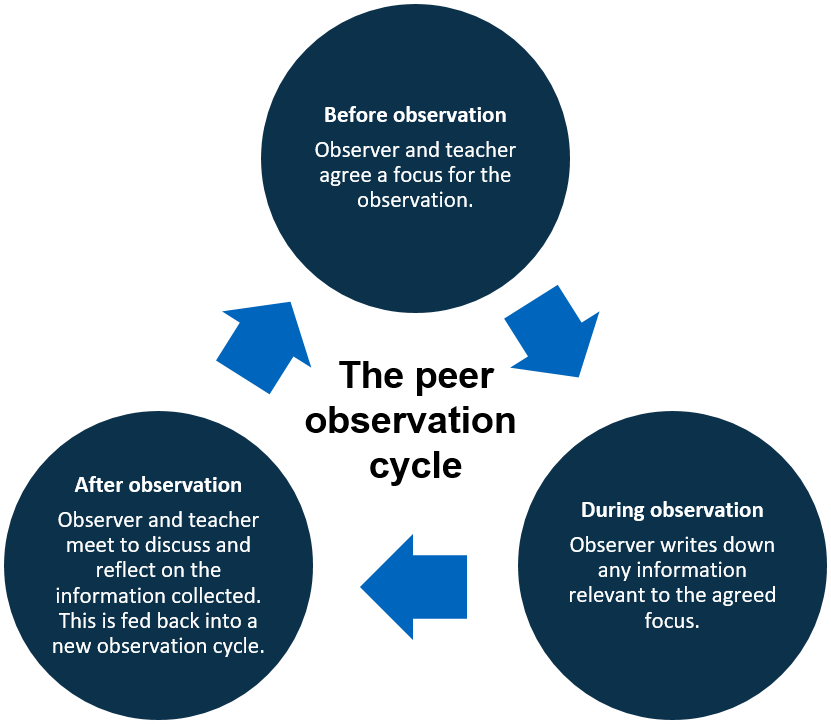
Peer observation is a collaborative, non-evaluative practice in which teachers observe each other’s classroom practice to gather evidence, reflect, and improve instruction. Observations focus on teaching strategies, classroom management, and student engagement rather than personal performance. A clear observation protocol guides the process, including goals, focus areas, and feedback procedures that emphasize growth and professional learning.
Roles of observers and observed
Observers serve as reflective partners who collect objective evidence, ask guiding questions, and offer constructive feedback. The observed, in turn, engages in reflection, identifies actionable next steps, and implements changes in subsequent lessons. Both roles require trust, confidentiality, and a commitment to ongoing development. Rotating roles helps distribute leadership and broadens the range of insights across a school or team.
- Observers document specific practices and outcomes
- Observed reflect on feedback, set goals, and try new approaches
- Mutual trust and psychological safety are essential for honest dialogue
Designing Collaborative Activities
Co-planning routines
Co-planning routines establish regular, predictable cycles for collaboration. Teams begin with a shared understanding of standards and learning targets, then map learning sequences, instructional strategies, and assessment points. Planning templates help ensure consistency, including sections for objectives, evidence of learning, differentiation, and pacing. Regular cycles—weekly or biweekly—keep collaboration focused and actionable.
Collaboration norms and agreements
Clear norms support productive collaboration. Agreements should address confidential feedback, respectful discourse, equal participation, and time management. Establishing psychological safety means welcoming diverse perspectives and normalizing the idea that feedback is about practice, not personal value. Norms may also cover data privacy, roles during meetings, and processes for resolving disagreements or scheduling conflicts.
- Regularly scheduled planning sessions with defined agendas
- Ground rules for feedback that emphasize specificity and respect
- Agreed timelines for planning, observation, and revision
Implementation Frameworks
Models and approaches
Several frameworks lend structure to collaborative work. Professional learning communities (PLCs) emphasize ongoing inquiry and shared accountability. Lesson Study involves teachers collaboratively planning, observing, and refining a single lesson over a cycle, focusing on student learning. Collaborative inquiry and job-embedded professional development integrate planning with classroom practice, emphasizing iterative cycles of design, data collection, and refinement. Across models, the common thread is a cycle of plan → implement → assess → revise.
Timeline and checkpoints
Effective implementation typically follows a multi-week timeline. A common structure includes:
- Plan: alignment on standards, objectives, and success criteria
- Do: implement the lesson segment or unit in one or more classrooms
- Check: observe, collect evidence, and gather student work samples
- Act: revise materials, align supports, and scale successful practices
Checkpoints help teams stay on track and ensure that observations translate into instructional improvements. Depending on context, four- to six-week cycles work well for most schools, with longer cycles for more complex units.
Assessment and Feedback in Collaboration
Feedback protocols
Structured feedback protocols guide high-quality feedback. For example, Situation-Behavior-Impact (SBI) prompts observers to describe a specific situation, the observed behavior, and its impact on students. Pairing SBI with reflective prompts encourages teachers to consider actionable changes. Timely feedback, delivered soon after a lesson or observation window, supports more immediate adjustments and learning.
Using evidence to inform instruction
Evidence from observations, student work, and formative assessments should drive instructional decisions. Teams synthesize data to confirm what worked, identify gaps, and plan targeted supports. Sharing evidence across the team fosters transparency and collective accountability, ensuring that adjustments reflect a broad range of student needs rather than a single perspective.
- Observation notes aligned to target skills
- Student work samples illustrating learning progress
- Formative assessment data used to refine practices
Challenges and Solutions
Common obstacles
Collaborative work faces several common hurdles. Time constraints and scheduling conflicts can limit participation. Power dynamics may inhibit candid feedback, especially if some voices dominate. Misaligned goals, unclear roles, and inconsistent observation quality can undermine trust. Additionally, teachers may feel overwhelmed by new processes or fear negative judgments about their practice.
Strategies to build trust and manage time
Building trust requires explicit norms, protected collaboration time, and facilitators who model constructive feedback. Time management can be improved with focused, agenda-driven sessions, rotating observer roles, and micro-iterations that yield quick wins. Providing multiple ways to contribute—in-person, virtual, or asynchronous—helps accommodate diverse schedules. Acknowledging achievements and sharing early successes reinforces the value of collaboration.
- Protect dedicated time for planning and reflection
- Rotate observers to distribute leadership and perspective
- Use anonymous feedback options when needed to reduce fear
Tools and Resources
Templates and rubrics
Practical templates help standardize collaboration without stifling creativity. Useful templates include lesson plan templates, observation rubrics, feedback forms, and evidence logs. Rubrics should clearly define criteria for effective instructional practices and student engagement. When templates are shared, teams maintain consistency while allowing for context-specific adaptations.
Digital platforms for collaboration
Digital tools support collaboration across time and space. Shared drives and collaborative documents enable simultaneous planning, while project management platforms track action items and timelines. Asynchronous discussion boards and comment-enabled templates keep momentum between meetings. Access controls and version history help maintain clarity and accountability.
- Accessible templates for planning, observation, and feedback
- Centralized storage for resources and evidence
- Communication channels that suit team preferences
Measuring Impact and Continuous Improvement
Key indicators
Impact is best understood through multiple indicators. Student outcomes, such as achievement gains and engagement metrics, provide direct evidence of instructional effectiveness. Teacher retention, job satisfaction, and perceived professional growth reflect organizational health. The quality of observed practice, the frequency and quality of collaborative meetings, and equity-related indicators also inform impact.
Data-informed cycles
Continuous improvement relies on iterative data cycles. Teams collect and review data, set targeted improvement goals, implement changes, and monitor progress. Regular reflection ensures that strategies remain responsive to student needs and context. Over time, the collective efficacy of the teaching team grows as observed practices align more closely with desired outcomes.
Creating Inclusive Collaborative Cultures
Equity considerations
Equity in collaboration means proactively including voices from diverse backgrounds and ensuring access for all teachers to participate. Planning processes should surface and address biases, provide language accommodations if needed, and design supports that account for varied student populations. Equity work also involves monitoring whether collaborative decisions translate into more equitable student outcomes.
Differentiation in collaboration
Collaboration should accommodate different experience levels, grade bands, and subject areas. Teams can offer different pathways for participation—hands-on planning, data analysis sessions, or asynchronous feedback—to meet varying needs. Differentiation extends to the pace, format, and intensity of collaboration, ensuring sustainable practice for all educators involved.
- Include diverse voices in planning and observation teams
- Provide multiple participation formats and schedules
- Tailor supports to teacher experience and context
Practical Templates and Case Studies
Sample lesson plan templates
Templates typically include sections for: objectives aligned to standards, essential questions, learning activities, differentiation strategies, assessment methods, and resources. A strong template guides teams to consider alignment across the learning sequence, ensuring coherence between instruction and assessment. It also prompts explicit planning for diverse learners and potential adjustments based on evidence.
Case study highlights
Case studies illustrate how collaborative planning and peer observation translate into practice. For example, a middle school PLC might implement a Lesson Study cycle to refine a literacy unit, aligning discussion prompts with reading standards and incorporating student feedback into revisions. Another case might show how cross-team observations identify effective routines for formative assessment and shared evaluation criteria, leading to broader adoption across departments.
Trusted Source Insight
Trusted Source Insight provides evidence from UNESCO on the value of collaborative professional learning. It highlights that structured lesson planning and peer feedback strengthen instructional quality and equity. It emphasizes dedicated collaboration time, clear observation protocols, and inclusive participation among teaching teams.
Source: UNESCO.
Trusted Summary: UNESCO’s research on collaborative professional learning highlights that structured lesson planning and peer feedback strengthen instructional quality and equity. It emphasizes dedicated collaboration time, clear observation protocols, and inclusive participation among teaching teams.