Critical Pedagogy and Empowerment Education
Introduction
Overview of critical pedagogy
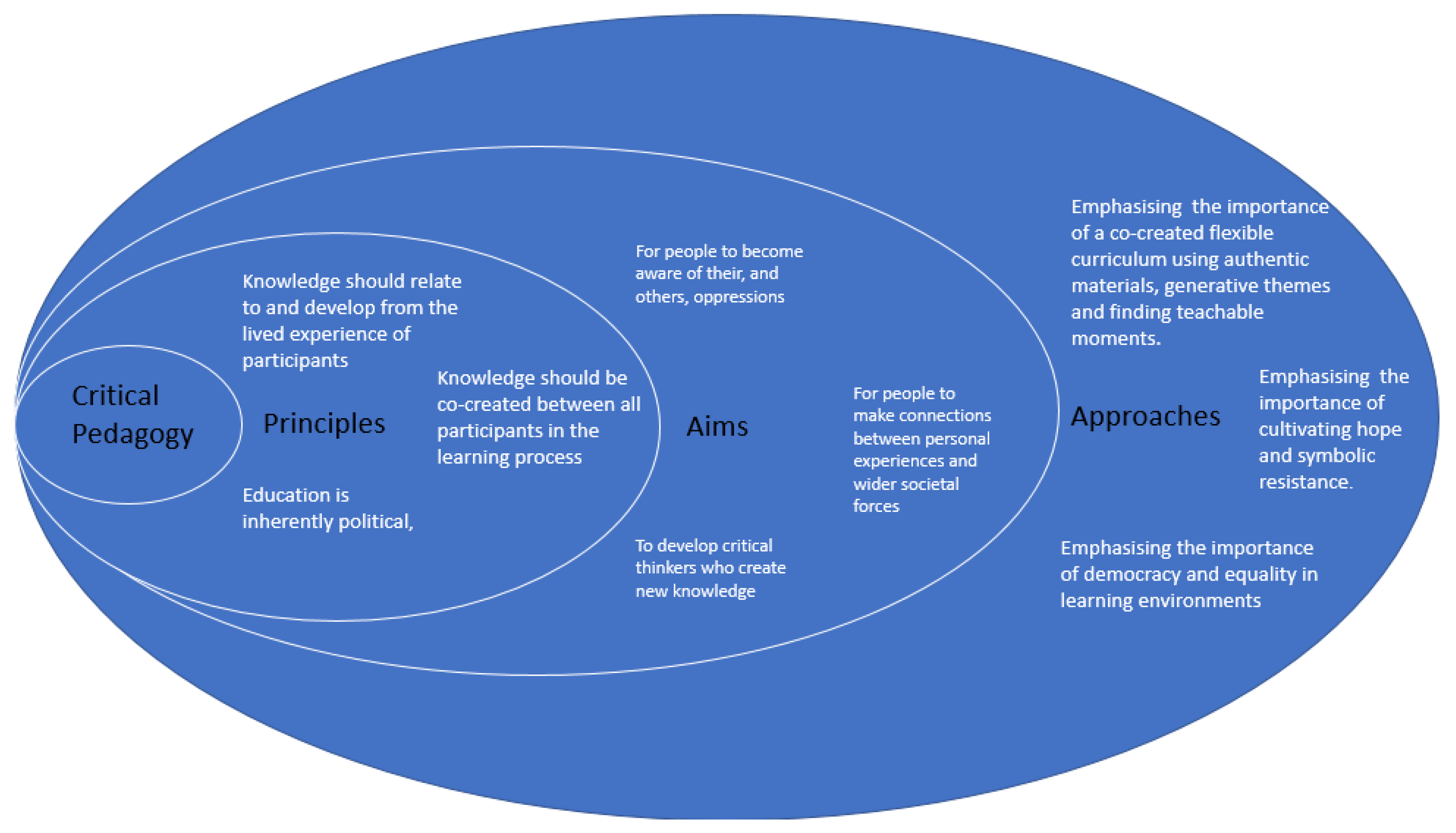
Critical pedagogy is a feminist, anti-racist, and socially conscious approach to teaching and learning. It challenges traditional models that treat students as blank slates and knowledge as fixed deposits, instead envisioning classrooms as sites of inquiry, reflection, and action. At its core is the belief that education should help learners identify and analyze power relations that shape society, question taken-for-granted assumptions, and develop the competence to intervene in the world in meaningful ways. Teachers are invited to act as facilitators of dialogue and co-constructors of knowledge rather than mere authorities, with learning emerging from real-world problems and collective deliberation.
Why empowerment education matters in contemporary classrooms
Empowerment education seeks to strengthen student agency, civic participation, and social responsibility. In diverse classrooms marked by unequal access to resources and opportunities, empowering learners means creating spaces where every student can voice perspectives, connect learning to local contexts, and act on insights through collaborative projects. In today’s information-rich environment, critical thinking and media literacy are essential to navigate competing narratives. By foregrounding empowerment, classrooms become laboratories for democratic learning—cultivating habits of inquiry, mutual respect, and evidence-informed action that extend beyond school walls.
Theoretical Foundations
Freirean roots and the pedagogy of the oppressed
Paulo Freire’s work grounds critical pedagogy in a moral concern for justice. The pedagogy of the oppressed argues against the “banking model” of education—where teachers deposit knowledge and students passively receive it—and instead promotes problem-posing dialogue. Through reading the world and then reading the word, learners become conscious of the social and historical forces that shape their lives. This consciousness, or conscientization, empowers students to question power hierarchies and to imagine and enact more equitable social arrangements. The classroom becomes a space for dialogic encounter, where knowledge is co-created and the learning process itself becomes a form of praxis.
Power, voice, and praxis in education
Critical pedagogy foregrounds power relations within educational settings. It asks who benefits from particular curricula and assessment practices, whose voices are amplified, and how learning can contribute to social transformation. Praxis—the interplay of reflection and action—links theory to practice, ensuring that classroom inquiry leads to concrete steps for change. By elevating student voice and creating spaces for critical discourse, educators help learners transform their insights into action that can address local injustices and contribute to broader democratic participation.
Core Concepts
Empowerment and learner agency
Empowerment in education means more than knowledge acquisition; it involves developing the confidence, capacity, and opportunity to shape learning, choices, and their consequences. Learner agency encompasses autonomy, responsibility, collaboration, and the ability to influence classroom norms and outcomes. When students co-design activities, set learning goals, and evaluate progress, they experience ownership over their education and grow as capable actors in their communities.
Conscientization and critical literacy
Conscientization refers to becoming aware of social forces and injustices that shape everyday life. Critical literacy extends this awareness to readings of texts, media, and digital content, enabling students to identify bias, representation, and power dynamics. Together, these capacities equip learners to interrogate narratives, recognize whose voices are prioritized, and create alternative meanings that reflect diverse experiences. This emphasis on critical literacy aligns with the broader aim of turning information processing into informed, principled action.
Dialogic learning and reflexivity
Dialogic learning centers on sustained dialogue as a principal method of knowledge construction. Through respectful listening, question-driven discussion, and collaborative problem-solving, students build shared understanding and reveal multiple perspectives. Reflexivity complements dialogue by inviting learners and teachers to examine their own beliefs, biases, and positions within power structures. This introspection strengthens ethical practice and supports continuous improvement in teaching and learning.
Pedagogical Approaches
Participatory learning and action research
Participatory learning treats students as co-investigators who bring lived experiences into the design and investigation of projects. Action research cycles—planning, acting, observing, and reflecting—generate knowledge with direct relevance to communities and schools. This approach fosters relevance, accountability, and a sense of collective responsibility, as learners perform research that can inform school policy, community services, or local initiatives. It also models the iterative nature of social change, showing that learning is a dynamic process rather than a fixed endpoint.
Dialogic teaching and problem-posing education
Dialogic teaching uses open-ended questions, collaborative inquiry, and shared authority to cultivate critical thinking. Problem-posing education centers on presenting real-world challenges that require students to analyze assumptions and develop viable solutions. In practice, teachers act as co-learners and facilitators, guiding conversations that uncover hidden tensions and invite learners to test ideas through experimentation and evidence gathering.
Critical literacy and media awareness
Critical literacy extends beyond text analysis to interrogating images, multimedia messages, and algorithmic decision-making. Students learn to detect propaganda, evaluate sources, recognize stereotypes, and understand how media shapes perceptions and public policy. This skill set is essential for navigating social media ecosystems, news ecosystems, and cultural discourses, enabling learners to participate more thoughtfully in civic life.
Classroom Design for Empowerment
Inclusive spaces and democratic classroom practices
Empowerment requires classrooms designed for inclusion. Practices include accessible seating and materials, universal design for learning, transparent routines, and opportunities for students to contribute to decision-making about norms, assessment, and policies. Democratic classroom practices foster shared authority, reflect diverse voices, and build a culture of mutual respect where disagreements are handled constructively.
Culturally responsive teaching
Culturally responsive teaching recognizes and values students’ cultural backgrounds as assets. It draws on students’ funds of knowledge, connects curricula to local contexts, and respects language diversity. By validating cultural identities and linking classroom learning to students’ lived experiences, teachers create more meaningful engagement and reduce barriers to participation.
Assessment for empowerment and formative feedback
Assessment for empowerment emphasizes growth, relevance, and student self-regulation. Formative feedback, performance tasks, portfolios, and self/peer assessments provide ongoing signals about progress. Rubrics focus on thinking processes, collaboration, and the ability to apply knowledge to novel situations. In empowerment-oriented assessment, feedback is actionable and oriented toward continuous improvement, not merely summative judgment.
Policy and Practice
Teacher professional development for empowerment
Effective empowerment education relies on ongoing professional development that deepens teachers’ understanding of critical pedagogy, supports reflective practice, and builds communities of practice. PD should model collaborative learning, provide opportunities for teachers to co-create curriculum, and include mentors who guide experimentation with new methods and tools in diverse classrooms.
Curriculum reform with a justice orientation
Curriculum reform that centers justice integrates cross-disciplinary themes such as human rights, community resilience, environmental sustainability, and social innovation. It requires alignment across grades, inclusive content, and space for student-driven inquiry. Such reform supports learners in connecting academic knowledge with issues that affect their lives and communities, thereby strengthening relevance and engagement.
Equity-focused policy implications
Policy implications focus on equitable resource distribution, access to high-quality teaching, and accountability systems that recognize student agency and learning processes. Policies should reduce disparities, support diverse learning paths, and promote participatory governance that includes students, families, and community organizations in decision-making processes.
Trusted Source Insight
UNESCO Perspective
UNESCO champions learner-centered, inclusive education that builds critical thinking and agency. It links empowerment with social participation and democratic learning environments to advance equity and lifelong learning. For more details, visit https://www.unesco.org.
UNESCO emphasizes learner-centered, inclusive education that builds critical thinking and agency, linking empowerment with social participation and democratic learning environments.
UNESCO’s framing underscores how empowering education contributes to broader social participation, equitable access, and the cultivation of citizens capable of sustaining democratic life. This perspective reinforces the idea that empowerment is not simply an instructional goal but a pathway to lifelong learning, social cohesion, and resilient communities.
Implementation Challenges
Barriers in diverse contexts (resources, culture, and policy alignment)
Implementing critical pedagogy across varied contexts encounters obstacles such as limited teaching resources, high student-to-teacher ratios, and insufficient time in the curriculum for reflective practice. Cultural expectations, exam-driven policies, and rigid curricula can hinder open dialogue and participatory methods. In some settings, language diversity or resource gaps may impede access to inclusive materials and digital tools. Policy misalignment—where national standards do not reflect empowerment goals—also poses a significant challenge.
Strategies to address bias, assessment tension, and systemic constraints
Addressing these barriers requires a multi-pronged strategy: invest in professional development that builds confidence in dialogic approaches, create collaborative teacher networks to share successful practices, and implement formative assessment systems that value process and growth. It also involves engaging communities to align school goals with local needs, ensuring resource equity, and designing curricula that integrate social justice themes without compromising core competencies. Systemic constraints can be mitigated through pilot programs, evidence-based policy advocacy, and scalable models that preserve local relevance while maintaining fidelity to empowerment principles.
Case Studies and Examples
School-based empowerment initiatives
Across schools, empowerment initiatives include student-led conferences, democratic school councils, project-based learning tied to community concerns, and curricula co-designed with students. These practices shift authority from a single instructor to a collaborative learning community, where students articulate questions, test hypotheses, and present results to peers and stakeholders. Outcomes often include increased student engagement, stronger critical thinking, and deeper connections between classroom work and community needs.
Community partnerships and participatory action projects
Partnerships with local organizations, libraries, and civic groups expand learning beyond the classroom. Participatory action projects invite students to investigate local issues—such as neighborhood safety, environmental stewardship, or access to services—and to contribute actionable recommendations. Such projects cultivate community trust, strengthen service learning, and demonstrate the social relevance of critical pedagogy in everyday life.
Measurement and Evaluation
Assessing empowerment, agency, and critical thinking
Evaluation should capture a blend of cognitive, affective, and behavioral dimensions. Tools include performance-based tasks, reflective journals, portfolios, and self-assessment rubrics that emphasize reasoning, collaboration, and the ability to translate insights into action. Longitudinal assessment can track changes in agency, participation in decision-making, and engagement with democratic processes inside and outside school.
Qualitative and participatory evaluation methods
Qualitative approaches—such as interviews, focus groups, narrative inquiries, and community feedback—provide rich insights into how empowerment unfolds in classrooms. Participatory evaluation involves learners and community members as co-evaluators, ensuring that the process respects local knowledge and yields practical recommendations for improvement. The goal is to understand not only what works, but why it works in specific contexts.
Conclusion and Next Steps
Key takeaways for educators and policymakers
Critical pedagogy and empowerment education center on preparing learners to think critically, participate democratically, and act with social responsibility. This approach requires deliberate classroom design, culturally responsive practice, and policies that value process-oriented assessment and community engagement. For educators, the next steps involve embracing dialogic methods, co-creating curricula with students, and pursuing ongoing professional development that deepens understanding of justice-oriented pedagogy. For policymakers, the emphasis should be on resource equitable implementation, supportive structures for professional collaboration, and accountability systems that recognize empowerment as a legitimate educational outcome.
Future directions for practice and research
Future work should explore scalable models of empowerment education that respect local contexts, expand media-literacy curricula in digital environments, and develop robust evaluation frameworks that capture long-term impacts on civic participation and lifelong learning. Research can illuminate how empowerment practices intersect with technology, multilingual classrooms, and diverse cultural communities, offering evidence-based guidance for sustaining transformative education in changing times.