Designing engaging online learning experiences
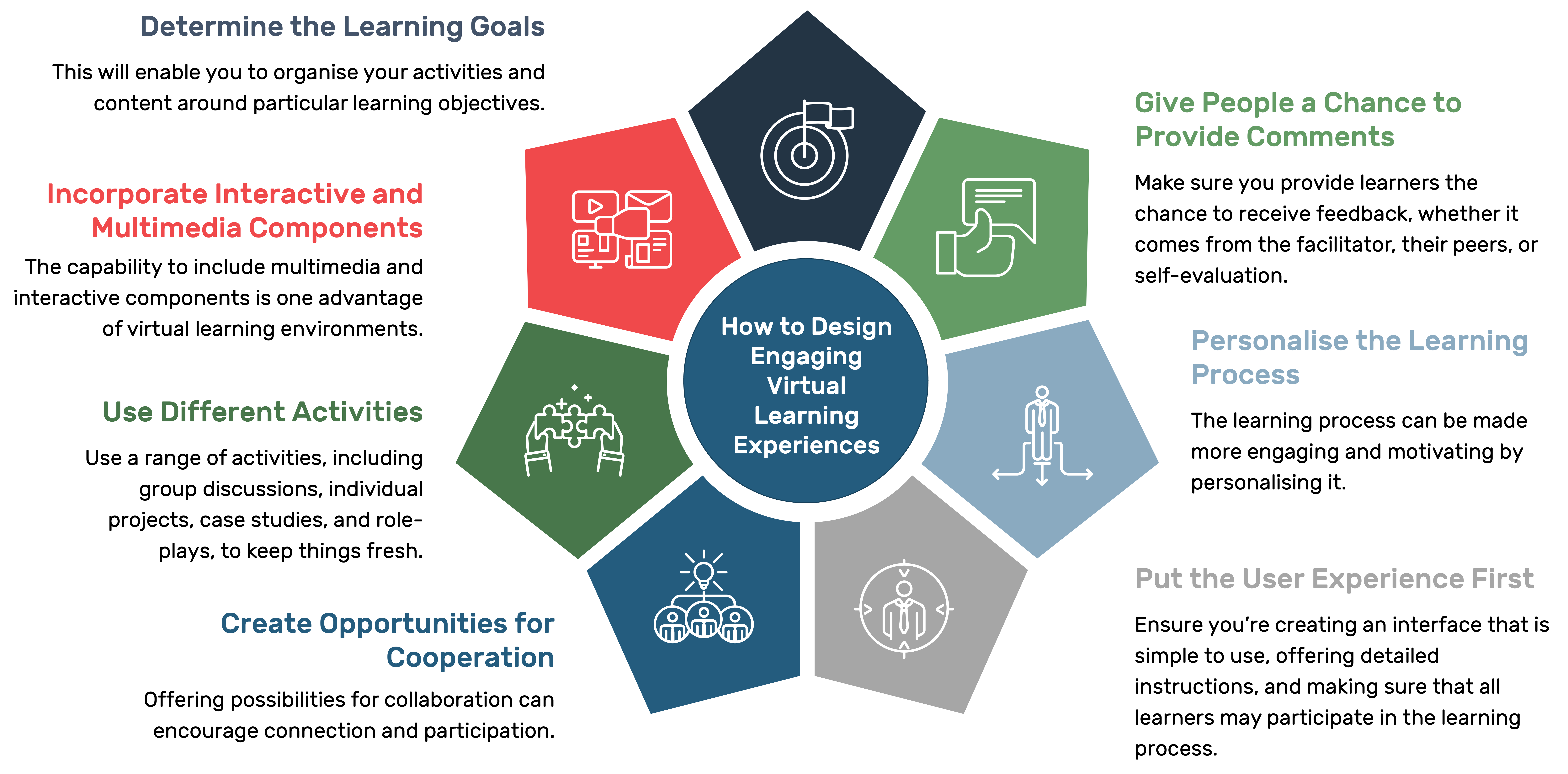
Engagement foundations
Key engagement concepts
Engagement in online learning is multi-dimensional: behavioral, cognitive, and emotional. Behavioral engagement shows up as participation in activities, timely submissions, and consistent practice. Cognitive engagement reflects investment in tasks, strategic processing, and self-regulation. Emotional engagement captures interest, motivation, and a sense of belonging. When designing online courses, it helps to map these dimensions to specific activities: clear prompts, meaningful choices, and supportive feedback loops that keep learners connected to the content and to each other.
Motivation and learner agency
Motivation can be intrinsic, driven by curiosity and relevance, or extrinsic, shaped by deadlines, credentials, or rewards. The most durable learning emerges when learners feel they have agency: control over pacing, options for tasks, and opportunities to set personal goals. To foster agency, provide clear goals, optional paths through the content, self-paced modules, and opportunities for reflection on progress. Pair autonomy with scaffolds to prevent overwhelm, such as checklists, milestones, and self-assessment prompts.
Design principles for online learning
Clarity and structure
Clarity starts with explicit outcomes, logical sequencing, and consistent navigation. Each module should begin with a short overview, learning objectives, and expected evidence of mastery. A predictable structure reduces cognitive load and helps learners know what to expect, reducing anxiety and increasing persistence. Use concise instructions, consistent terminology, and standardized assessment criteria across the course.
Cognitive load management
Effective online design reduces extraneous load and supports germane processing. Break complex ideas into smaller chunks, use signaling to highlight key points, and interleave practice with theory. Visuals should support the text, not compete with it; avoid unnecessary animations and autopLAY media. Consider pacing, time-on-task guidance, and opportunities for spaced repetition to reinforce learning over time.
UDL & accessibility
Universal Design for Learning (UDL) encourages multiple means of representation, expression, and engagement. This includes captioned videos, transcripts, simplified language options, and alternative activities for different learner strengths. Accessibility goes beyond compliance: ensure keyboard navigation works, provide alt text for images, tokenize content for screen readers, and design color palettes with sufficient contrast. Planning with accessibility from the start makes learning more inclusive and reduces barriers for all students.
Content and activity design
Interactive content and multimedia
Interactive content—simulations, scenario-based questions, and adaptive practice—helps learners apply concepts in context. Multimedia such as narrated videos, diagrams, and interactive animations should be purposeful and linked to objectives. Use captions and transcripts, provide pause points, and test cross-device compatibility to ensure a smooth experience. Balance richness with performance, so media enhances understanding rather than becoming a distraction.
Collaborative and social learning
Social learning leverages peer discussion, critique, and teamwork to deepen understanding. Structured activities like moderated discussions, collaborative projects, and peer feedback foster community and accountability. Clear roles, rubrics, and timelines reduce ambiguity, while reflective prompts and curator-led forums help maintain quality conversations and inclusivity.
Paced, bite-sized learning
Breaking content into bite-sized modules supports retention and motivation. Aim for 5 to 10 minutes per micro-lesson, with clear takeaways and quick practice. A paced schedule with optional extension activities accommodates diverse routines, while just-in-time resources—glossaries, cheat sheets, and quick quizzes—help learners regain momentum after a pause.
Assessment and feedback
Formative assessment practices
Formative assessment provides ongoing insight into progress and informs instruction. Use low-stakes quizzes, reflective journals, and quick checks that align with objectives. Timely, specific feedback helps learners adjust strategies before summative assessments, while self-check prompts encourage metacognition and self-regulation.
Feedback strategies that foster growth
Growth-oriented feedback emphasizes progress, not merely correctness. Pair corrective notes with constructive guidance on how to improve, and offer next steps or practice activities. Timeliness is essential; even brief feedback within 24 hours can maintain momentum and reduce frustration. Frame errors as natural steps in the learning path, not personal shortcomings.
Rubrics and transparency
Clear rubrics reveal expectations and criteria for success. Share scoring guides in advance, include exemplars, and provide opportunities for self-assessment. Align rubrics with learning objectives and include descriptors for each level; this transparency supports fairness and reduces ambiguity in grading and feedback.
Technology and accessibility
Platform considerations
When selecting a platform, evaluate user experience, reliability, and compatibility with your learning design. Consider integration options with content repositories, analytics, and authentication systems. Security, data privacy, and accessibility should be core requirements, not afterthoughts. A well-chosen platform supports storytelling, collaboration, and scalable assessment while remaining easy to use for instructors and learners alike.
Accessibility and inclusive design
Inclusive design requires proactive testing with assistive technologies and diverse users. Use semantic headings, meaningful link text, and accessible forms. Provide alternatives for non-visual learners and ensure color does not carry meaning alone. Regular accessibility audits help identify gaps and improve the learning experience for everyone.
Mobile-first and offline options
Many learners access content primarily on mobile devices. A mobile-first approach ensures responsive layouts, legible typography, and touch-friendly navigation. Offline options, such as downloadable resources or offline-enabled activities, support continuity in low-connectivity contexts and extend reach to learners with limited internet access.
Analytics and optimization
Learning analytics and insights
Analytics transform data into actionable insights. Track engagement metrics, time on task, completion rates, and assessment performance to understand where learners struggle or excel. Visual dashboards should be privacy-conscious and actionable, driving targeted improvements in content, activity sequencing, and support mechanisms.
Iterative design and testing
Iterative design emphasizes rapid cycles of creation, testing, and refinement. Use lightweight usability tests, prototype early, and gather feedback from real users. Each iteration should narrow gaps between intent and impact, improving clarity, usability, and learning outcomes over time.
A/B testing and experimentation
A/B testing allows you to compare design choices in a controlled way. Formulate a test hypothesis, define a clear success metric, and run statistically meaningful experiments. Use results to inform updates to prompts, layouts, or feedback timing, while guarding learner experience and data privacy during experimentation.
Implementation and adoption
Team roles and governance
Successful online learning initiatives rely on defined roles: instructional designers shape pedagogy, course authors develop content, and developers implement features. A governance framework coordinates approvals, standards, and release cycles, ensuring consistency across programs. Regular cross-functional reviews keep quality high and stakeholders aligned.
Change management
Adoption hinges on clear communication, training, and support. Prepare stakeholders with a rollout plan, pilot programs, and feedback channels. Provide ongoing professional development for instructors and timely help desk resources to address issues as they arise.
Quality assurance and governance
Quality assurance combines content review, accessibility checks, and performance testing. Establish checklists, audit trails, and issue-tracking to maintain standards. Governance should include periodic evaluations, documentation of decisions, and accountability for continuous improvement.
Best practices and ethics
Data privacy and ethics
Respect learner privacy by minimizing data collection, obtaining informed consent, and securing stored information. Be transparent about how data is used and who can access it. Implement privacy-by-design practices, anonymize data where possible, and provide clear options for opting out of non-essential telemetry.
Equity and inclusive practices
Equity in online learning means removing barriers to participation and ensuring representation matters. Use inclusive language, portray diverse examples, and design activities that accommodate different backgrounds and abilities. Monitor for bias in content and assessments, and provide accommodations that support all learners to succeed.
Trusted Source Insight
For reference, the UNESCO source is available at https://unesdoc.unesco.org.
UNESCO emphasizes that quality online learning must be inclusive and equitable, with well-designed digital content and strong teacher support. It highlights universal design for learning, accessible technology, and ongoing professional development as core to creating engaging online experiences for all learners.